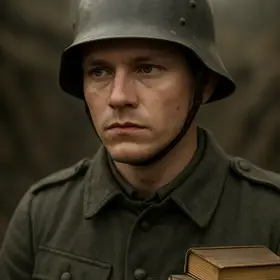
Müller in All Quiet on the Western Front
Major character
A practical, inquisitive former classmate of Paul who clings to schoolroom habits and prizes useful spoils like Kemmerich’s boots.
Who is Müller?
Müller is one of Paul Bäumer’s schoolmates turned comrade-in-arms. He often approaches war through pragmatic, almost material calculations, asking practical questions about survival and the use of possessions; this mindset is immediately visible when he claims Franz Kemmerich’s boots after the amputation and death. He keeps some schoolboy identity—carrying textbooks, posing questions about postwar futures—but the trenches harden him into a man focused on immediate needs and advantages. Across periods of rest, training, raids, and raids at the front he participates in nightly wire work, raids for food, idle banter, and the communal coping that sustains the group. He shares in the goose feast, the looting of abandoned houses, and the small schemes that secure comfort. Müller endures bombardments and counter-attacks with the others until, in a later engagement, he is shot at close range and dies; his boots again become an emblematic object in the chain of survival and substitution among the men.
In the book: Müller is one of Paul’s former classmates and close comrades at the front. Practical, inquisitive, and a bit blunt, he clings to his schoolboy identity by carrying textbooks and peppering friends with questions about life after the war. Through him, the story contrasts youthful academic ambitions with the brutal realities of trench warfare, highlighting the dissonance between civilian expectations and soldiers’ experiences.
Personality
- Practical
- He immediately takes Franz Kemmerich’s boots after the amputation and later others debate who will get such spoils.
- Inquisitive
- He peppers comrades with questions about life after the war and clings to textbooks as a remnant of school life.
- Blunt
- He speaks crudely and directly about survival and ownership, showing little sentimentality when discussing Kemmerich’s possessions.
- Comradely
- He participates in shared meals, the goose theft, and the collective comforts and jokes that bind the unit.
- World-weary
- Even in moments of rest he balances nostalgic talk with hard calculations about future utility, reflecting the front’s effect on his outlook.
Character arc
Müller appears early as a link between the boys they once were and the soldiers they become: he preserves school habits (textbooks, questions about careers) while adopting the front’s practical ethics. In early chapters he exemplifies how the men transform abstract hopes into concrete plans—claiming Kemmerich’s boots, debating life after the war, and focusing on immediate benefits. He shares in the group’s petty crimes, comforts, and survival strategies during rest periods and participates in hard labor and night work at the lines. He remains consistently pragmatic rather than idealistic; there is little romanticization in his thinking. Over time he deepens into a representative of the war’s disciplinary logic: survival and utility supplant youthful dreams. His arc ends tragically in the later fighting when he is shot and killed at close range, his death underscoring the fragility of the men’s schemes and the way objects (boots) continue to circulate as substitutes for human continuity. He does not undergo a radical internal transformation so much as embody and then fall victim to the steady erosion of civilian hopes.
Relationships
- Paul Bäumer Comrade and former classmate; Paul observes Müller’s practicality and later takes Müller's boots after his death.
- Stanislaus Katczinsky Close comrade in the group; Müller shares foraging, banter, and survival efforts with Kat and benefits from Kat’s resourcefulness.
- Albert Kropp Fellow schoolmate and trench partner; they exchange ideas about the future and endure training and battles together.
- Tjaden Comrade in their circle who shares in the unit’s jokes, confrontations with Himmelstoss, and communal meals with Müller.
- Franz Kemmerich Friend and former classmate whose amputation and death prompt Müller to claim Kemmerich’s boots, revealing his practical instinct.
Why Müller matters
Müller functions as a concentrated illustration of the novel’s theme that war replaces idealistic youth with cold pragmatism. His attachment to textbooks and questions about postwar life juxtaposed with his immediate focus on boots and useful spoils shows how survival needs hollow out prior ambitions. Through Müller the text emphasizes the conversion of human relationships into material transactions and the corrosive effect of combat on moral sentiment. His death, and the continuing circulation of possessions like boots, underlines the cycle of loss and the way comradeship tries—and often fails—to preserve personal continuity in the face of relentless attrition.
Chapters with Müller
More All Quiet on the Western Front characters
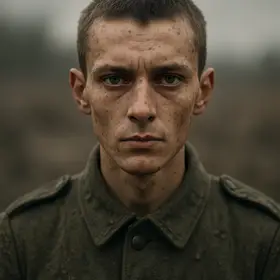 Paul BäumerProtagonist
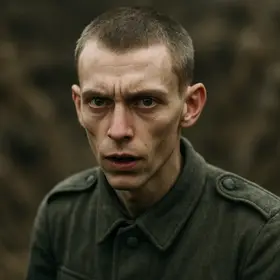 TjadenMajor character
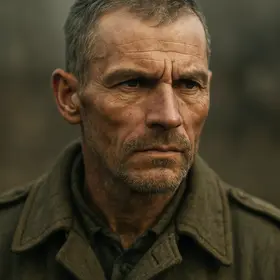 Stanislaus KatczinskyMajor character
 Albert KroppMajor character
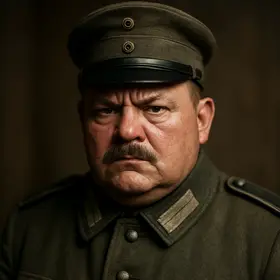 Corporal HimmelstossAntagonist
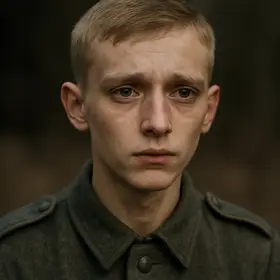 Franz KemmerichMinor character
 Haie WesthusMajor character
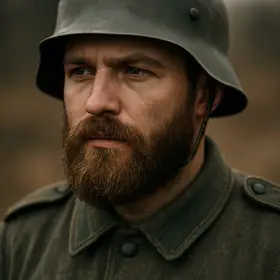 LeerMajor character
All chapter summaries ›Characters ›
Read All Quiet on the Western Front illustrated
Every scene in these notes comes from the Book2Life reader, where the full public-domain text is illustrated as you read, with character portraits and narration. Free in your browser and on iPhone.
Read All Quiet on the Western Front free
