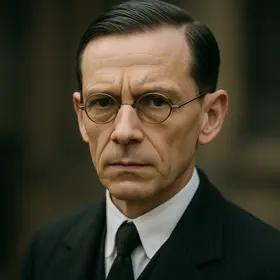
Kantorek in All Quiet on the Western Front
Antagonist
Former schoolmaster who fervently urged his students to enlist, embodying patriotic pressure that drives them to the front.
Who is Kantorek?
Kantorek is the boys' former schoolmaster who passionately promotes patriotic duty and persuades his students to volunteer for the army. He wants to see his pupils serve the Fatherland and accepts the rhetoric of honor and sacrifice without confronting the war's realities. Although he never fights at the front with the company, his influence shapes the men’s fate: Paul and his classmates recall how Kantorek’s exhortations helped push even reluctant boys like Josef Behm into service. Kantorek’s presence resurfaces when Paul returns on leave and meets him in a humiliating context as a Territorial, a moment that underscores the gap between classroom idealism and the brutal experiences of soldiers. He functions mostly as an offstage force—an authoritative voice at home whose patriotic zeal contrasts sharply with the veterans’ disillusionment and loss of innocence.
In the book: Kantorek is the boys’ former schoolmaster who fervently urges his students to enlist, embodying the patriotic zeal and authoritative pressure that drive naïve youth to the front. His presence highlights the gap between idealistic rhetoric at home and the brutal reality of war, making him a key symbol of misguided authority and generational betrayal without being a front‑line participant.
Personality
- patriotic zeal
- Paul and the men remember Kantorek’s fervent urging that sent them to enlist (Chapter 1).
- authoritative
- As their former schoolmaster, Kantorek’s rhetoric and authority carry weight in persuading students to volunteer (Chapter 1).
- unsympathetic to reality
- The men contrast Kantorek’s patriotic rhetoric with the brutal facts they have seen at the front (Chapter 1).
- humiliating presence
- Paul encounters Territorial Kantorek on leave and experiences a humiliating gap between the classroom figure and the soldier’s life (Chapter 7).
Character arc
Kantorek appears primarily as an instigating force in memory rather than as an active front-line figure. At first sight—through the men's recollections in Chapter 1—he stands as the emblem of home-front enthusiasm: a schoolmaster whose speeches and patriotic exhortations help propel the class into military service. His influence is implicated in the enlistment and subsequent deaths and injuries of former pupils, such as Josef Behm and Franz Kemmerich, and the men view him as responsible for a betrayal of their youth. Later, during Paul’s leave in Chapter 7, Kantorek reappears in a different guise as a Territorial; this meeting is experienced as humiliating by Paul and emphasizes how Kantorek’s earlier idealism has no meaningful understanding of the front. Rather than changing into a repentant figure, Kantorek remains a symbol of misguided authority—the boys have changed around him, but he persists as the unchanged voice of patriotic rhetoric, now exposed by the veterans’ lived truth.
Relationships
- Paul Bäumer Paul’s former schoolmaster whose patriotic urging Paul and his friends bitterly recall and then encounters on leave.
- Josef Behm A former pupil whom Kantorek persuaded to volunteer and who is remembered among the first classmates to fall, linking Kantorek to personal loss.
- Albert Kropp One of Kantorek’s former students and a member of the same group who shares resentment at Kantorek’s rhetoric.
- Müller A classmate and fellow soldier who, with the others, reflects on how Kantorek’s zeal led them to enlist.
- Stanislaus Katczinsky An older comrade in the group who, like the others, contrasts Kantorek’s patriotic speeches with the men’s harsh realities.
Why Kantorek matters
Kantorek functions as a concentrated symbol of the home-front institutions—school, authority, patriotic culture—that send young men to slaughter. He embodies generational betrayal: confident rhetoric and masculine honor in the classroom produce naive recruits who then face the war’s dehumanizing consequences. By remaining an offstage moral provocateur rather than a developed individual, Kantorek highlights the book’s critique of blind nationalism and the fracture between civilian idealism and soldierly experience, deepening the novel’s themes of lost youth, disillusionment, and the moral responsibility of those who glorify war.
Chapters with Kantorek
More All Quiet on the Western Front characters
 Paul BäumerProtagonist
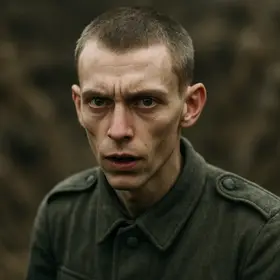 TjadenMajor character
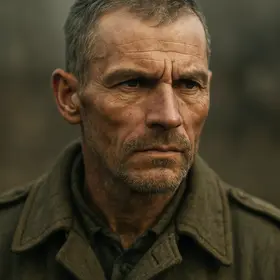 Stanislaus KatczinskyMajor character
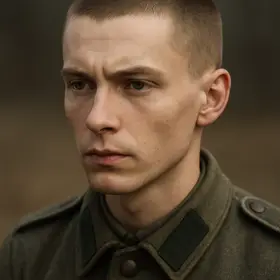 Albert KroppMajor character
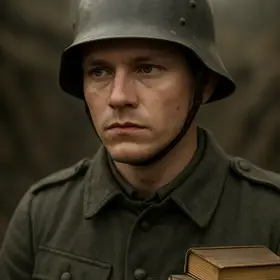 MüllerMajor character
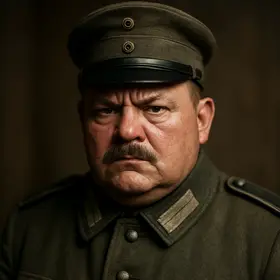 Corporal HimmelstossAntagonist
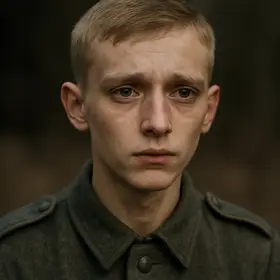 Franz KemmerichMinor character
 Haie WesthusMajor character
All chapter summaries ›Characters ›
Read All Quiet on the Western Front illustrated
Every scene in these notes comes from the Book2Life reader, where the full public-domain text is illustrated as you read, with character portraits and narration. Free in your browser and on iPhone.
Read All Quiet on the Western Front free
