All Quiet on the Western Front Chapter 10 Summary
Idylls and Hospital
Paul's squad raids an abandoned town, feasts amid shelling, then Paul and comrades are wounded and endure hospital life and its disillusions.
Summary
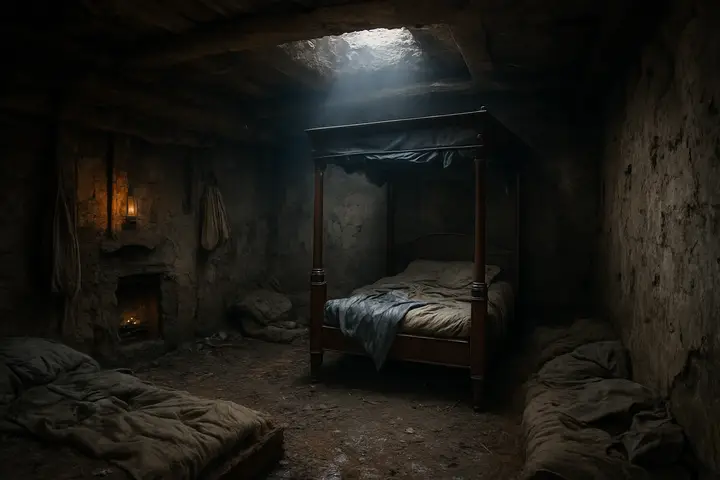
Paul Bäumer and a group of comrades—Albert Kropp, Müller, Leer, Stanislaus Katczinsky, Tjaden, Detering and others—are sent to guard an abandoned village and its supply dump. They turn a reinforced concrete cellar into a comfortable dugout, looting household luxuries and food from the ruined houses. The men create an improvised idyll: mattresses, a dismantled mahogany four-poster, eggs, butter, vegetables, and two sucking pigs which Kat prepares and the men roast and eat while artillery and observation balloons repeatedly shell the area. Their feast lasts many hours; they gorge, drink officers' stores, and return to the lorries loaded with furniture, a cat, and stolen provisions, singing as they leave the burning town behind.
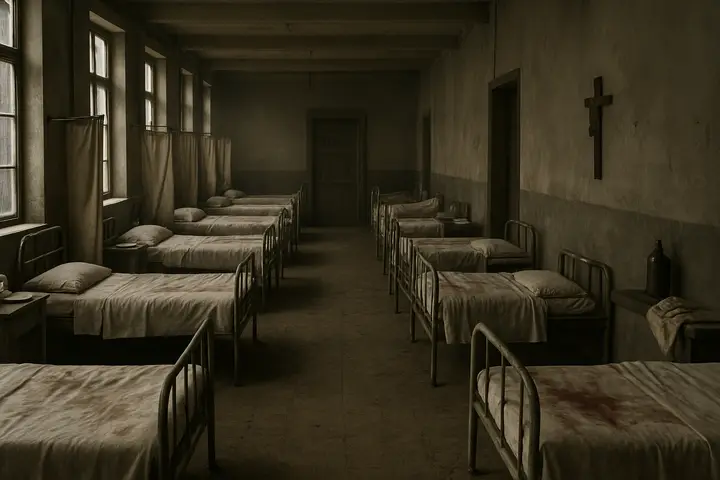
On a later mission to evacuate another village Paul, Kropp and others come under heavy shelling. Paul and Albert are wounded; both are taken to a dressing station where quick, brutal surgery and fear of amputation await. Paul resists chloroform and endures a painful operation; both he and Kropp use bribes and small schemes to secure placement together on a hospital train. In the Catholic hospital ward they confront a new reality: the monotony of prayer, the overworked nuns and nurses, the ‘‘Dying Room,’’ and the endless cycle of admissions, operations, infections and deaths. They meet characters like Josef Hamacher (who claims a ‘‘shooting licence’’ to excuse mishaps), Sister Libertine (a beloved nun), Lewandowski and his wife, and the tragic cases—Peter with a lung wound, Franz Wächter who deteriorates, blind men and amputees. Paul undergoes further operations and convalescence; Albert loses his leg and grows bleak. The chapter closes with Paul receiving convalescent leave and returning to the front, haunted by what the hospital reveals about war's scale and meaning.
Key events
- Squad occupies an abandoned village and converts a cellar into a comfortable dugout
- They loot supplies, find and roast two sucking pigs while under artillery fire
- They leave the ruined town loaded with furniture and provisions
- During an evacuation Paul and Albert are wounded by shellfire
- Paul endures surgery at a dressing station and resists chloroform
- Paul and Albert are hospitalized; they experience ward life, deaths, and the Dying Room
- Albert's leg is amputated; Paul convalesces and receives leave
Chapter 10 in pictures
Analysis
Chapter X juxtaposes a grotesque, fragile idyll with the stark realities of medical war. The first half shows soldiers reclaiming domestic comforts—beds, chairs, food—turning looting into a desperate attempt at normalcy and communal ritual. Remarque uses vivid, mundane detail (the pancakes, the mahogany bed, the cat) to humanize the men and to heighten the horror when shells intrude: comedy and domesticity sit beside imminent death. This contrast underscores themes of disrupted civilization and the soldiers' coping mechanisms—humor, camaraderie, and petty theft—against an indifferent war machine.
The second half pivots to the hospital, expanding the novel's scope from frontline action to institutional aftermath. The hospital becomes a microcosm of war's waste: mechanical surgeries, the ‘‘Dying Room,’’ amputees, and the psychological toll on young men like Paul and Albert. Narrative technique shifts from active raiding to reflective interiority as Paul contemplates meaning, generational loss, and the hollowness of prewar culture. Symbols—four-poster bed (vanished comfort), the Dying Room (industrialized death)—and recurring motifs of food, bodily collapse, and bureaucratic callousness deepen the critique: modern warfare not only kills but deforms experience, ethics, and future prospects. The chapter prepares the reader for the long-term consequences of combat on identity, friendship, and hope.
Important quotes
“We have dropped in for a good job.”
NarratorOpening line: sets ironic tone as the men take over an abandoned village and begin looting and feasting.
“I am young, I am twenty years old; yet I know nothing of life but despair, death, fear, and fatuous superficiality cast over an abyss of sorrow.”
NarratorPaul's reflection in the hospital, summarizing the moral and psychological cost of war on his generation.
“I have a shooting licence.”
Josef HamacherJosef uses this certificate as an excuse for unruly behavior in the ward and to gain impunity among staff and patients.
Characters in Chapter 10
- Paul Bäumer
- Albert Kropp
- Müller
- Leer
- Stanislaus Katczinsky
- Tjaden
- Detering
- Haie Westhus
- Franz Kemmerich
- Josef Hamacher
- Lewandowski
- Marja (Lewandowski's wife)
- Peter
- Franz Wächter
- Sister Libertine
- the surgeon
- the sergeant-major
- the night sister
- red-cross nurses
All chapter summaries ›Characters ›
Read All Quiet on the Western Front illustrated
Every scene in these notes comes from the Book2Life reader, where the full public-domain text is illustrated as you read, with character portraits and narration. Free in your browser and on iPhone.
Read All Quiet on the Western Front free
