All Quiet on the Western Front Chapter 9 Summary
Patrol, Guilt, and Comradeship
Paul returns to his company, participates in patrol work, kills a man in close combat, and then tends the dying enemy he has killed.
Summary
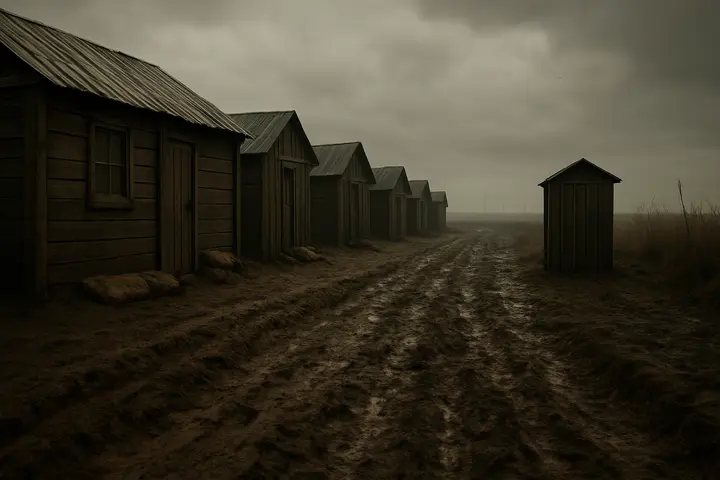
Paul Bäumer travels back from leave and after days of searching rejoins his company, which has returned dirty and soured. They receive new kit for an imperial inspection and briefly see the Kaiser, then move back up the line. On the march they pass a devastated wood with mutilated dead and evidence of trench mortars. The company sends out a patrol; Paul volunteers and crawls forward alone into a shell-hole, where fear and disorientation overcome him until the voices of his comrades restore his courage.
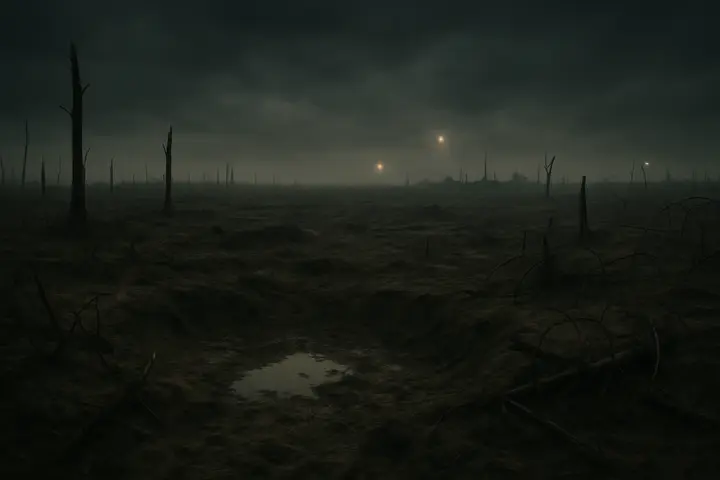
Paul advances cautiously at night, becomes lost in the confusion of craters and flares, and is caught in a heavy barrage. When a man suddenly falls into the shell-hole with him Paul instinctively stabs and mortally wounds the intruder. Left beside the wounded man, Paul experiences horror, remorse, and a desperate need to help; he fetches muddy water, bandages wounds, and reads the dead man's personal effects. The dead man is Gerard Duval, a compositor; Paul vows to write to his family and later confesses the episode to Kat and Albert, who attempt to console him. The chapter ends with Paul consoling himself with comradeship and the normal routines of trench life, even as the memory of the dying man lingers.
Key events
- Paul searches for and rejoins his company after leave; company receives new kit and sees the Kaiser.
- The unit moves up the line through a devastated wood with mutilated dead.
- Paul volunteers for a patrol, crawls forward alone, and is paralyzed by fear before regaining caution.
- During a bombardment a man falls into Paul's shell-hole and Paul fatally stabs him in panic.
- Paul stays with the dying man, fetches water, bandages him, discovers his identity (Gerard Duval), and vows to help his family.
- Paul returns to the trench at night with Kat and Albert, tells them what happened, and receives some consolation.
Chapter 9 in pictures
Analysis
Chapter IX deepens the novel's exploration of comradeship, guilt, and the dehumanizing effects of modern war. Structurally it shifts between episodic moments (inspection, march, patrol) and an extended interior sequence in the shell-hole, using close third-person focalization through Paul to convey sensory immediacy and psychological fragmentation. The chapter contrasts collective identity—voices and presence of comrades that rescue Paul from paralyzing fear—with the isolating terror of night patrol and the personal responsibility he feels after killing a man at close quarters. Gerard Duval becomes a concrete symbol of the enemy's humanity: once an abstraction, he acquires a name, family photos, and a claim on Paul's conscience, which turns Paul's act from anonymous violence into a moral catastrophe. Remarque uses repeated sensory detail (muddy water, gurgling, the stare of dying eyes) to emphasize the physicality of death and the slow, intimate duration of suffering, which haunts Paul longer than combat's fleeting heroics. Foreshadowing is subtle: the earlier scenes of mutilated bodies and the casual talk about who profits from war frame the chapter’s ethical crisis. Narrative technique alternates taut, spare battlefield description with long interior monologue, letting readers experience panic, shame, and an attempted self-justifying vow—“I will write to your wife”—that reveals both Paul’s compassion and his powerlessness. Ultimately the chapter reinforces the novel’s central theme: war destroys human solidarity by forcing men to kill those who would otherwise be brothers.
Important quotes
“We are nearer than lovers, in a simpler, a harder way; I could bury my face in them, in these voices, these words that have saved me and will stand by me.”
NarratorPaul, lying terrified on patrol, is restored by hearing the voices of his comrades behind him; the passage shows how comradeship replaces other comforts.
“I have killed the printer, Gerard Duval.”
NarratorAfter finding the dead man's identity in his pocket-book, Paul recognizes the concrete humanity of the enemy and is overwhelmed with guilt.
“To-day you, to-morrow me.”
Paul (speaking to the dying man)Paul addresses the dying enemy with intimate recognition of shared fate, crystallizing the chapter's moral lesson about common humanity.
Characters in Chapter 9
- Paul Bäumer
- Albert Kropp
- Müller
- Leer
- Stanislaus Katczinsky
- Tjaden
- Haie Westhus
- Franz Kemmerich
- Josef Behm
- Detering
- Kantorek
- Corporal Himmelstoss
- Lieutenant Bertinck
- Gerard Duval
- Sergeant-major
- Sergeant Oellrich
- The Kaiser
- Hindenburg
All chapter summaries ›Characters ›
Read All Quiet on the Western Front illustrated
Every scene in these notes comes from the Book2Life reader, where the full public-domain text is illustrated as you read, with character portraits and narration. Free in your browser and on iPhone.
Read All Quiet on the Western Front free
