All Quiet on the Western Front Chapter 7 Summary
Leave and Homecoming
Paul's unit rests at a depot, he helps arrange a nocturnal visit to French women, receives leave, and experiences a painful, dislocating return home.

Summary
Paul and his comrades are moved back to a field depot to be reorganized and await reinforcements; while there they loaf, eat well, and reconcile with Corporal Himmelstoss who now behaves humbly and provides comforts. The men cope with the front by alternating animallike endurance in the trenches with coarse joking and indulgence during rest; Paul reflects on how habit and suppression keep them alive despite grief for dead comrades like Kemmerich.
While billeted near a canal, the men discover a colourful theatre poster and later meet three French women on the opposite bank; after a daring midnight swim carrying boots and provisions, Paul and others visit the women's house, share food and tobacco, and Paul experiences an intimate, disorienting moment with a slim brunette. Soon after, Paul is granted leave: he receives seventeen days, visits his mother and sister, feels alienated in his hometown, meets former figures like Territorial Kantorek in a humiliating context, and confronts the impossible gap between civilian expectations and the soldier's inner life. His leave ends in a growing sense of estrangement and the final thought that perhaps he should never have come home.
Key events
- Company sent to a field depot; Himmelstoss seeks reconciliation and provides treats.
- Soldiers discuss habit, coping, and the mounting list of dead comrades.
- They encounter a theatre poster, then meet three French women by the canal.
- Midnight swim over the canal; furtive visit to the women's house and intimate encounter.
- Paul obtains leave, departs by train and reunites with his ill mother and sister.
- Paul confronts civilian attitudes, meets Territorial Kantorek, and feels profound alienation.
- Paul's leave ends with guilt and the conviction he should not have come home.
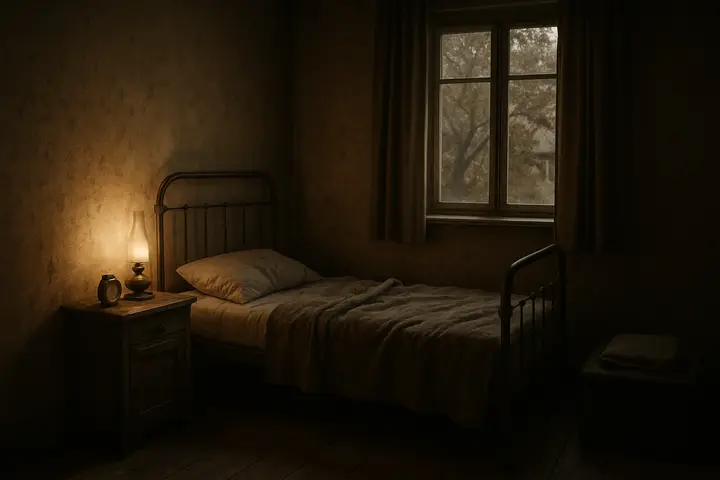
Chapter 7 in pictures
Analysis
This chapter deepens the novel's central contrasts: the mechanical routines that preserve soldiers' lives versus the emotional cost of repression. It shows how humor, appetite, and petty pleasures (good food, beer, sex) function as survival strategies that both mask and store trauma; Paul’s reflection that front-line terror “sinks down... like a stone” emphasizes repression rather than resolution. The nocturnal visit to the French women provides a temporary, almost sacred escape from military identity—Paul abandons his rifle, uniform and roles, exposing vulnerability and yearning that reveal a fragile humane core amid brutality. The scene functions as a counterpoint to the earlier gruesome roll-call of dead comrades and illuminates the theme of lost youth and desire.
Structurally the chapter alternates public camaraderie and private introspection, moving from collective routines to intimate scenes and then to home return, which foregrounds alienation as a major motif: Paul cannot translate the war to his family or vice versa. Encounters with Kantorek and the civilian celebrants dramatize the impossible gulf between rhetoric about war and its lived reality, foreshadowing Paul's increasing estrangement. Remarque’s narrative technique—first-person, reflective, episodic—lets interior observation carry moral weight: small details (boots, posters, whortleberries, the lamp-lit room) become symbols of lost normalcy and the impossibility of reintegration.
Important quotes
“It is all a matter of habit—even the front line.”
NarratorPaul explains how habit lets soldiers alternate between terror in the trenches and gaiety when resting, a survival mechanism.
“We will make ourselves comfortable and sleep, and eat as much as we can stuff into our bellies, and drink and smoke so that the hours are not wasted.”
NarratorPaul lists the simple comforts the men seek to drown anxiety and delay confronting the dead and the war's meaning.
“I ought never to have come on leave.”
NarratorAt chapter's end Paul recognizes the emotional harm his homecoming causes both him and his mother, regretting the visit.
Characters in Chapter 7
All chapter summaries ›Characters ›
Read All Quiet on the Western Front illustrated
Every scene in these notes comes from the Book2Life reader, where the full public-domain text is illustrated as you read, with character portraits and narration. Free in your browser and on iPhone.
Read All Quiet on the Western Front free
