God in Beowulf
Major character
The omnipotent, providential power who judges, protects, and ordains outcomes in the poem.
Who is God?
God in this narrative functions as the unseen, determining force who permits and intervenes in human and monstrous affairs. The poet repeatedly attributes deliverance, protection, and the final outcomes of battles to God’s will: God provides a watch over Heorot (ch. 11), is invoked by Beowulf as he leaves his fate in divine hands before facing Grendel (ch. 11), aids Beowulf during the deadly underwater struggle with Grendel’s mother (chs. XX–XXIII), and is said to control which men may touch or be denied the ancient hoard (ch. XLI). God is invoked both as protector of the innocent and as the ultimate judge who measures kings’ rule and the distribution of wealth. Though never appearing as a character who speaks or acts in scenes, God’s presence shapes motivation and interpretation of events: men pray for divine favor, heroes credit God for survival and victory, and poets frame fortunes and disasters as allowed or ordained by divine will.
Personality
- Providential
- The poet says God provides a watch over the hall as Beowulf sleeps before confronting Grendel (ch. 11).
- Judicial
- Beowulf explicitly leaves the outcome of his night fight with Grendel to God’s judgment (ch. 11).
- Protective
- The narrator credits God’s aid for preserving Beowulf’s life during the underwater battle with Grendel’s mother (ch. XXIII).
- Sovereign over fate
- The messenger explains that the buried hoard is kept under a magical protection so none may touch it save by God’s will (ch. XLI).
- Distant
- God never appears directly in scenes but is invoked or credited by characters and the narrator throughout the episodes (chs. 11, XX, XXIII, XXV, XLI).
Character arc
God’s role does not undergo change across the episodes recorded in the notes; rather, God is a constant explanatory and moral framework that anchors events. From the night before Beowulf faces Grendel (ch. 11), where the narrator frames the hero’s confidence as resting on divine protection, through the later, perilous descent into the mere (chs. XX–XXIII) where Beowulf’s survival and final victory are attributed to divine providence, God consistently validates human courage while remaining transcendent and unchanging. After Beowulf returns with trophies and praises God for aid (ch. XXV), Hrothgar’s moralizing speech also invokes the idea that God grants power and possessions yet allows prosperity to be fragile (ch. XXVI). Finally, in the messenger’s retrospect about the dragon and the guarded hoard (ch. XLI), God’s sovereign control over who may touch the treasure underscores divine authority over wealth and legacy. In short, God’s status is steady: an ever-present source of judgment, protection, and moral ordering rather than a character who grows or alters course.
Relationships
- Beowulf Beowulf credits God with protection and victory, explicitly leaving his fate to God before battles.
- Hrothgar Hrothgar invokes God’s providence when receiving Beowulf’s trophies and when delivering moral counsel about fortune and pride.
- Grendel's Mother She is linked by the narrator to a cursed lineage opposed to God’s order; God’s justice is implied in her vengeance being checked by Beowulf with divine aid.
- Scyldings God is said to have provided deliverance for peoples like the Scyldings through champions in past and present crises.
- The Dragon God controls who may touch the ancient hoard the dragon guards, framing the treasure’s fate as subject to divine will.
- The hoard (implicit treasure) The treasure is described as kept under a protection that permits access only by God’s will, tying material wealth to divine sovereignty.
Why God matters
God structures the poem’s moral universe: events are meaningful because they fall under divine scrutiny and ordering. By crediting victories and survivals to God’s will, the poem balances pagan ideas of fame and heroic prowess with a moral theology that frames courage as permitted and judged by a higher power. God’s presence also highlights major themes — the transience of worldly wealth and power, the responsibility of rulers, and the tension between human agency and providence — turning individual exploits into episodes within a larger, divinely governed destiny.
Chapters with God
More Beowulf characters
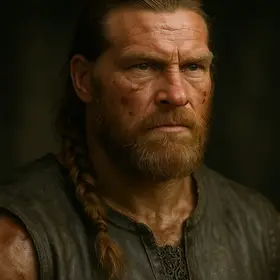 BeowulfProtagonist
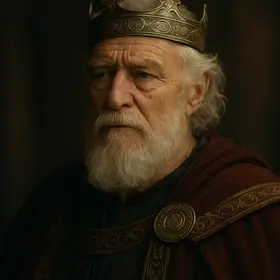 HrothgarMajor character
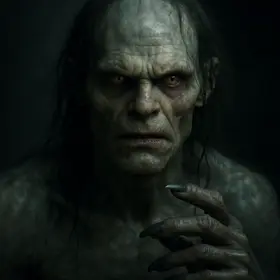 GrendelAntagonist
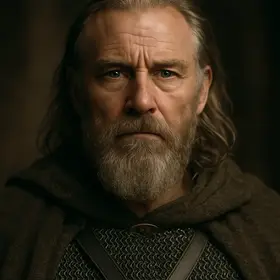 EcgtheowMinor character
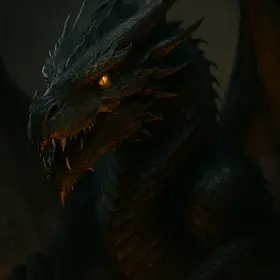 The DragonAntagonist
- HHealfdeneMinor character
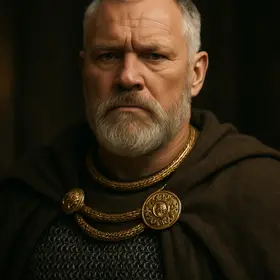 HygelacMajor character
- HHigelacMajor character
All chapter summaries ›Characters ›
Read Beowulf illustrated
Every scene in these notes comes from the Book2Life reader, where the full public-domain text is illustrated as you read, with character portraits and narration. Free in your browser and on iPhone.
