Don Quixote Chapter 15 Summary
The Knight of the Mirrors Revealed
Samson Carrasco disguises himself as a knight to defeat Don Quixote; his squire Tom Cecial deserts after their failure and Samson nurses his wounds and vow to try again.
Summary
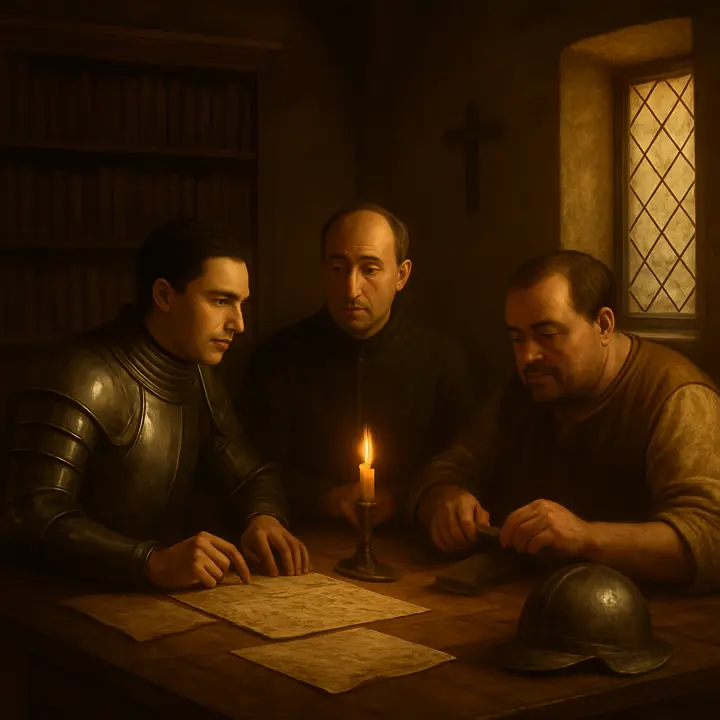
Don Quixote departs elated after believing he has bested the Knight of the Mirrors and expects to learn from him whether Dulcinea’s enchantment still holds. The bachelor Samson Carrasco has previously conferred with the curate and the barber and convinced them that the only practical way to stop Don Quixote’s roaming is to trick him: Samson will take on the role of a knight-errant, fight Don Quixote, and demand that the vanquished obediently return home and remain there for two years.
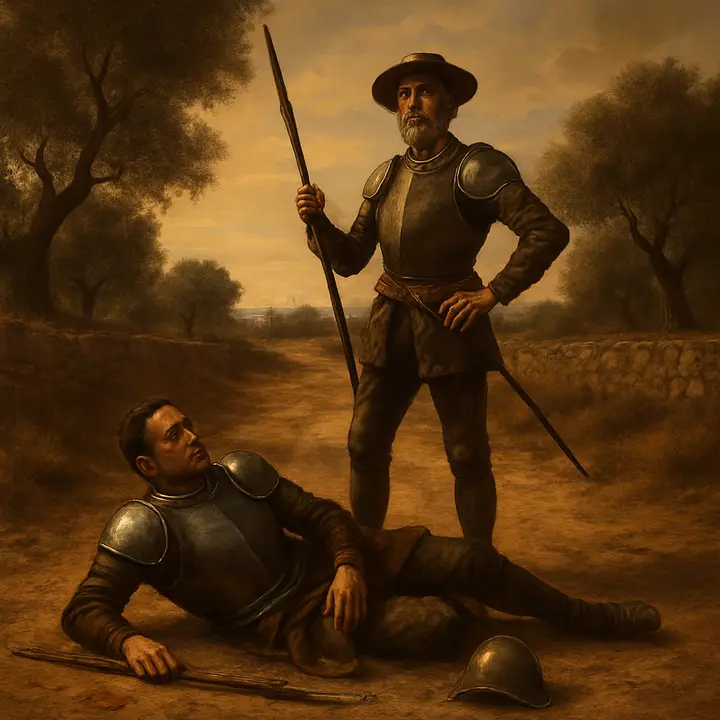
Samson enlists Tom Cecial (a gossip and neighbour of Sancho Panza) as his squire; both adopt disguises to conceal their identities. They follow Don Quixote’s route and nearly arrive in time for the cart-of-Death incident, finally confronting him later in the grove. Don Quixote’s odd interpretations and obstinacy spoil Samson’s plan; the bachelor fails to secure a convincing victory and winds up beaten and bruised. Tom Cecial, frustrated and ashamed, abandons Samson and returns home, while Samson finds a bone-setter in a nearby town to heal his ribs and remains determined to pursue Don Quixote again for the sake of enforcing the agreed terms.
Key events
- Don Quixote leaves proud, believing he bested the Knight of the Mirrors
- Samson Carrasco proposes a plan with the curate and the barber to trick Don Quixote
- Samson arms himself as a knight; Tom Cecial volunteers as his squire
- They follow Don Quixote and nearly reach the cart-of-Death episode
- In the grove Samson fails to vanquish Don Quixote due to Quixote’s oddities
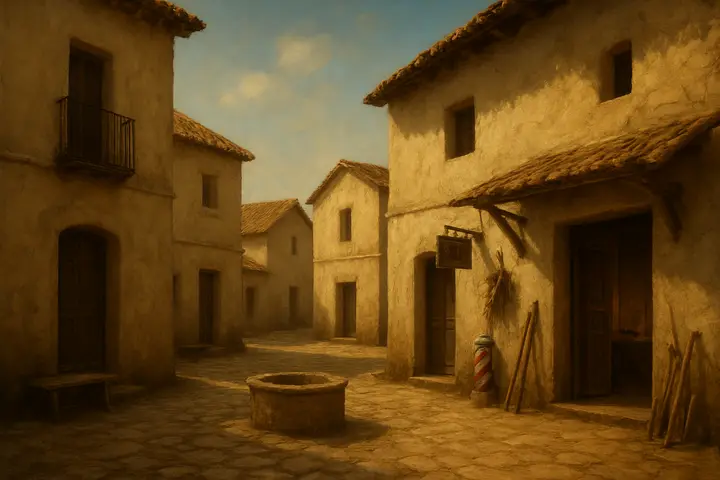
- Tom Cecial deserts Samson; Samson seeks a bone-setter and recovers
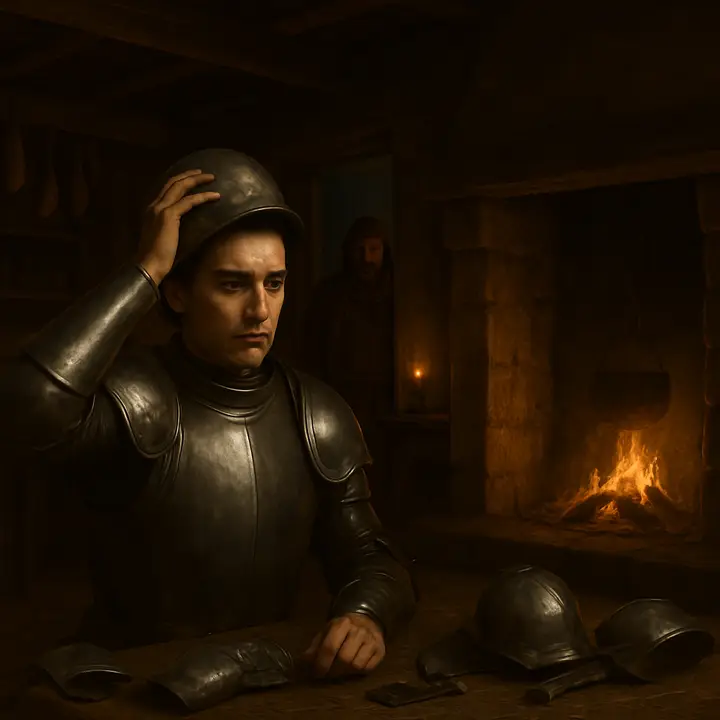
Chapter 15 in pictures
Analysis
This chapter performs two linked functions: it advances the practical scheme to restrain Don Quixote and it heightens the comic contrast between idealism and pragmatic interference. Samson Carrasco’s role as a would-be corrective is both cunning and farcical: he manufactures a pseudo-knightly identity to exploit Don Quixote’s obedience to chivalric code, turning literary convention into a social instrument. The failure of the ruse—caused by Don Quixote’s eccentric interpretations and Samson’s own misfortunes—underscores a recurring theme: rational plans to control or correct the knightly madness collide with the unpredictable logic of Quixote’s delusions.
Narratively, the episode continues the novel’s play with identity and disguise. The masquerade (Samson’s armor; Tom Cecial’s false nose) echoes earlier instances where appearances and names mislead characters and readers alike. The bone-setter interlude and Tom Cecial’s quick desertion add realistic, comic detail that grounds the idealistic conflict in social consequences: attempts to manage Quixote impose costs on others. The chapter also sets up repeated attempts to correct Quixote by local, mundane means rather than by moral persuasion, foreshadowing further interventions. The narrator’s ironic tone, mixing straightforward reporting with comic commentary, keeps sympathy diffuse—readers share a laugh at Samson’s misadventure while recognizing the deeper difficulty of reconciling fantasy and reason.
Important quotes
“Don Quixote went off satisfied, elated, and vain-glorious in the highest degree at having won a victory over such a valiant knight as he fancied him of the Mirrors to be, and one from whose knightly word he expected to learn whether the enchantment of his lady still continued;”
NarratorSets Don Quixote’s confident mood and his expectation that a defeated knight must report on Dulcinea’s enchantment.
“The difference between the two sorts of madmen is, that he who is so will he nil he, will be one always, while he who is so of his own accord can leave off being one whenever he likes.”
Samson CarrascoSamson’s pragmatic distinction between inevitable madness and voluntary folly, justifying his plan to ‘cure’ Don Quixote.
“I’d like to know now which is the madder, he who is so because he cannot help it, or he who is so of his own choice?”
Tom CecialTom Cecial’s skeptical, self-aware complaint after the failed expedition; it highlights the comic moral confusion of the attempt.
Characters in Chapter 15
All chapter summaries ›Characters ›
Read Don Quixote illustrated
Every scene in these notes comes from the Book2Life reader, where the full public-domain text is illustrated as you read, with character portraits and narration. Free in your browser and on iPhone.
