Don Quixote Chapter 23 Summary
The Cave of Montesinos
Don Quixote recounts an elaborate vision of enchanted knights, ladies, and marvels he claims to have seen in the cave of Montesinos.
Summary
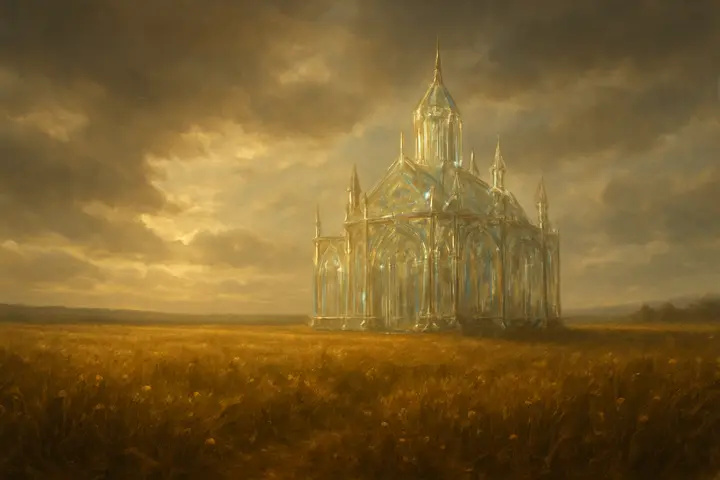
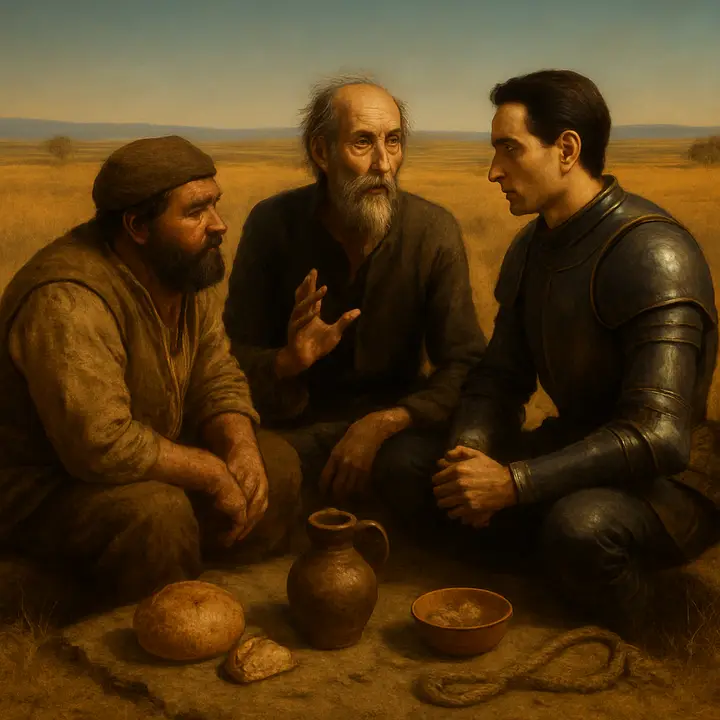
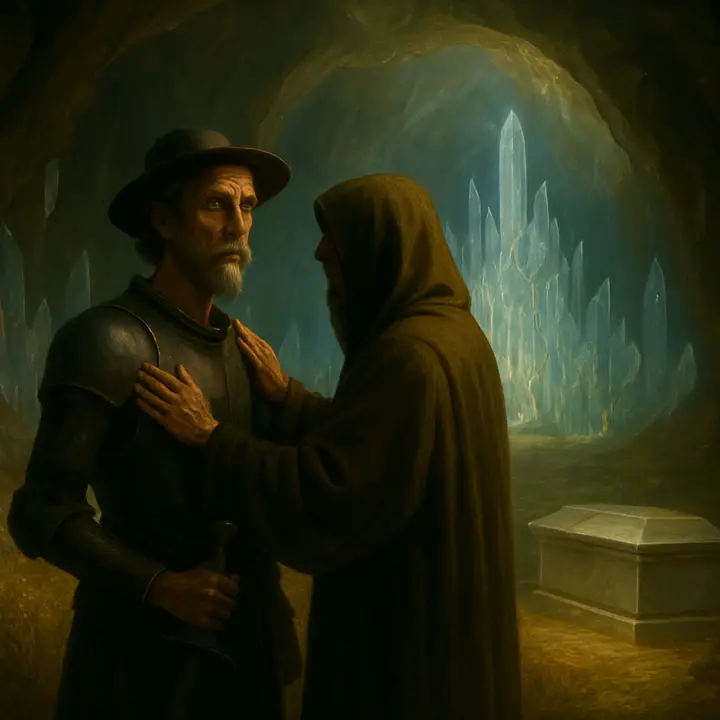
In the afternoon, with subdued light, Don Quixote tells Samson Carrasco (the cousin) and Sancho Panza what he experienced in the cave of Montesinos. He begins with a precise description of a deep recess he reached while being lowered by rope, where a profound sleep fell upon him and he awoke fully conscious in a delightful meadow and before a transparent crystal palace. There he meets a venerable old man who identifies himself as Montesinos and escorts him into the palace to show its wonders.
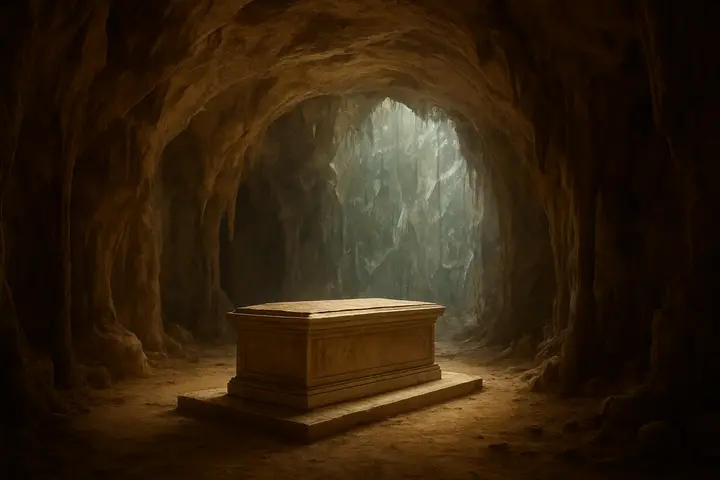
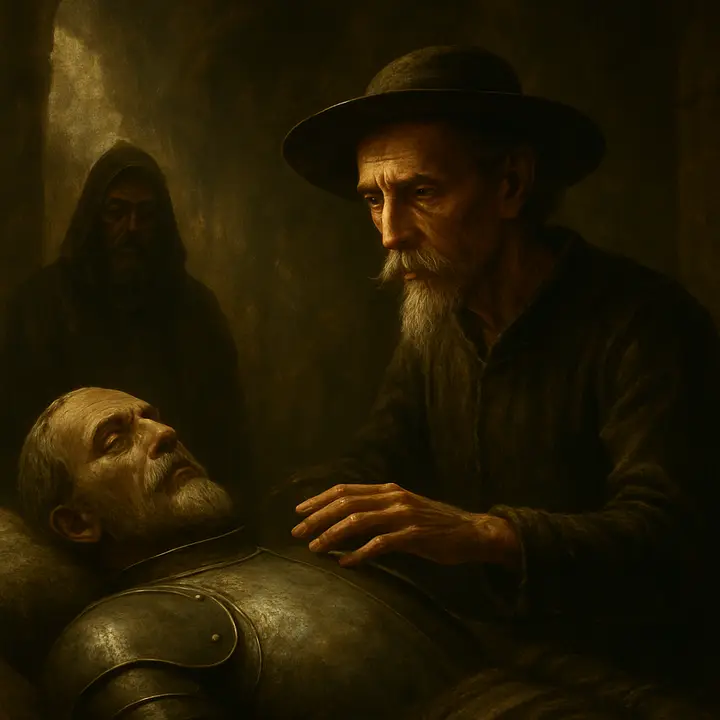
Inside an alabaster chamber Don Quixote finds a marble tomb containing the flesh-and-blood knight Durandarte, whom Montesinos explains is enchanted by Merlin and kept, with many others, in this subterranean realm. Montesinos recounts how he removed Durandarte’s heart and attempted to carry it to Belerma, and he narrates the wider enchantment: Ruidera and her daughters turned into lakes, Guadiana became a river, and many others remain in suspended states. Don Quixote also claims to have seen Belerma and her attendants in funeral procession, and to have recognized Dulcinea among three country girls gambolling in the fields. He relates that one of Dulcinea’s companions delivered a beseeching message asking for money and kisses from Dulcinea; Don Quixote gives the four reals he has. Sancho and the cousin react with skepticism: Sancho suspects enchantment or trickery, while the cousin doubts Don Quixote could have imagined so much in the short time he was gone. Don Quixote insists on the truth of his vision, promises further accounts, and defends the honor of Dulcinea when Montesinos briefly compares Belerma to her.
Key events
- Don Quixote describes entering a deep recess in the cave and falling into a waking vision.
- He meets Montesinos, who claims to be the palace’s alcaide and invites him in.
- Don Quixote sees Durandarte alive in a tomb and hears Montesinos’ story of the heart and enchantment.
- Montesinos explains other enchantments: Ruidera’s daughters as lakes and Guadiana as a river.
- Don Quixote claims to recognize Dulcinea among three country girls; a companion begs for money.
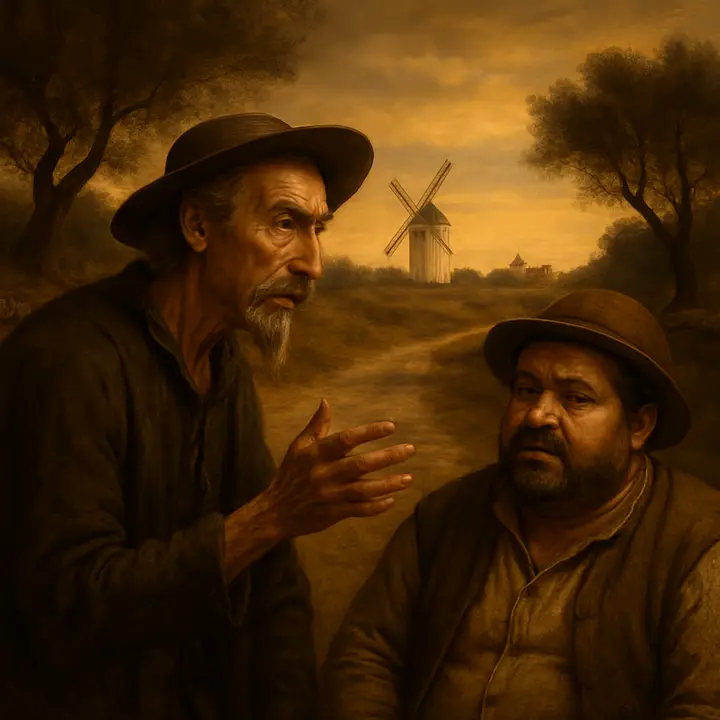
- Sancho and the cousin express disbelief; Don Quixote defends the truth of his experience and promises more tales.
Chapter 23 in pictures
Analysis
This chapter functions as a framed fantastical episode that intensifies the novel’s interplay between reality and illusion. The Montesinos episode presents a nested narrative: Don Quixote’s personal testimony reporting other characters’ stories (Montesinos telling Durandarte’s fate), which complicates authority and veracity—readers must weigh Don Quixote’s first-person certainty against Sancho’s commonsense skepticism and the cousin’s doubts. Thematically, enchantment and suspension of time recur: Don Quixote insists that a brief hour above ground corresponds to days below, reinforcing the novel’s recurring motif of subjective time and the malleability of perception when filtered through chivalric imagination. Symbolically, the crystal palace, the preserved flesh of Durandarte, and the mummied heart dramatize preservation versus decay, and the way stories (and love) are embalmed in memory and speech.
Structurally, the episode expands the book’s world by invoking legendary figures (Merlin, Guinevere) and by connecting local geography (the Lakes of Ruidera, the Guadiana) to mythical transformations, blending folktale, romance, and pseudo-historical detail. Narratively, Cervantes uses dialogic disputation—Don Quixote’s elaborate account interrupted by interjections from Sancho and the cousin—to place doubt alongside wonder, inviting readers to evaluate truth claims and to see how Don Quixote’s chivalric reading of the world creates its own internal consistency. The chapter also advances character: Don Quixote’s devotion to Dulcinea remains immutable, even when presented with mockery, and Sancho’s practical incredulity emphasizes his role as the tether to ordinary reality.
Important quotes
“A matter of some twelve or fourteen times a man’s height down in this pit, on the right-hand side, there is a recess or space, roomy enough to contain a large cart with its mules.”
Don QuixoteDon Quixote opens his account by describing the physical recess in the cave where his vision begins, grounding the fantastic in measurable detail.
“This is my friend Durandarte, flower and mirror of the true lovers and valiant knights of his time.”
MontesinosMontesinos identifies the knight in the tomb and introduces the tale of Durandarte’s enchantment and the heart he carried to Belerma.
“I will take no pledge of her,' I replied, 'nor yet can I give her what she asks, for all I have is four reals; which I gave...”
Don QuixoteDon Quixote claims to give the four reals he possesses to Dulcinea’s messenger, showing his devotion and the episode’s mix of nobility and comic triviality.
Characters in Chapter 23
- Don Quixote
- Sancho Panza
- Samson Carrasco
- Montesinos
- Durandarte
- Belerma
- Guadiana
- Ruidera
- Merlin
- Dulcinea del Toboso
- Queen Guinevere
- Quintañona
All chapter summaries ›Characters ›
Read Don Quixote illustrated
Every scene in these notes comes from the Book2Life reader, where the full public-domain text is illustrated as you read, with character portraits and narration. Free in your browser and on iPhone.
