Don Quixote Chapter 5 Summary
Sancho and Teresa argue
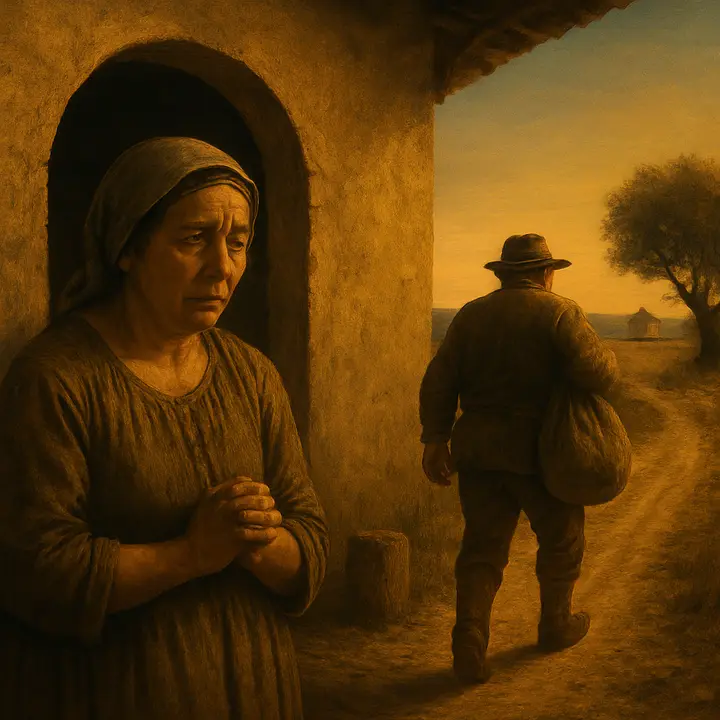
Sancho returns home excited to rejoin Don Quixote; he and his wife Teresa argue over his leaving and the prospect of his daughters' social rise.
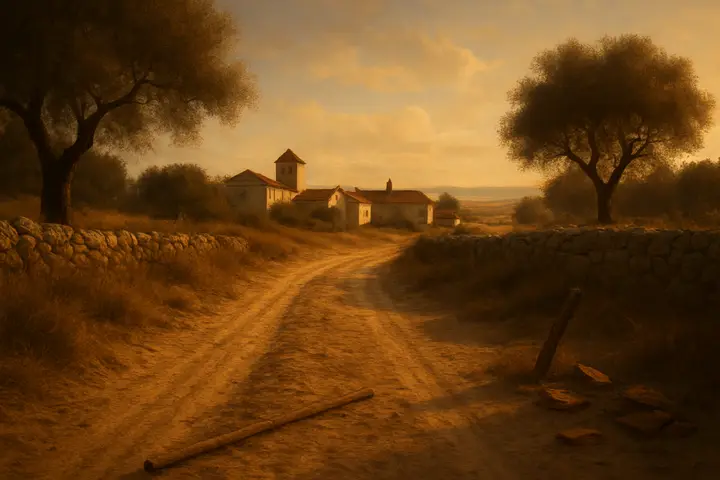
Summary
The chapter opens with the translator's aside that he considers this chapter almost apocryphal because Sancho speaks with an unexpectedly subtle and reasoned tone. Sancho arrives home elated and Teresa quickly asks the cause of his cheer. Sancho explains that he intends to return to Don Quixote, who is planning a third sally, and that necessity and the hope of finding more money compel him to go. He admits he is torn by the pleasure of adventure and the sorrow of leaving his family.
Teresa and Sancho then launch into an extended, practical argument about the consequences of his possible success: Sancho dreams of being made governor of an island and marrying his daughter Mari-Sancha into high rank; Teresa insists on keeping the family’s modesty and marriage Mari-Sancha to a local, respectable man. They debate pride, social appearance, and the dangers of rapid elevation. Sancho invokes a preacher’s maxim about the power of present appearance to override remembered low origins, arguing that new dignity will silence past shame; Teresa counters with proverbs about envy and the social costs of sudden ascent. The scene closes with Teresa reluctantly submitting to her husband's plans while lamenting the loss she imagines for her daughter, and Sancho going back to Don Quixote to prepare for departure.
Key events
- Translator's aside about the chapter's doubtful authenticity
- Sancho returns home in high spirits and tells Teresa he'll rejoin Don Quixote
- Sancho explains hope for money and a future governorship
- Teresa resists social elevation for their daughter, arguing for a local match
- Sancho defends ambition using a preacher's opinion about present appearance
- They argue proverbs and practicalities before Teresa yields reluctantly
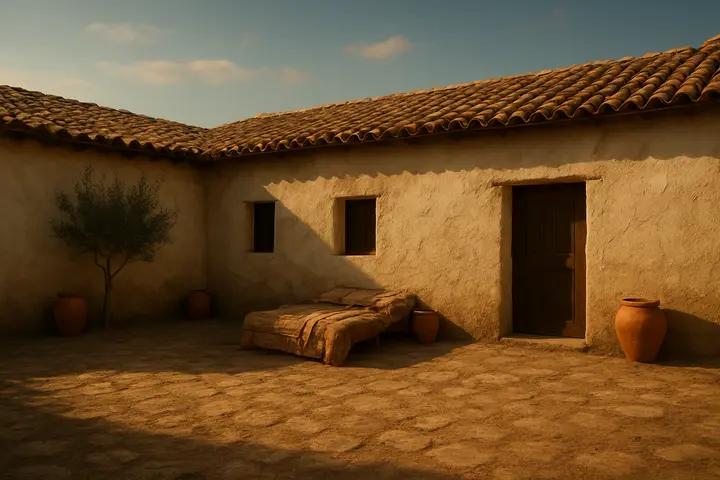
Chapter 5 in pictures
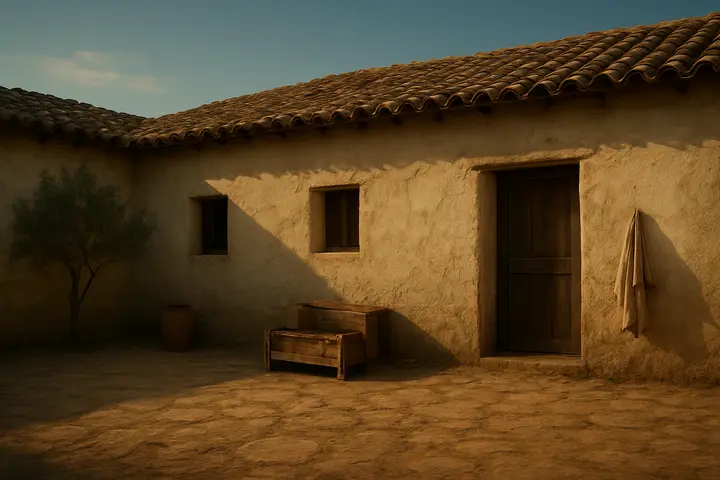
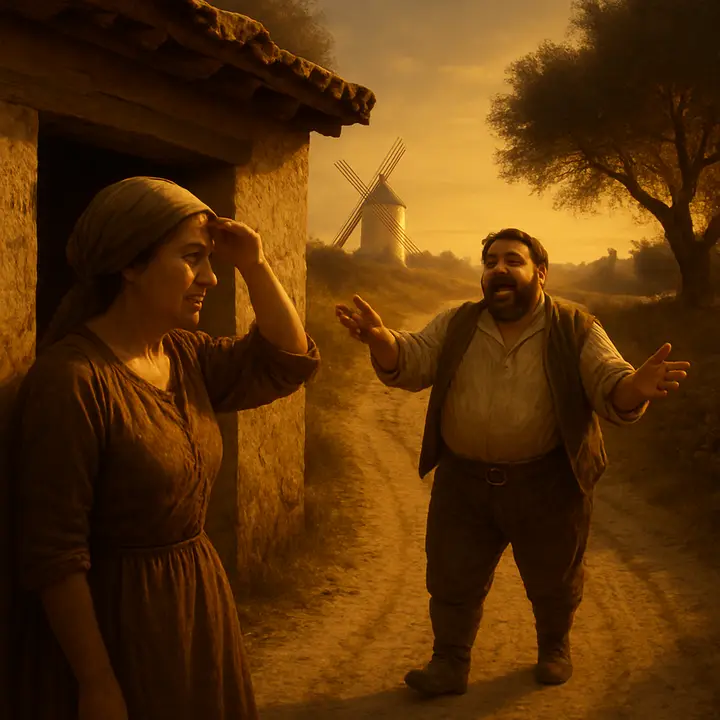
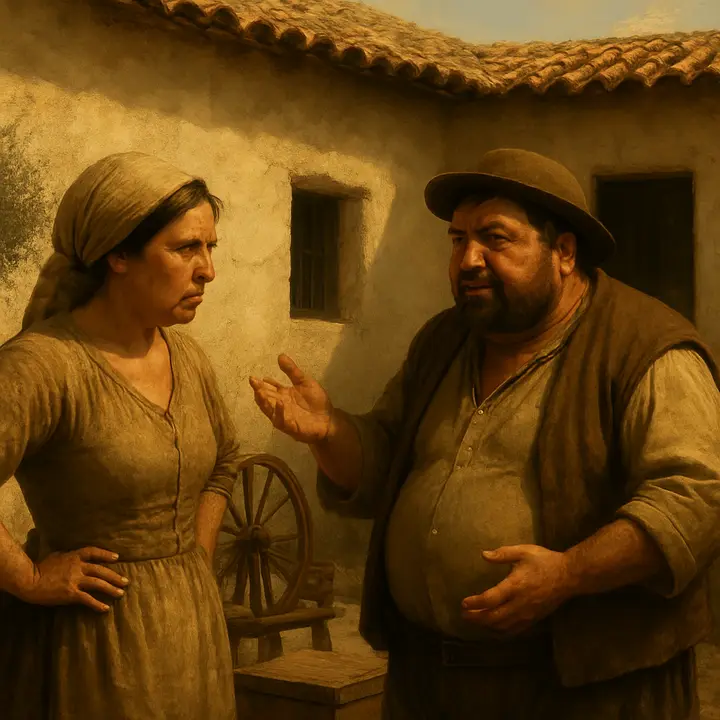
Analysis
This chapter functions as a domestic counterweight to the knightly adventures by bringing the consequences of Don Quixote’s and Sancho’s pursuits into the household. It deepens Sancho’s character: he is comic and earthy but also capable of pragmatic, even rhetorical, reasoning about status, fortune, and family strategy. Teresa represents conservative, communal values — a voice of prudence, social memory, and maternal protectiveness. Their exchanges crystallize central themes: the tension between aspiration and rootedness, appearance versus origin, and how fortune reshapes identity.
Structurally the chapter is a pause in action that humanizes the protagonists and grounds the novel’s larger satire of chivalric ambition in everyday concerns. The translator’s framing remark introduces narrative self-consciousness and irony: by questioning Sancho’s eloquence the narrator highlights the novel’s play with reliability and voice. Symbolically, Mari-Sancha’s prospective elevation dramatizes the novel’s recurring interest in social mobility and the performative nature of nobility — clothing, titles, and outward respect can obscure past lowliness. The dialogue also foreshadows conflicts between ambition and community expectations that will recur, while Sancho’s citation of the preacher reveals Cervantes’ interest in how received wisdom and rhetoric are used to justify personal choices.
Important quotes
“Wife, if it were God’s will, I should be very glad not to be so well pleased as I show myself.”
Sancho PanzaSancho explains the mixed feelings of joy and sorrow about leaving home to rejoin Don Quixote.
“The best sauce in the world is hunger, and as the poor are never without that, they always eat with a relish.”
Teresa PanzaTeresa argues that poverty gives people a strong appetite for life and cautions against abandoning their modest, known existence.
Characters in Chapter 5
- Sancho Panza
- Teresa Panza
- Don Quixote
- Sanchico
- Mari-Sancha
- Cascajo
- Infanta Doña Urraca
- the padre
All chapter summaries ›Characters ›
Read Don Quixote illustrated
Every scene in these notes comes from the Book2Life reader, where the full public-domain text is illustrated as you read, with character portraits and narration. Free in your browser and on iPhone.
