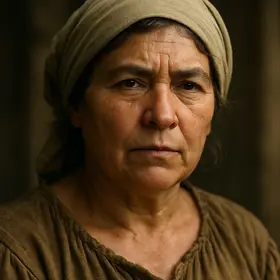
Teresa Panza in Don Quixote
Minor character
Sancho Panza’s practical, shrewd wife who keeps the household grounded and eyes the worldly rewards of her husband’s service to Don Quixote.
Who is Teresa Panza?
Teresa Panza is the pragmatic, no-nonsense wife of Sancho Panza who appears whenever village life and Sancho’s ventures intersect with Don Quixote’s adventures. She argues with Sancho about the risks of leaving home (insisting on sensible matches for their daughter and caution about social elevation), consents to his departure only after securing promises of material provision, and later reacts with astonished pride when news of Sancho’s mock governorship arrives. Teresa composes lively letters full of domestic news and requests small gifts, sends acorns and cheese to the duke and duchess, and receives odd presents that spark comic fantasies about rank and fashion. Across scenes at home, at the duke’s court by proxy, and on Sancho’s return, she provides a steady, earthy counterpoint to the chivalric and theatrical worlds Sancho and Don Quixote inhabit.
In the book: Teresa Panza is Sancho Panza’s practical, no-nonsense wife, a shrewd village woman who keeps her household grounded while Sancho pursues adventures with Don Quixote. She embodies common sense and social ambition in equal measure, urging prudence yet eyeing the tangible benefits Sancho might bring home. Through her letters and conversations, she provides a down-to-earth counterpoint to chivalric fantasies and highlights the everyday concerns of family and livelihood.
Personality
- Practical
- She insists Sancho secure wages or clear assurances before leaving home (Chapter 7) and argues for a modest, respectable marriage for their daughter (Chapter 5).
- Shrewd
- She dictates careful replies and negotiates with the page and local clergy when the duchess’s messenger announces Sancho’s governorship (Chapter 50).
- Proud
- When the duchess’s gifts and the news of Sancho’s office arrive, Teresa immediately imagines coaches, hoop petticoats, and grand ambitions (Chapter 50).
- Staunchly domestic
- She keeps house anxiously while Sancho is away and sends acorns and cheese as tokens to the duke and duchess (Chapter 52 and Chapter 57).
- Voice of common sense
- Her proverbs and warnings temper Sancho’s dreams of instant elevation, arguing practical social consequences of sudden rise (Chapter 5).
Character arc
Teresa Panza remains largely consistent from first to last appearance: she begins as a pragmatic village wife who counsels caution when Sancho contemplates leaving for another sally, and she continues to operate in that pragmatic register throughout the episodes that follow. Early on she negotiates the material terms of Sancho’s departure and argues over appropriate matches and appearances for their daughter, revealing both anxiety and keen social awareness. As Sancho becomes briefly prominent at the duke and duchess’s entertainments, Teresa shifts into an amused, ambitious posture—dictating replies, imagining elevated fashions, and accepting gifts—yet her ambitions are domestic and concrete rather than romanticized. When news and letters arrive from the court she reacts with comic pride but maintains practical concerns for household well‑being. By the end she remains the anchor of Sancho’s domestic world: proud of small honors, watchful of real needs, and continually the plainspoken counterweight to chivalric folly rather than someone transformed by it.
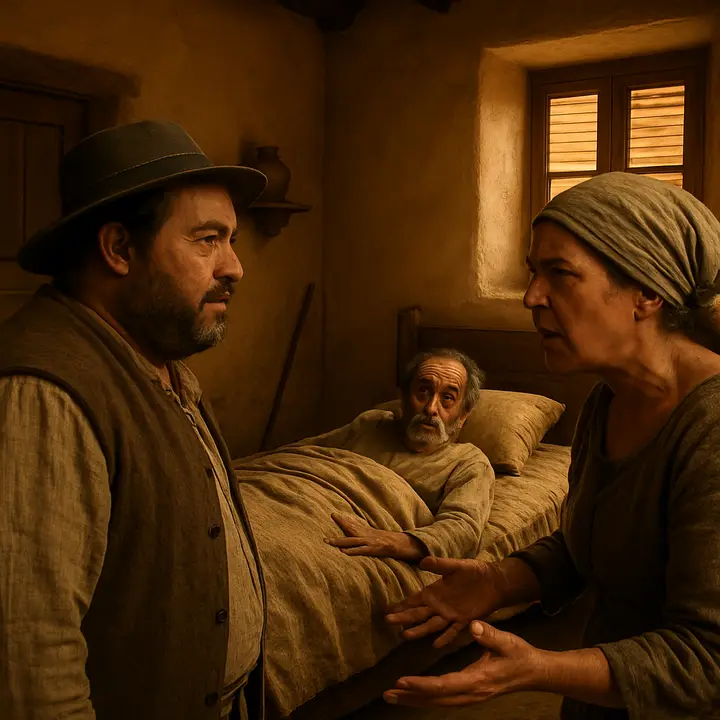
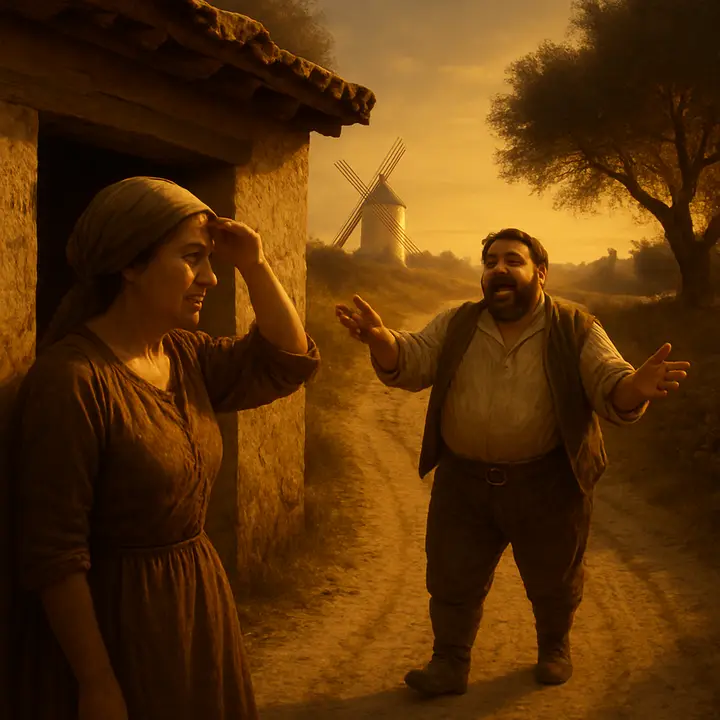
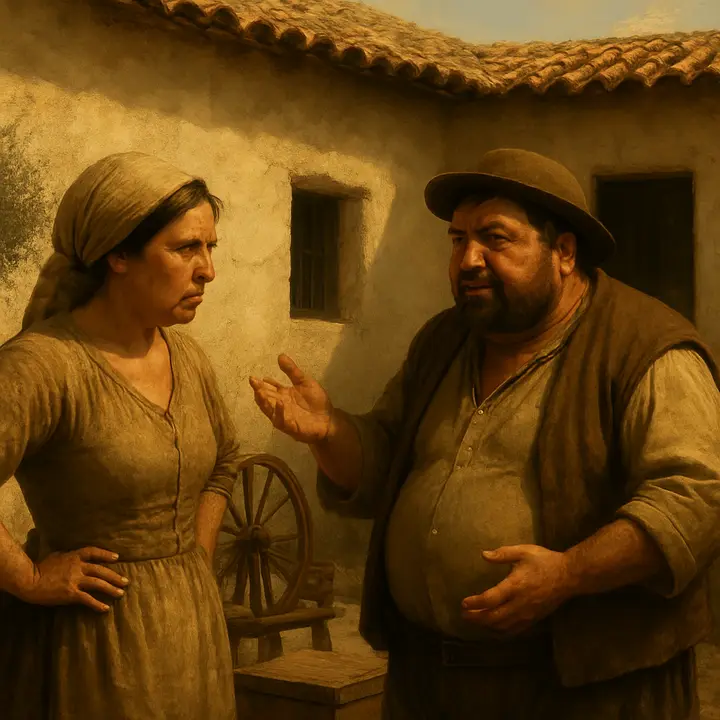
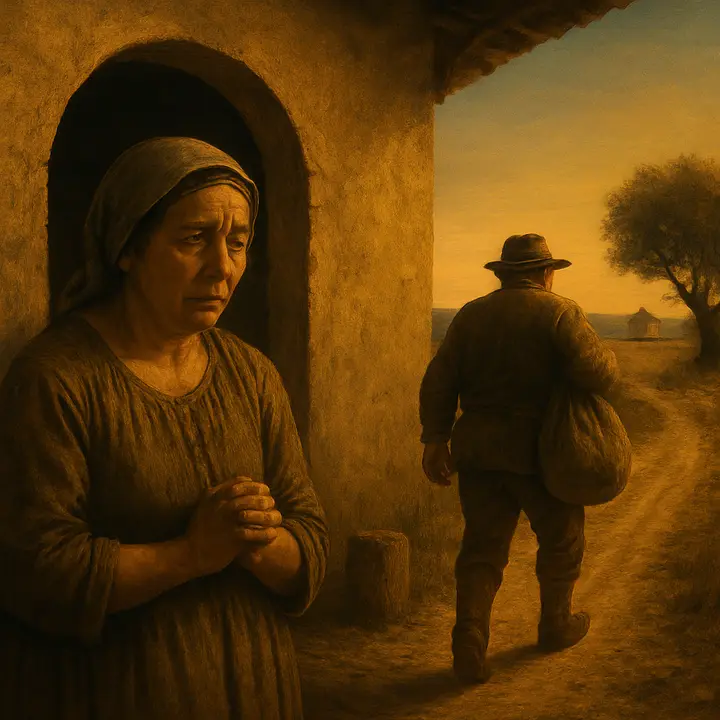
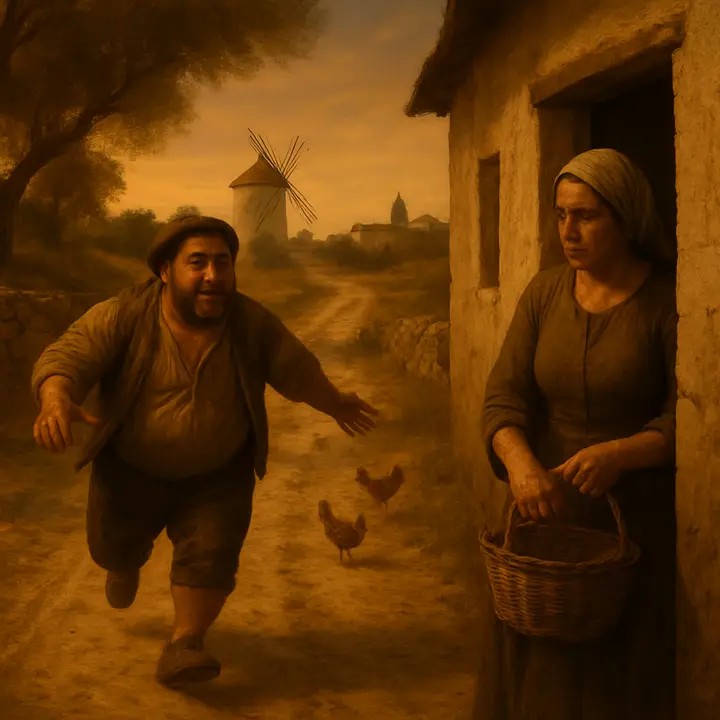
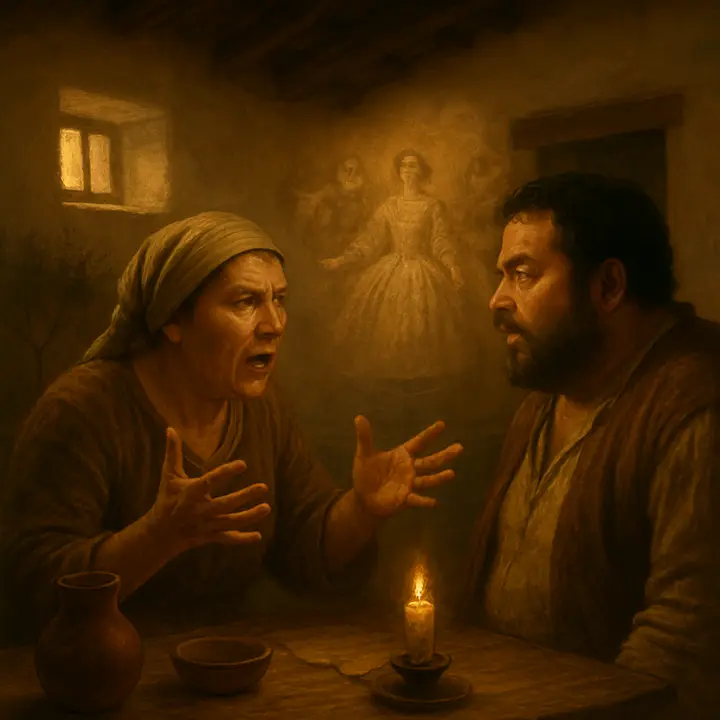
Teresa Panza in pictures
Relationships
- Sancho Panza Her husband; she argues with him over his leaving, conditions his departure on material security, and anxiously receives news of his fortunes.
- Don Quixote Her husband’s master; she disapproves of the chivalric chaos he causes yet benefits indirectly when Sancho gains favors tied to Quixote’s adventures.
- The Duchess Recipient and source of comic exchange—Teresa sends gifts and receives trinkets and letters that excite her social fantasies.
- The Duke A noble correspondent whose household’s jokes and gifts (via the page) alter Teresa’s hopes and provoke village commentary.
- The Priest Local authority who reads and examines the messenger’s letters and mediates the village’s response to news about Sancho and Teresa.
- The Innkeeper Indirectly connected through news and visitors: Teresa’s household life and the reports carried by travelers and pages reach and involve inn circles.
Quotes by Teresa Panza
“The best sauce in the world is hunger, and as the poor are never without that, they always eat with a relish.”
Chapter 5Teresa argues that poverty gives people a strong appetite for life and cautions against abandoning their modest, known existence.
“Ah, what a good, plain, lowly lady!”
Chapter 50Teresa’s affectionate reaction to the duchess’s familiar and humble tone in her letter, revealing Teresa’s admiration for aristocratic kindness and the social comedy that follows.
“When they offer thee a heifer, run with a halter; when they offer thee a government, take it; when they would give thee a county, seize it;”
Chapter 50A proverb-dense maxim that expresses Teresa’s practical opportunism and the Panzas’ folk-wisdom approach to sudden elevation.
“The letter your highness wrote me, my lady, gave me great pleasure, for indeed I found it very welcome.”
Chapter 52Opening line of Teresa’s vivid, humorous letter to the duchess, which the court reads aloud to comic effect.
Why Teresa Panza matters
Teresa Panza embodies the novel’s counterbalance to chivalric illusion: domestic common sense, material prudence, and earthy social ambition. Through her proverbs, letters, and reactions to gifts and rumors, Cervantes shows how grand narratives of honor and adventure ripple through ordinary households, producing comedy and real stakes. Teresa’s presence keeps the story grounded—reminding readers that chivalry’s consequences are practical (family security, marriage prospects, reputation)—and she highlights themes of social mobility, appearance versus reality, and the gap between fantasy and everyday needs.
Chapters with Teresa Panza
More Don Quixote characters
 Don QuixoteProtagonist
 Sancho PanzaMajor character
 Dulcinea del TobosoMinor character
- RRocinanteMajor character
 The DukeMajor character
- DDappleMinor character
 The BarberMajor character
 Cide Hamete BenengeliNarrator
All chapter summaries ›Characters ›
Read Don Quixote illustrated
Every scene in these notes comes from the Book2Life reader, where the full public-domain text is illustrated as you read, with character portraits and narration. Free in your browser and on iPhone.
