Frankenstein Chapter 4 Summary
Obsessive Study and Discovery
Victor devotes himself to natural philosophy, studies anatomy and decay, and discovers how to bestow life, beginning his secret work.
Summary
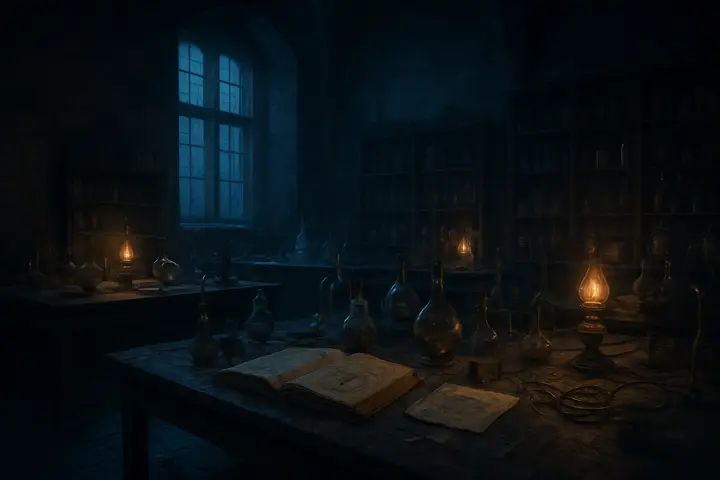
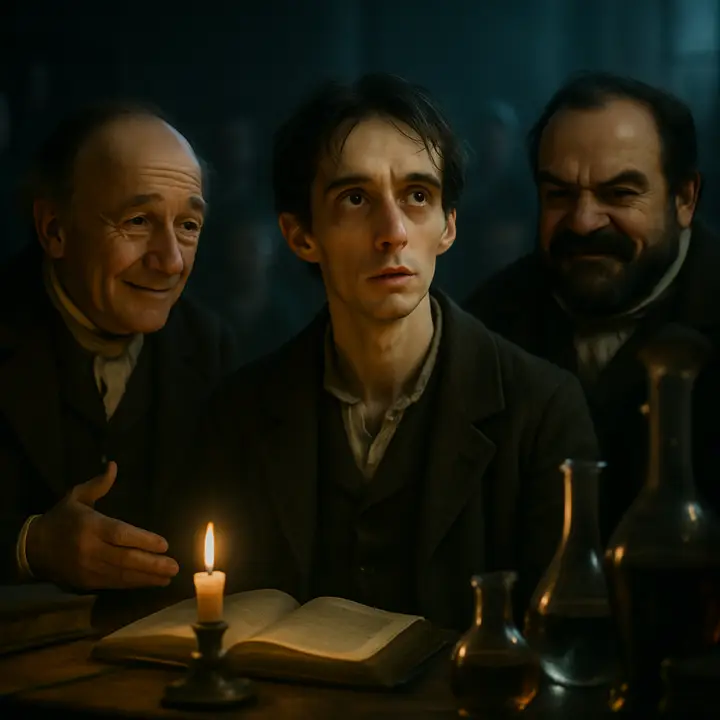
Victor immerses himself in natural philosophy and chemistry at Ingolstadt, reading widely, attending lectures, and forming relationships with two professors, M. Krempe and M. Waldman. He finds Krempe knowledgeable despite an off-putting manner and discovers in Waldman a humane, encouraging mentor who clarifies difficult subjects and supports his progress. Over two years his application deepens into ardour; he makes improvements to chemical instruments and wins admiration at the university.
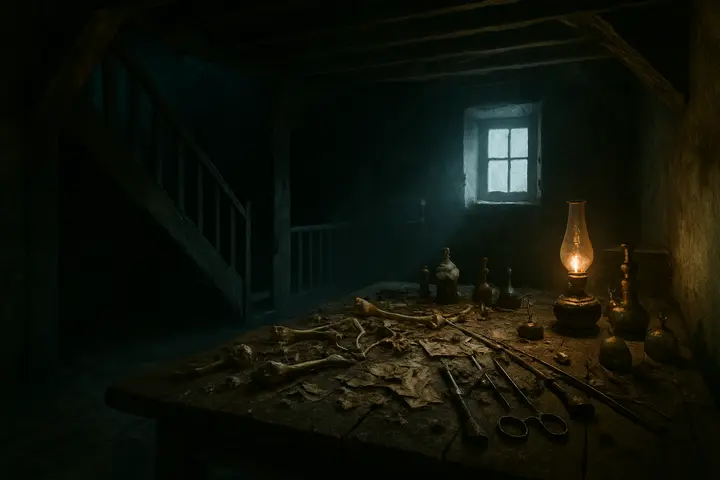
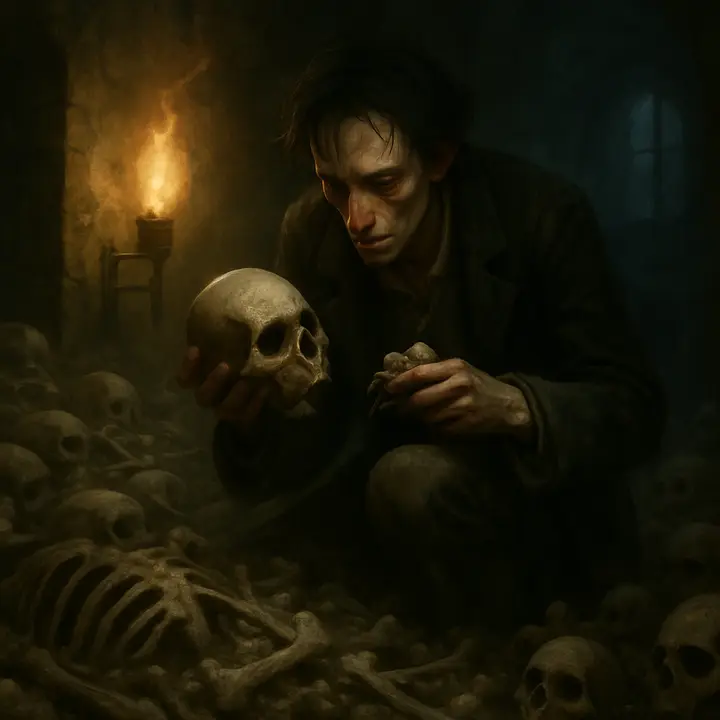
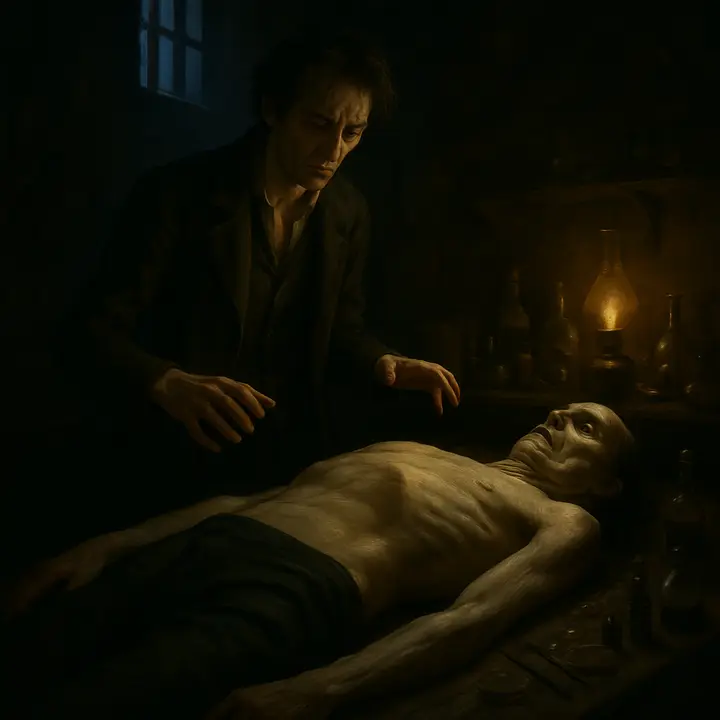
Driven by the central question of the source of life, Victor narrows his focus to physiology and the processes connecting life and death. He studies anatomy, spends time in charnel-houses, and observes the decay of the human body to understand how life arises from death. A sudden intellectual breakthrough comes: after long toil he claims to discover the cause of generation and life and that he can confer animation on lifeless matter. Overwhelmed with delight and ambition, he decides to attempt creating a human being, choosing to construct a gigantic form to expedite assembly and to test his power in a grand way. He gathers materials from dissecting rooms and slaughterhouses, secludes himself in a solitary upper chamber as his workshop, and works with an almost frantic compulsion through the seasons. His pursuit isolates him, emaciates him, and weakens his affections; he recognizes that his silence will trouble his family but cannot tear himself away. As his creation nears completion, he endures fever, nervousness, and moral conflict about the cost of his obsession and the dangers of knowledge.
Key events
- Victor studies natural philosophy intensely and befriends M. Waldman; M. Krempe criticizes his earlier readings.
- Two years of concentrated study lead Victor to notable laboratory improvements and recognition.
- He turns his study toward physiology, anatomy, and the decay of bodies to investigate life’s origin.
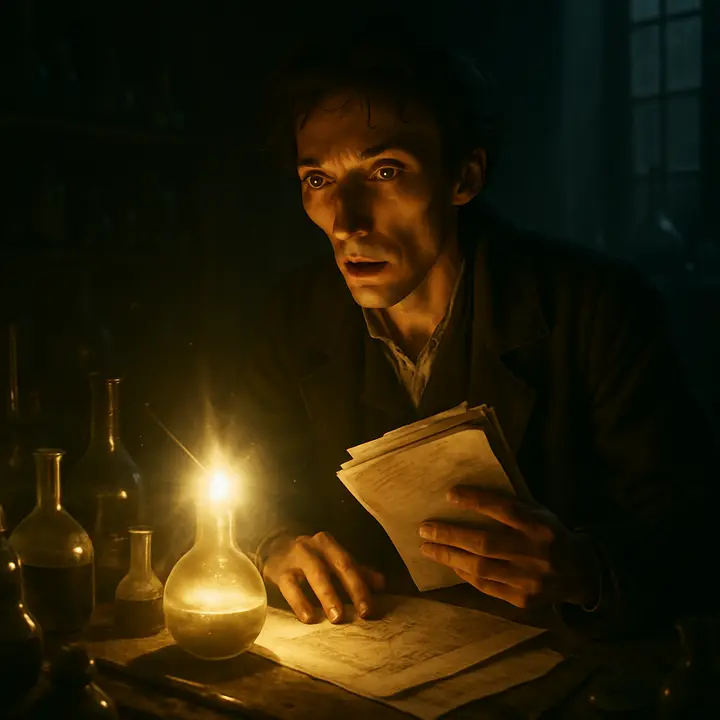
- Victor experiences a sudden discovery: he claims to find the cause of generation and can bestow animation.
- He resolves to create a human being of giant stature, collects materials, and begins secret experiments.
- Secluded in a filthy upper-room workshop, Victor works obsessively, neglecting health and family.
Chapter 4 in pictures
Analysis
This chapter marks a crucial shift from Victor’s general scientific study to obsessive, secretive creative ambition. It develops the novel’s central theme of dangerous knowledge: Victor’s progress is presented as brilliant yet isolating, and Shelley repeatedly links intellectual triumph with moral and physical cost. The contrast between Krempe’s bluntness and Waldman’s encouraging mentorship highlights competing scientific temperaments—cynicism versus charismatic promotion of discovery—and helps explain Victor’s susceptibility to grandiose projects. The scenes in charnel-houses and the emphasis on decay create a visceral atmosphere that foreshadows the unnatural act Victor will commit and frames creation as emerging directly from death. Narrative technique remains first-person reflective: Victor addresses Walton (and through him, the reader), combining pride in achievement with self-reproach and moralizing warnings, which complicates his reliability—he insists he is not mad, yet his account is colored by fervour and later regret. Symbolically, the “light” of discovery both illuminates and blinds: it offers knowledge while erasing the steps that led to it, suggesting knowledge that isolates rather than integrates. The chapter also structurally prepares the reader for the clandestine creation by detailing the materials, the workshop, and Victor’s physical and psychological deterioration, thereby tightening suspense while thematizing the costs of transgressing natural bounds.
Important quotes
“From this day natural philosophy, and particularly chemistry, in the most comprehensive sense of the term, became nearly my sole occupation.”
Victor FrankensteinOpens the chapter by stating the shift to intense study that drives the rest of the events.
“After days and nights of incredible labour and fatigue, I succeeded in discovering the cause of generation and life; nay, more, I became myself capable of bestowing animation upon lifeless matter.”
Victor FrankensteinVictor announces his central discovery—both the moment of triumph and the ethical turning point that propels his secret project.
“I will not lead you on, unguarded and ardent as I then was, to your destruction and infallible misery.”
Victor FrankensteinVictor cautions Walton (and the reader) about the dangers of uncontrolled ambition, signaling his own awareness of risk even amid pride.
Characters in Chapter 4
All chapter summaries ›Characters ›
Read Frankenstein illustrated
Every scene in these notes comes from the Book2Life reader, where the full public-domain text is illustrated as you read, with character portraits and narration. Free in your browser and on iPhone.
