
Alphonse Frankenstein in Frankenstein
Major character
Victor’s wise, compassionate father who offers moral counsel, steadiness, and domestic care throughout the family’s crises.
Who is Alphonse Frankenstein?
Alphonse Frankenstein is the patriarch of the Frankenstein household: a public servant of integrity who rescues and shelters Beaufort, later marries Caroline Beaufort, and raises Victor in a household shaped by duty and charity. He writes the urgent letter that summons Victor home after William’s murder and repeatedly counsels moderation, gentleness, and social responsibility as the family collapses under successive tragedies. Alphonse arranges support for Victor’s recovery (sending Henry to accompany him to England), encourages marriage to restore domestic happiness, and comforts his children while misreading the source of Victor’s suffering because Victor withholds the truth. He provides financial and emotional steadiness, presses for reunion and normalcy, and acts as a moral anchor that highlights Victor’s drift into secrecy and obsession. Over the course of the narrative his calm authority is tested by grief—William’s murder, Justine’s execution, Henry’s death, and Elizabeth’s murder—and he ultimately succumbs to shock and sorrow, dying after the final household catastrophe.
In the book: Alphonse Frankenstein is Victor’s wise, compassionate father and a stabilizing presence whose counsel and affection embody duty, moderation, and moral responsibility. Through his guidance, letters, and steady concern for family, he anchors the human world that Victor drifts from, highlighting themes of parental care, social obligation, and the costs of isolation without revealing key plot turns.
Personality
- Compassionate
- He finds the impoverished Beaufort, shelters him, and later marries Beaufort’s daughter Caroline to provide her protection (Chapter 1).
- Duty‑bound
- He writes to Victor urging him to return gently after William’s murder, emphasizing family duty over vengeance (Chapter 7).
- Stabilizing
- He repeatedly attempts to restore domestic happiness—proposing a prompt marriage for Victor and arranging Henry’s company to aid recovery (Chapters 18, 22).
- Practical organizer
- He arranges for Henry Clerval to accompany Victor on the journey to England to help his son’s spirits (Chapter 18).
- Grieving parent
- He endures the family’s losses with visible sorrow, and ultimately sinks under the shock after Elizabeth’s murder (Chapter 23).
Character arc
Alphonse appears first as a model of civic virtue and parental devotion: he rescues Beaufort, marries Caroline to secure her welfare, and helps raise Victor in a household governed by patience and charity. As Victor leaves for university and then returns, Alphonse repeatedly plays the role of moral counselor—writing to summon Victor after William’s murder, urging gentleness and social order, and attempting to rouse his son from despair. He takes practical steps to heal the family, from arranging companions for Victor’s travels to recommending marriage to restore domestic equilibrium. Yet Alphonse never learns the true cause of the family’s ruin; Victor’s secrecy prevents him from addressing the crisis at its root. The sequence of deaths—William, Justine’s execution (which Alphonse shares in grieving), Clerval’s murder, and finally Elizabeth’s death—wears away his strength and hope. He remains steadfast and loving to the end, but the cumulative shock of Elizabeth’s murder overwhelms him, and he dies soon after Victor’s return, marking the collapse of the home he once stabilized.
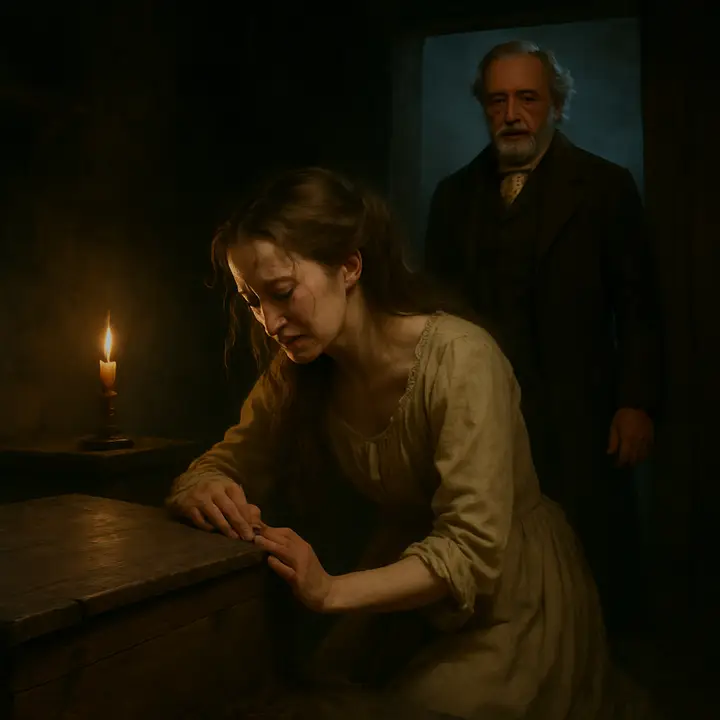
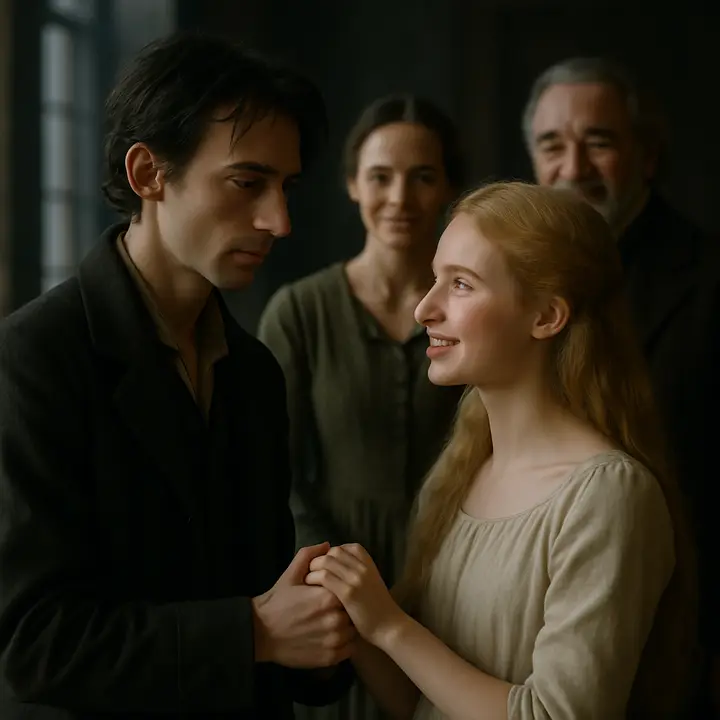
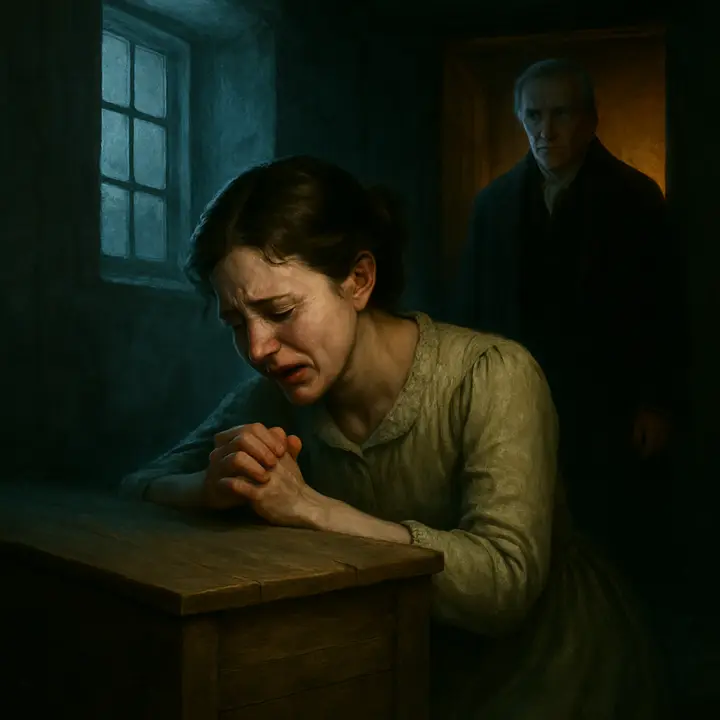
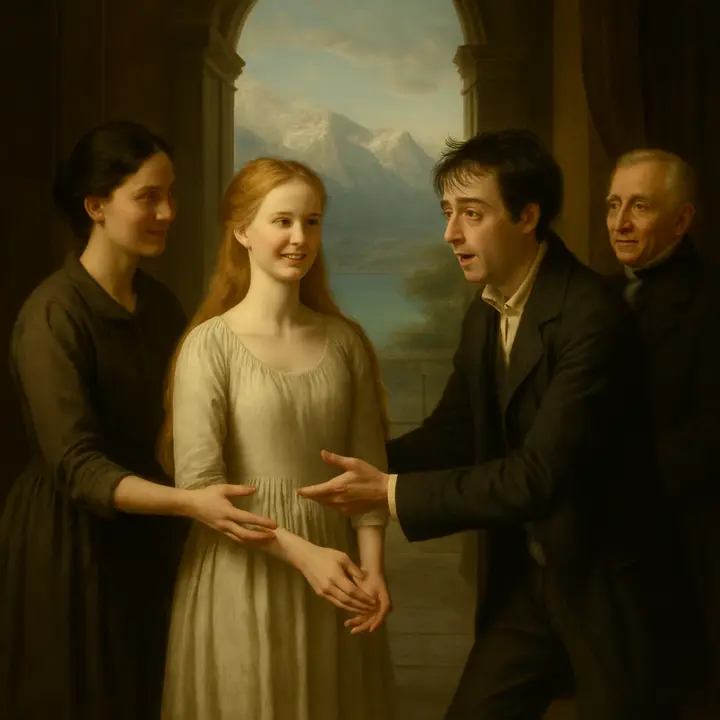
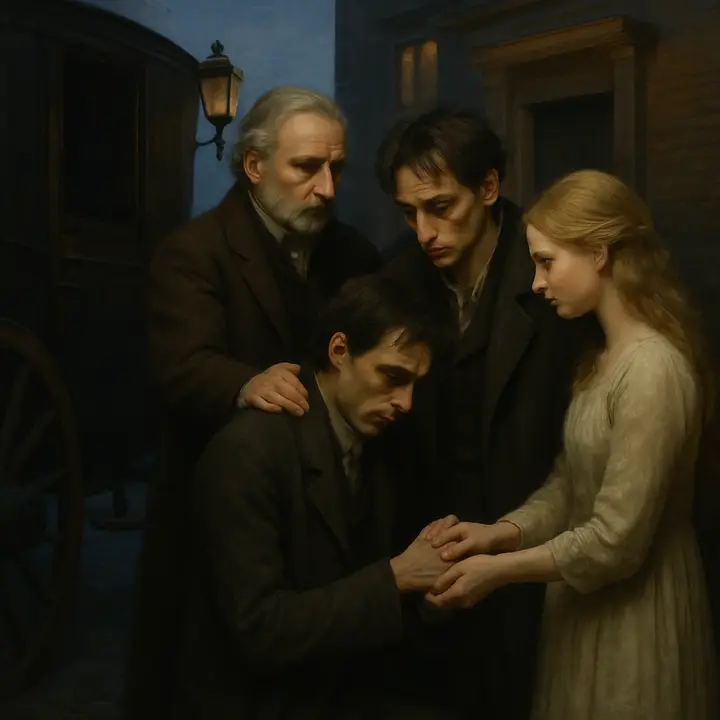
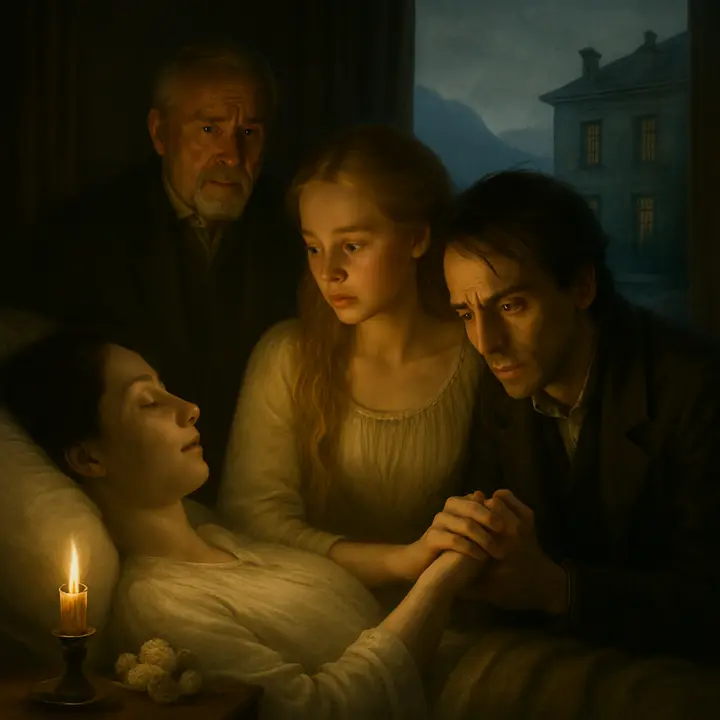
Alphonse Frankenstein in pictures
Relationships
- Victor Frankenstein Father and moral counsellor who repeatedly urges Victor toward duty and domestic restoration while unaware of Victor’s secret.
- Caroline Beaufort Frankenstein Wife; he marries her after rescuing her father Beaufort and treats her with reverent protection.
- William Frankenstein Young son whose murder prompts Alphonse to summon Victor home and catalyzes the family’s grief.
- Elizabeth Lavenza Beloved daughter/cousin figure whose distress and later murder deeply wound him and contribute to his decline.
- Henry Clerval Friend arranged to accompany Victor to England at Alphonse’s suggestion to aid his recovery.
- Ernest Frankenstein Son who remains part of the grieving household sustained by Alphonse’s care.
Quotes by Alphonse Frankenstein
“William is dead!—that sweet child, whose smiles delighted and warmed my heart, who was so gentle, yet so gay! Victor, he is murdered!”
Chapter 7Alphonse announces William’s death in a letter that summons Victor home and frames the family’s grief.
“I am happy to remark, my dear son, that you have resumed your former pleasures and seem to be returning to yourself.”
Chapter 18Victor’s father opens a candid conversation about Victor’s melancholy and suggests marriage to Elizabeth to restore domestic happiness.
“You travelled to seek happiness, but a fatality seems to pursue you.”
Chapter 21Victor’s father comforts him in prison, reflecting on the tragic pattern that has followed Victor since his travels and experiments.
Why Alphonse Frankenstein matters
Alphonse embodies the book’s ideals of parental care, civic responsibility, and moral moderation; he contrasts with Victor’s reckless ambition and secretive isolation. His efforts to restore domestic order, to counsel gentleness over vengeance, and to secure the family’s welfare underline the novel’s critique of individualism divorced from social duty. His inability to access Victor’s inner truth also demonstrates the limits of familial authority when confronted by modern scientific transgression, and his decline and death show how the costs of Victor’s ambition extend outward, devastating those whose lives are rooted in compassion and social obligation.
Chapters with Alphonse Frankenstein
More Frankenstein characters
 Victor FrankensteinProtagonist
 The CreatureMajor character
 Elizabeth LavenzaMajor character
 Henry ClervalMajor character
 William FrankensteinMinor character
 Justine MoritzMinor character
 De LaceyMinor character
 Felix De LaceyMajor character
All chapter summaries ›Characters ›
Read Frankenstein illustrated
Every scene in these notes comes from the Book2Life reader, where the full public-domain text is illustrated as you read, with character portraits and narration. Free in your browser and on iPhone.
