Frankenstein Chapter 3 Summary
Departure and Education
Victor leaves for Ingolstadt after his mother's death, encounters professors Krempe and Waldman, and resolves to pursue modern science.

Summary
Victor recounts that at seventeen his parents determine he should study at the university of Ingolstadt; his planned departure is delayed when Elizabeth contracts scarlet fever. Victor's mother tends Elizabeth despite warnings and, though her care saves Elizabeth, she herself succumbs to the illness. On her deathbed she blesses Victor and Elizabeth and urges them toward a future together; Victor describes the family grief and the slow adjustment from immediate anguish to the need to resume duties.
After a short respite Victor finally departs. He travels to Ingolstadt, feels melancholic and apprehensive about leaving familiar faces, yet is eager for knowledge. At the university he first meets M. Krempe, an uncouth professor of natural philosophy, who scorns Victor's earlier study of alchemists and urges him to discard those books and begin anew. Victor then attends M. Waldman's lecture on chemistry: Waldman praises modern chemistry's real achievements and situates earlier alchemists as foundational but limited. Waldman's manner and lecture ignite in Victor an overpowering ambition—the conviction that he will surpass past achievements and probe creation's deepest mysteries. Victor visits Waldman, who treats him kindly, advises a broad scientific education, shows him the laboratory, and supplies a reading list. The chapter closes with Victor declaring that the day decides his future destiny: a renewed devotion to scientific study and a sense that his life is steered toward a singular purpose.
Key events
- Elizabeth contracts scarlet fever; Victor's mother nurses her and dies as a result
- Victor and family grieve; mother blesses Victor and Elizabeth before dying
- Victor departs for Ingolstadt after a short delay and fears solitude
- Victor first meets professor M. Krempe, who rejects Victor's alchemical studies
- Victor attends M. Waldman's chemistry lecture and is passionately inspired
- Waldman counsels Victor, shows his laboratory, and provides books—Victor resolves to pursue science
Chapter 3 in pictures
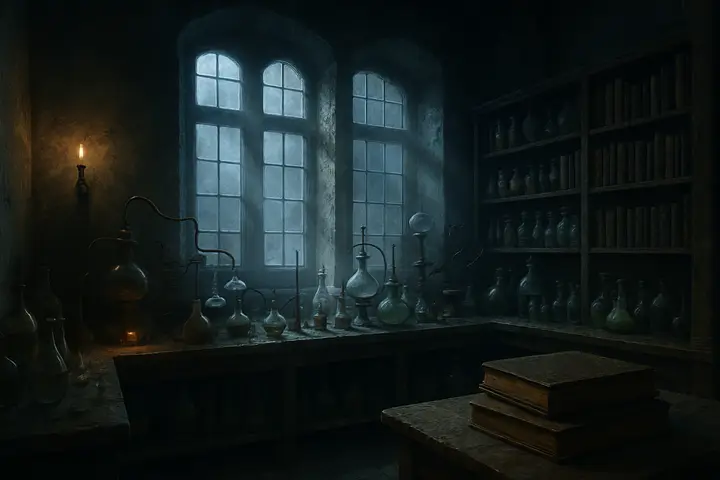
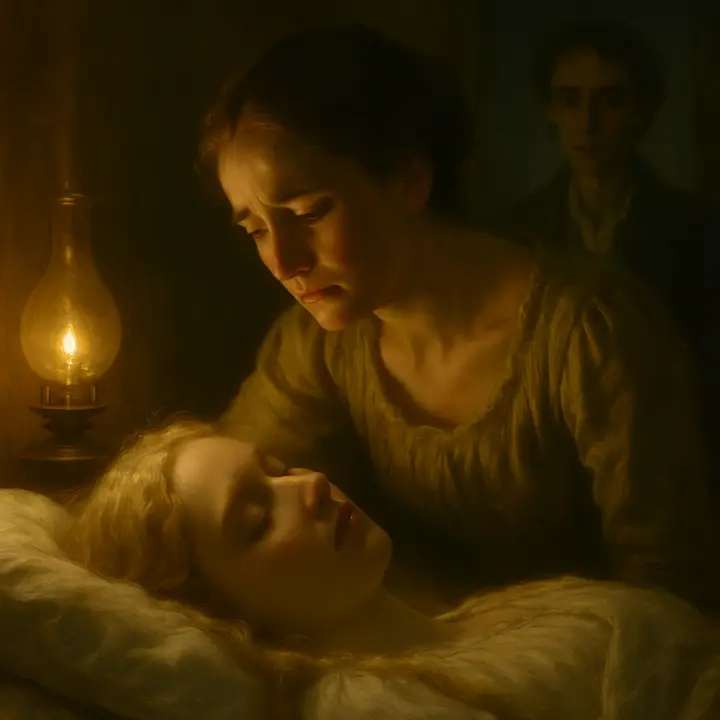
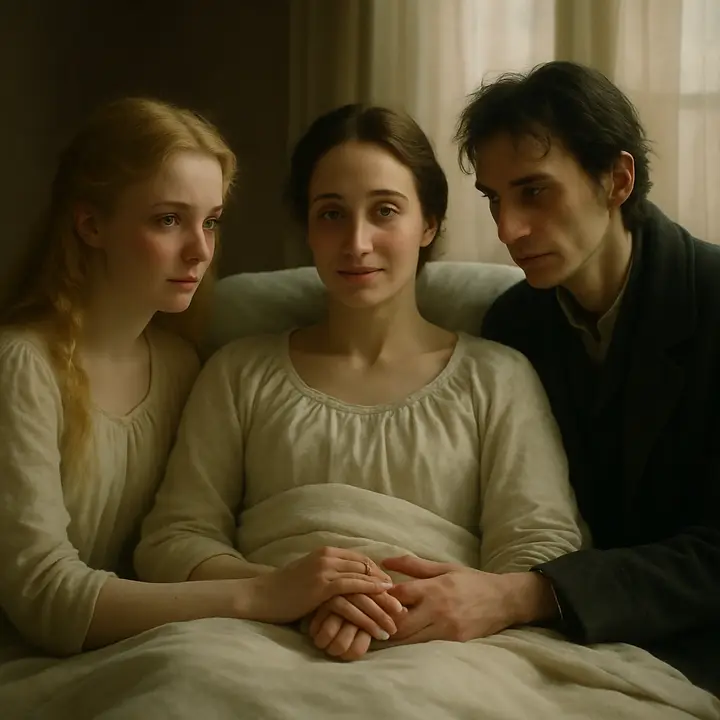
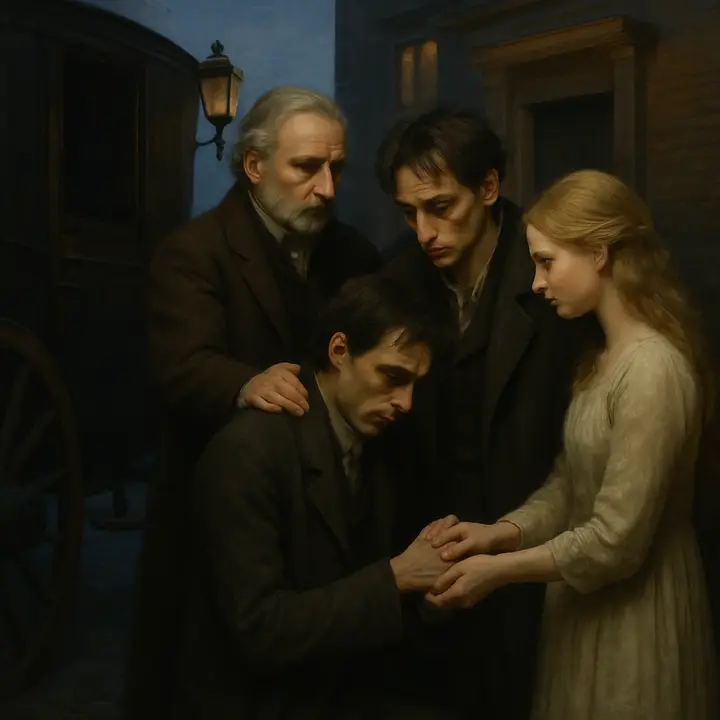
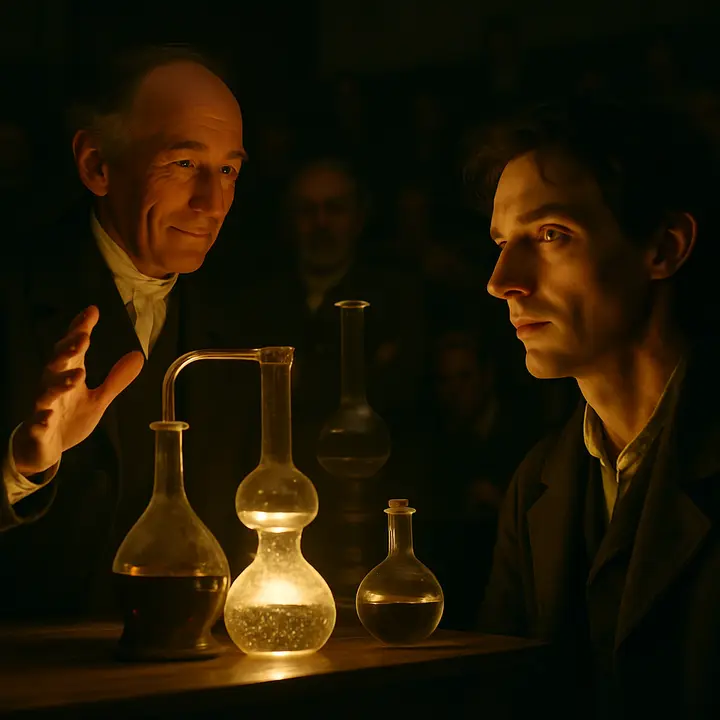
Analysis
Chapter 3 bridges family loss and the emergence of Victor's scientific vocation, linking personal tragedy to intellectual destiny. The death of Victor's mother performs two functions: it severs a domestic tie that enables his physical departure, and it emotionally primes him for the single-minded pursuit that follows. Grief is rendered not only as sorrow but as a transition that permits reorientation toward duty and ambition. The encounters with Krempe and Waldman establish a tonal contrast in scientific pedagogy—Krempe's brusque rejection of ancient authorities and Waldman's humane, persuasive advancement of modern chemistry. Narratively, this chapter is pivotal: it transforms Victor from a grieving son into a discipled student and sets the novel's central project in motion. The chapter foreshadows the ethical tension between reverence for past visions (alchemy) and the disciplined, empirical methods that Victor adopts; yet Waldman's flattering portrayal of modern science also functions as temptation, not merely instruction. The chapter's language alternates domestic lyricism (the deathbed scene) with invigorated, almost religious rhetoric about scientific conquest, suggesting that Victor's scientific zeal has quasi-religious intensity. The repeated imagery of sight—smiles, eyes, steeples, lectures—marks transitions in perception: personal loss clears the way for a new, obsessive vision. Stylistically, Victor's first-person reflection keeps the narration intimate while introducing other voices (Krempe, Waldman) that shape his future choices, reinforcing the theme of influence and responsibility in the formation of character.
Important quotes
“"My children," she said, "my firmest hopes of future happiness were placed on the prospect of your union."”
Caroline Beaufort FrankensteinMother's dying blessing links family duty and future hopes, motivating Victor and Elizabeth's bond after her death.
“"The ancient teachers of this science," said he, "promised impossibilities and performed nothing."”
M. WaldmanWaldman's public dismissal of alchemical promises and celebration of modern chemistry frames the scientific shift that influences Victor.
“So much has been done, exclaimed the soul of Frankenstein—more, far more, will I achieve; treading in the steps already marked, I will pioneer a new way, explore unknown powers, and unfold to the world the deepest mysteries of creation.”
NarratorVictor's proclamation of ambition marks the moment his scientific obsession is born and sets the novel's central project in motion.
Characters in Chapter 3
All chapter summaries ›Characters ›
Read Frankenstein illustrated
Every scene in these notes comes from the Book2Life reader, where the full public-domain text is illustrated as you read, with character portraits and narration. Free in your browser and on iPhone.
