
Don Pedro de Mendez in Gulliver's Travels
Minor character
A Portuguese sea captain who finds and kindly rescues Gulliver, restoring him to civilized life.
Who is Don Pedro de Mendez?
Don Pedro de Mendez is the Portuguese captain of a ship who discovers Lemuel Gulliver exhausted, wounded, and living rough on a rocky shore after a failed attempt at solitary exile. He recognizes Gulliver as European, brings him aboard, and treats him with steady courtesy and practical care: food, shelter, and clean clothes. Don Pedro insists only that Gulliver promise not to escape; his calm authority and humane attention help Gulliver recover physically and mentally. He sails Gulliver to Lisbon and ensures he is fitted out for the voyage home, enabling Gulliver to return to England and to his family. Don Pedro’s actions are quiet and pragmatic rather than heroic—he offers ordinary decency at a moment of crisis, a predictable moral center who facilitates Gulliver’s reintegration into human society.
In the book: When we first meet Don Pedro de Mendez, he’s a Portuguese sea captain who finds an English traveler in rough shape and immediately treats him with warmth and good sense. He matters because he offers rescue, decent clothes, and a humane steadiness that helps bring the shaken voyager back to ordinary life.
Personality
- compassionate
- He brings the wounded Gulliver aboard, feeds and clothes him, and treats him with courteous attention when he finds him near death.
- practical
- He provides immediate, realistic care—food, lodging, and new clothes—and arranges passage to Lisbon rather than grand gestures.
- steady
- He remains calmly authoritative, asking only a promise that Gulliver will not flee and patiently helping him recover.
- trustworthy
- Gulliver, initially suspicious, slowly accepts Don Pedro’s kindness and ultimately relies on him to return to England.
Character arc
Don Pedro appears late in Gulliver’s narrative as a stabilizing, external force rather than a changing figure. He enters the story already composed: a competent, humane captain who responds to a found European in distress. His role does not require transformation; instead, he functions to move Gulliver from the brink of death and alienation back toward ordinary society. Over the course of the chapters in which he appears, his steady care produces a visible change in Gulliver—physically healed, clothed, and persuaded to travel to Lisbon and then England—so Don Pedro’s arc is instrumental and constant. He does not undergo moral doubt or development; his consistent compassion and commonsense action are the means by which the protagonist’s last reintegration is achieved. By the end, he has completed his purpose: a humane rescuer who leaves Gulliver ready to attempt domestic life again, while Don Pedro himself remains the same reliable seaman who first found him.
Relationships
- Lemuel Gulliver He rescues, cares for, and escorts Gulliver to Lisbon, pressing him to promise not to flee and restoring him to health and proper clothes.
Why Don Pedro de Mendez matters
Don Pedro embodies ordinary human decency and practical morality in contrast to the extremes Gulliver has experienced. His quiet rescue and civilized courtesy model a humane alternative to the cruelty, hypocrisy, or fantastical systems Gulliver critiques elsewhere. The captain’s actions also facilitate the book’s final questions about reintegration, colonial contact, and ethical conduct: by choosing care over conquest or exploitation, Don Pedro subtly reinforces Swift’s concern with how Europeans ought to behave toward strangers and dependents.
Chapters with Don Pedro de Mendez
More Gulliver's Travels characters
 Lemuel GulliverProtagonist
 The YahoosAntagonist
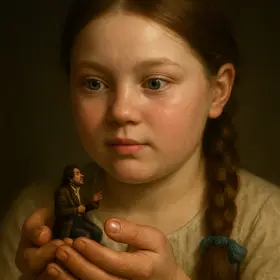 GlumdalclitchMajor character
 The Emperor of LilliputMajor character
- tthe kingMajor character
 The King of BrobdingnagMajor character
 The Queen of BrobdingnagMajor character
 The Empress of LilliputMajor character
All chapter summaries ›Characters ›
Read Gulliver's Travels illustrated
Every scene in these notes comes from the Book2Life reader, where the full public-domain text is illustrated as you read, with character portraits and narration. Free in your browser and on iPhone.
