Houyhnhnms in Gulliver's Travels
Major character
A race of rational, eloquent horses who govern by reason and embody an idealized, virtuous social order.
Who is Houyhnhnms?
The Houyhnhnms are an intelligent, horse-like species among whom Gulliver lives after being set ashore. They value reason above all, organize society through collective deliberation, and treat Yahoos as animal labor. Gulliver is taken in by a gray Master Horse and learns their language and customs; he observes their habits, laws, child-rearing, and public councils. The Houyhnhnms seek harmony, temperance, and practical breeding to sustain the species. They show curiosity and gentle care toward Gulliver but also maintain distance as a different kind of being. Through extended description and comparison with the Yahoos, Gulliver presents the Houyhnhnms as a model of rational virtue, praising their lack of fraud, envy, and formal ceremony. Their ordered festivals, athletic upbringing, and periodic national councils demonstrate a social structure designed to preserve common welfare and reasoned judgment. The Houyhnhnms’ steadiness and self-sufficiency shape Gulliver’s admiration and eventual rejection of human society.
Personality
- Rational
- Gulliver notes they converse by reasoned neighs and gestures and make decisions by conviction rather than quarrel, showing an absence of controversy.
- Temperate
- Their education forces youths to fast on oats and milk and to endure physical training to cultivate self-control and health.
- Communal
- Every fourth year a national council meets to assess resources and regulate where children are placed to balance community needs.
- Practical
- They arrange marriages and breeding deliberately—selecting mates for qualities to preserve the species rather than for ceremony or passion.
- Unemotional
- They show universal benevolence without partiality and lack ceremonial affectation, treating matters with calm reason rather than sentimentality.
Character arc
From their first appearance as rescuers of Gulliver to their final role in shaping his exile from human company, the Houyhnhnms remain essentially constant: a steady, rational ideal against which Gulliver measures humanity. They do not undergo personal transformation; rather, they function as an unchanging social mirror. Gulliver arrives awed and curious, gradually learning their language and customs while comparing them to the Yahoos. His admiration intensifies as he records their virtues—temperance, communal governance, deliberate breeding, and the absence of deceit. The Houyhnhnms themselves do not change in response to Gulliver: they receive him, examine him, and treat him according to their reasoned norms. Their fixed attitudes eventually force a decisive judgment: when the community's deliberations confront Gulliver's unnatural place among them, they choose to send him away to preserve their order. Thus the Houyhnhnms’ consistency propels Gulliver’s moral and social radicalization—he moves from curious guest to estranged admirer who rejects his species—while the Houyhnhnms remain the rational constant that catalyzes his final departure.
Relationships
- Lemuel Gulliver They take Gulliver in, teach him their language and customs, and serve as the standard by which he judges humanity.
- The Yahoos The Houyhnhnms keep and use Yahoos for labor and food, regarding them as brutish, filthy creatures in contrast to their own reason.
- The Master Horse A gray Houyhnhnm who guides and examines Gulliver closely and under whose care Gulliver spends much time.
- my master Gulliver refers to a particular Houyhnhnm as 'my master,' indicating direct authority and day-to-day supervision over him.
Why Houyhnhnms matters
The Houyhnhnms embody Swift’s exploration of reason versus passion and the limits of idealizing rationality. As a contrast to the depraved Yahoos and corrupt human society, they dramatize questions about natural law, governance by reason, and the ethics of social engineering (breeding, education, and communal allocation). Their unyielding rationality forces Gulliver—and the reader—to confront the costs of a civilization without emotion or individual liberties, making them central to the book’s satire on human nature, political institutions, and the search for moral perfection.
Chapters with Houyhnhnms
More Gulliver's Travels characters
 Lemuel GulliverProtagonist
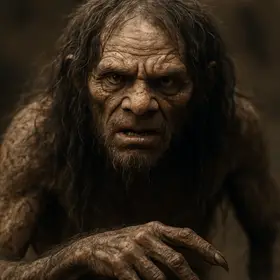 The YahoosAntagonist
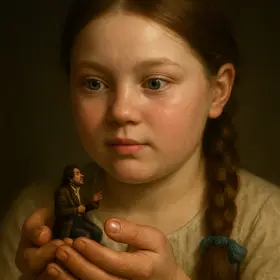 GlumdalclitchMajor character
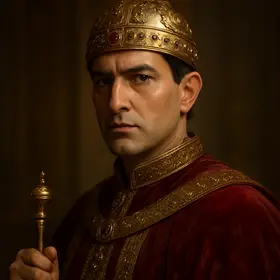 The Emperor of LilliputMajor character
- tthe kingMajor character
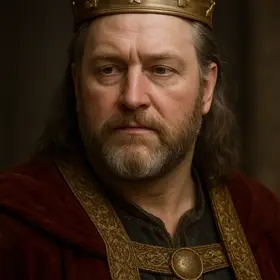 The King of BrobdingnagMajor character
 The Queen of BrobdingnagMajor character
 The Empress of LilliputMajor character
All chapter summaries ›Characters ›
Read Gulliver's Travels illustrated
Every scene in these notes comes from the Book2Life reader, where the full public-domain text is illustrated as you read, with character portraits and narration. Free in your browser and on iPhone.
