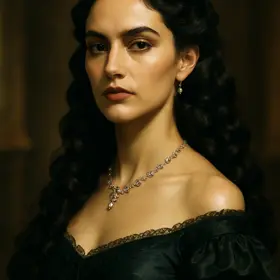
Blanche Ingram in Jane Eyre
Major character
A wealthy, proud socialite and celebrated beauty who visits Thornfield as a prospective bride for Mr. Rochester.
Who is Blanche Ingram?
Blanche Ingram arrives at Thornfield Hall as the leading lady of a fashionable visiting party, presented as an accomplished, aristocratic match for Mr. Rochester. She embodies the social ideal of beauty, breeding, and accomplishment: conversation, music, and carriage-worthy polish mark her presence. Blanche deliberately positions herself within the house-party spectacle—performing in charades, accepting private attention from the gypsy, and drawing Rochester’s public notice. Her behavior and manner display hauteur and social ambition; Thornfield’s other guests and servants remark on her qualities. Jane observes Blanche closely and understands that Rochester appears to court her as a suitably titled and attractive wife, even while Jane senses that his feeling for Blanche lacks deep passion. Blanche functions largely as a social foil—she presses the social question of rank, wealth, and appearance against Jane’s moral and emotional claims on Rochester, without any private interior scenes that complicate her public pose.
In the book: A wealthy, accomplished socialite and daughter of Lady Ingram, Blanche visits Thornfield Hall and becomes a prominent focus of the house party’s attentions, positioning herself as a potential match for Mr. Rochester. She serves as a foil to Jane Eyre, embodying aristocratic pride, beauty, and social ambition, which highlights the novel’s tensions around class, character, and genuine feeling without resolving the central romantic conflict.
Personality
- Proud
- Jane notes Blanche’s commanding appearance and polished carriage among the visiting party (Chapter 17).
- Accomplished
- Mrs. Fairfax and the guests praise Blanche’s beauty and accomplishments when Mr. Rochester’s Leas party arrives (Chapter 16–17).
- Socially ambitious
- Blanche takes the lead in the house-party entertainments and is framed as Rochester’s likely bride, signalling her marriage ambitions (Chapters 17–18).
- Theatrical
- She performs in the charades and participates in the evening’s spectacles that fill Thornfield with fashionable display (Chapter 18).
- Reserved
- After the gypsy’s visit Blanche returns pale and silent, suggesting a controlled public demeanor (Chapter 18).
Character arc
Blanche’s presence at Thornfield is steady and external rather than developmental: she is introduced as the glamorous, socially superior candidate for Rochester’s hand and maintains that role throughout her appearances. From her arrival with the Leas party, through her conspicuous performance in the drawing-room entertainments, to her private moment with the gypsy, Blanche consistently projects aristocratic polish and social certainty. She functions primarily as a fixed foil to Jane—there is no recorded private unmasking or transformation in the chapter notes. Jane’s growing recognition of Blanche as Rochester’s intended emphasizes Blanche’s narrative purpose: she crystallizes the social obstacle Jane must confront. When Rochester teases Jane about Miss Ingram and later proposes to Jane despite the supposed match, Blanche’s role as prospective rival is effectively superseded, but the notes record no change in Blanche herself; she remains the poised, accomplished socialite who highlights the novel’s contrasts rather than undergoing an internal arc.
Relationships
- Mr. Rochester Presented as his likely and suitable matrimonial match; she draws his public attention though his passion for her seems limited.
- Lady Ingram Her mother or close relation and part of the Leas party; Blanche arrives accompanied by her family circle.
- Jane Eyre A foil and social contrast: Blanche’s aristocratic polish highlights Jane’s plainness, moral depth, and inward feeling.
- Mrs. Fairfax Observer and relayer of Blanche’s accomplishments to Jane; Mrs. Fairfax describes Blanche at length to Jane (Chapter 16).
- Adèle Varens Shares the household space where Blanche’s arrival increases social activity around Adèle’s home at Thornfield (Chapter 17).
Why Blanche Ingram matters
Blanche Ingram symbolizes the social ideal of rank, beauty, and accomplished breeding that stands opposed to Jane’s moral worth and spiritual equality. As a foil, she sharpens the novel’s examination of class, appearance, and the nature of genuine feeling versus social performance. Blanche’s presence makes visible the pressures and expectations around advantageous marriage and social standing, forcing the central question: should love defer to rank and polish? Her steadiness and lack of interior disclosure emphasize that the core conflict is not between two fully drawn rivals but between social convention and authentic mutual regard.
Chapters with Blanche Ingram
More Jane Eyre characters
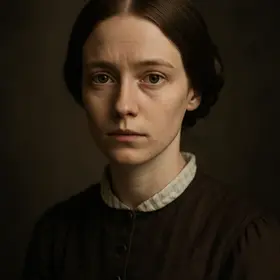 Jane EyreProtagonist
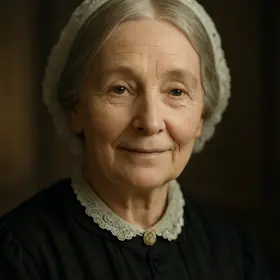 Mrs. FairfaxMinor character
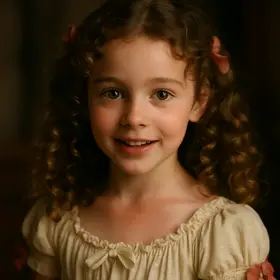 Adèle VarensMinor character
- MMr. RochesterMajor character
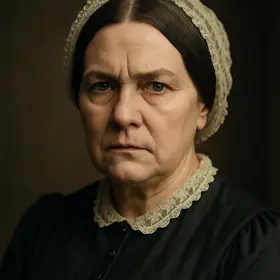 Mrs. ReedAntagonist
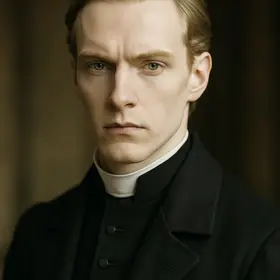 St. John RiversMajor character
 Edward Fairfax RochesterMajor character
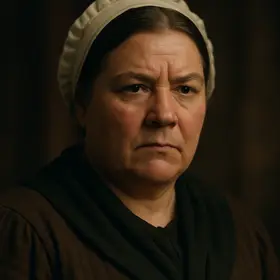 Grace PooleMinor character
All chapter summaries ›Characters ›
Read Jane Eyre illustrated
Every scene in these notes comes from the Book2Life reader, where the full public-domain text is illustrated as you read, with character portraits and narration. Free in your browser and on iPhone.
