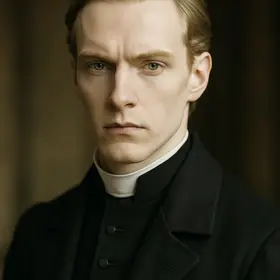
St. John Rivers in Jane Eyre
Major character
A serious, disciplined clergyman and Jane’s cousin who urges duty, missionary zeal, and self-denial over personal feeling.
Who is St. John Rivers?
St. John Rivers is a reserved, principled young clergyman who appears at Moor House and becomes central to Jane’s life after she is found on the moor. He wants to serve God and attain distinction through missionary work, repeatedly subordinating personal desire to duty. At Moor House he examines and shelters Jane, offers practical help, and integrates her into the household rhythm while arranging employment for her. He creates and funds a small school post, trains Jane in Hindostanee, and exerts steady moral influence. When their uncle’s inheritance unites them as cousins, he accepts Jane’s decision to divide the legacy but soon presses his own plan: he proposes that Jane accompany him to India as his wife and fellow-missionary. After Jane refuses a loveless marriage, St. John continues to press vocation over affection and ultimately departs for Cambridge and then India, remaining single and devoted to his calling while maintaining an intermittent, formal correspondence with Jane.
In the book: A serious, principled young clergyman who aids Jane at a crucial juncture, St. John embodies duty, self-denial, and missionary zeal. His disciplined temperament and lofty ambitions make him a powerful moral counterpoint to Jane’s passionate nature, forcing her to weigh obedience and purpose against inner feeling and freedom.
Personality
- Ascetic
- In Chapter 31 he declares his abandonment of worldly ambition and frames his life around missionary service, rejecting marriage to Rosamond as incompatible with that vocation.
- Resolute
- In Chapter 34 he insists Jane must marry him if she is to accompany him to India, pressing the point as a necessary condition for their joint work.
- Emotionally reserved
- Throughout Chapters 29–34 he studies Jane with clinical detachment and keeps a cool distance, even when Rosamond’s visits visibly stir him (Chapters 31–32).
- Duty-driven
- He repeatedly frames choices in terms of obligation and service—urging Jane to watch, pray, and embrace missionary labour rather than domestic comfort (Chapters 30, 34–35).
- Authoritative
- He organizes Jane’s employment at Morton, instructs her in Hindostanee, and leads parish rounds, demonstrating practical leadership (Chapters 30–31).
Character arc
St. John first appears as a composed, distant figure who inspects and shelters the exhausted Jane on the moor (Chapter 28–29). He assumes a stabilizing, clinical role at Moor House—assessing Jane’s health, offering employment, and arranging a modest life for her (Chapters 29–31). As Jane grows stronger and more independent, St. John’s character sharpens into an avowed ascetic and missionary: he renounces worldly ambition, resists Rosamond Oliver’s charms, and channels desire into a higher purpose (Chapters 31–32). The revelation of kinship and the Eyre inheritance complicates his position—he accepts the division of the legacy but soon advances a plan that would subsume Jane’s autonomy to missionary duty by demanding marriage as a practical necessity for work in India (Chapters 33–34). After Jane refuses a marriage without love, St. John maintains rigid composure, pressing duty even more firmly and ultimately leaving for Cambridge and then India to pursue his cause alone (Chapters 34–36; conclusion). He remains unchanged in his core convictions: he sacrifices personal ties for vocation and ends unmarried and wholly committed to missionary labour, his fate contrasted with Jane’s choice of love and domestic partnership (final chapter references).
Relationships
- Jane Eyre Cousin who he shelters, teaches, and ultimately proposes to as a means to recruit her for missionary work; she refuses a loveless marriage.
- Diana Rivers Sister and co-heir at Moor House, warm companion who embodies domestic kindness contrary to his austerity.
- Mary Rivers Sister and co-heir who shares domestic duties and supports Jane’s recovery and integration into Moor House life.
- Rosamond Oliver Object of his restrained affection whose bright society contrasts his ascetic aims and tempts him emotionally (he rejects marriage to her).
- Mr. Briggs Solicitor whose letter about Jane Eyre’s identity and the Eyre inheritance sets events in motion and reveals kinship ties.
- Mr. Rochester Indirect rival for Jane’s affections by virtue of the life Jane contemplates; St. John’s proposal presses Jane to choose duty over romantic love (contrast culminating in Jane’s return to Rochester).
Quotes by St. John Rivers
“You have a question to ask of me?”
Chapter 30He initiates the conversation in which the school-post he offers Jane is revealed; it signals his formal, controlling manner.
“I believe you will accept the post I offer you," said he, "and hold it for a while: not permanently, though:”
Chapter 30St. John outlines the temporary, humble nature of the school position and anticipates Jane’s acceptance, framing the role as a duty rather than a vocation.
“A missionary I resolved to be.”
Chapter 31St. John declares his spiritual vocation, explaining his conversion from worldly ambition to missionary duty.
“"She is lovely," he murmured. "She is well named the Rose of the World, indeed!"”
Chapter 32St. John’s involuntary praise of Rosamond that exposes the depth of his feeling before he renounces the possibility of marriage.
“Twenty years ago, a poor curate—never mind his name at this moment—fell in love with a rich man’s daughter; she fell in love with him, and married him, against the advice of all her friends, who consequently disowned her immediately after the wedding.”
Chapter 33St. John frames the backstory of the missing Thornfield governess and sets up the solicitor's search, providing expositional context for the mystery.
“You see, Jane, the battle is fought and the victory won.”
Chapter 34St. John announces to Jane his inner resolution—an allusion to a decisive moral or vocational conflict he believes he has resolved.
Why St. John Rivers matters
St. John embodies the novel’s central conflict between duty/obedience and individual feeling/freedom. His austere, missionary zeal presents an alternative moral ideal that tests Jane’s principles: she admires his commitment yet rejects the annihilation of her inner life that his plan requires. By pressing a loveless marriage as a moral necessity, he forces Jane to define authentic faith and autonomy. His fate—single, devoted, and remote—acts as a foil to Jane’s chosen balance of love, independence, and moral integrity, deepening the book’s exploration of vocation, conscience, and the dangers of self-denying fanaticism.
Chapters with St. John Rivers
More Jane Eyre characters
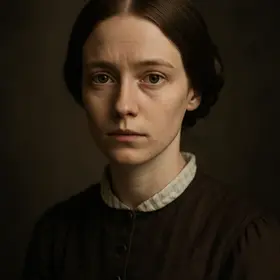 Jane EyreProtagonist
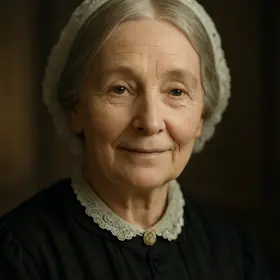 Mrs. FairfaxMinor character
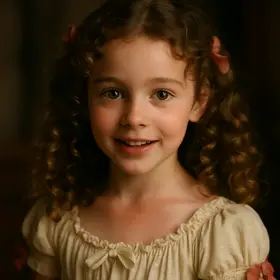 Adèle VarensMinor character
- MMr. RochesterMajor character
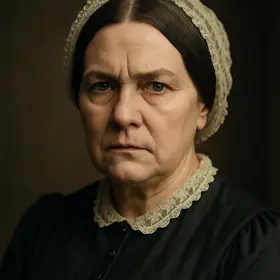 Mrs. ReedAntagonist
 Edward Fairfax RochesterMajor character
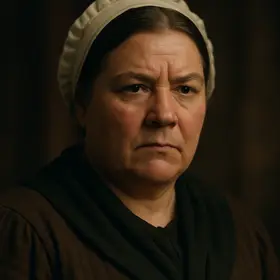 Grace PooleMinor character
 Mr. BrocklehurstAntagonist
All chapter summaries ›Characters ›
Read Jane Eyre illustrated
Every scene in these notes comes from the Book2Life reader, where the full public-domain text is illustrated as you read, with character portraits and narration. Free in your browser and on iPhone.
