
Mrs. Reed in Jane Eyre
Antagonist
Jane Eyre’s aunt and guardian at Gateshead whose cold authority and favoritism shape Jane’s early sense of injustice.
Who is Mrs. Reed?
Mrs. Reed is Jane Eyre’s aunt by marriage and legal guardian during Jane’s childhood at Gateshead Hall. She wants to maintain social order, protect her own children’s status, and keep control of the household’s reputation; to those ends she treats Jane with emotional distance and frequent harshness. In the narrative she enforces Jane’s exclusion (sending her to the red-room after Jane defends herself), brands Jane as deceitful before visitors (notably Mr. Brocklehurst), and arranges Jane’s placement at Lowood—actions that both punish and redirect Jane’s life. Later, when Jane returns as an adult, Mrs. Reed lies about a possible adoption, withholds the truth about Jane’s uncle, and dies unrepentant despite a brief revival in which she confesses hatred. Mrs. Reed’s behavior establishes the early moral and social obstacles Jane must resist and helps precipitate Jane’s growth toward independence and self-respect.
In the book: Mrs. Reed is Jane Eyre’s aunt by marriage and legal guardian at Gateshead, a figure of chilly authority whose favoritism toward her own children and harsh treatment of Jane shape the heroine’s early sense of injustice and independence. As the household’s matriarch, she embodies the social and emotional constraints Jane must push against to find dignity and self-worth.
Personality
- Cold authority
- Orders Jane locked in the red-room as punishment after John Reed’s attack (Chapter 1–2).
- Partial
- Favors her own children—Eliza, John, and Georgiana—giving them comfort and status while relegating Jane to solitude (Chapter 1–4).
- Vindictive
- Accuses Jane publicly of deceit in Mr. Brocklehurst’s presence to damage Jane’s reputation (Chapter 4).
- Secretive / Deceptive
- Conceals and later admits she lied about Jane’s possible adoption, saying she claimed Jane dead to block it (Chapter 21).
- Unrepentant
- Refuses genuine reconciliation when Jane offers forgiveness, dying without altering her long-standing hatred (Chapter 21).
Character arc
Mrs. Reed appears consistently as the controlling, unsympathetic matriarch at Gateshead. Initially she enforces Jane’s marginalization through cold discipline and visible favoritism toward her own children: she confines Jane to the red-room, separates her at meals, and endorses harsh public censure when Mr. Brocklehurst visits. These actions set Jane on the path to Lowood and contribute to Jane’s emotional fortitude. Years later, when illness and family tragedies strip Mrs. Reed of physical vigor, she briefly revives and confesses the key deceit—having prevented Jane’s adoption by asserting she was dead. This disclosure reveals the deliberate cruelty behind earlier slights, yet even in this last moment she refuses true repentance, professing hatred rather than asking forgiveness. Her death closes her influence in Jane’s life: she remains an antagonist in moral terms but also a catalyst for Jane’s independence. Mrs. Reed’s arc is thus largely static in character—she shifts only from active matriarch to infirm confessor—but her final disclosure changes Jane’s circumstances materially while leaving emotional wounds and confirming the need for Jane’s moral autonomy.
Mrs. Reed in pictures

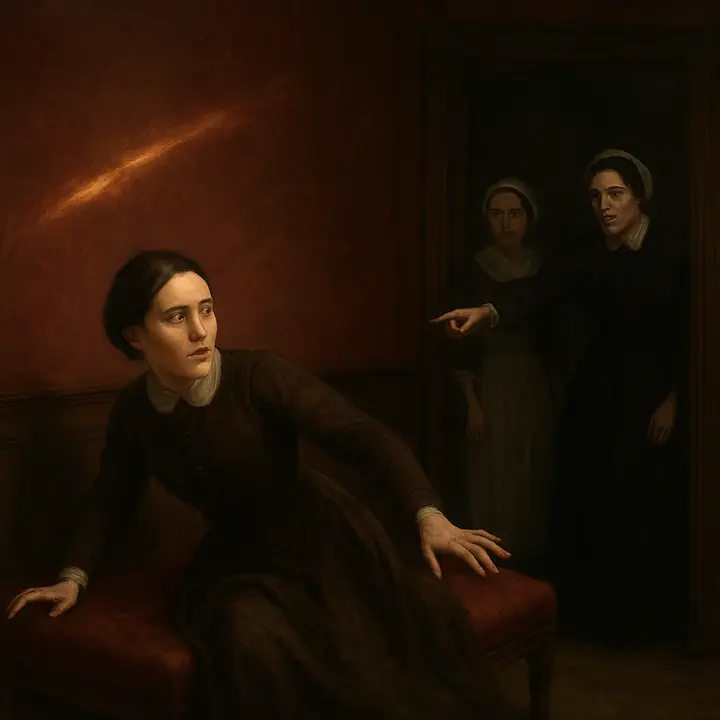
Relationships
- Jane Eyre Ward and object of Mrs. Reed’s cold guardianship—Mrs. Reed marginalizes and punishes Jane throughout childhood and later withholds adoption information.
- Eliza Reed Daughter who shares her mother’s austere, detached demeanor and benefits from Mrs. Reed’s favoritism (Chapter 21–22).
- Georgiana Reed Daughter who is pampered and groomed for society, reflecting Mrs. Reed’s concern for status and appearances (Chapter 21–22).
- John Reed Son whose bullying of Jane goes unchecked by Mrs. Reed; she punishes Jane rather than disciplining John (Chapter 1–2).
- Mr. Brocklehurst Acquaintance called upon to legitimize Mrs. Reed’s moral and educational decisions for Jane, publicly reinforcing Jane’s shame (Chapter 4).
- Bessie Lee Servant who alternates between scolding and small kindnesses to Jane while acting within Mrs. Reed’s household order (Chapter 3–5).
Quotes by Mrs. Reed
“Take her away to the red-room, and lock her in there.”
Chapter 1Mrs. Reed’s command that culminates the chapter in physical punishment and symbolic exile within Gateshead Hall.
“‘Bring Jane—fetch Jane Eyre: I want to speak to her.’”
Chapter 21The words that prompt Bessie to fetch Jane, initiating Jane’s return and the confrontation with her aunt.
“‘I wish she had died!’”
Chapter 21Mrs. Reed’s brutal admission while recounting her long hatred of the child, revealing the depth of her resentment and the cruelty that shaped Jane’s childhood.
Why Mrs. Reed matters
Mrs. Reed embodies the social and emotional constraints that Jane must resist to claim dignity and autonomy. Her favoritism, moral grandstanding, and final confession illustrate themes of injustice, hypocrisy, and the destructive effects of rigid class and family hierarchies. By opposing Jane rather than nurturing her, Mrs. Reed forces Jane into moral and psychological self-reliance; the cruelty Jane endures under Mrs. Reed’s roof both provokes the novel’s critique of social authority and furnishes the protagonist with the inner resources to seek equality and integrity later in life.
Chapters with Mrs. Reed
More Jane Eyre characters
 Jane EyreProtagonist
 Mrs. FairfaxMinor character
 Adèle VarensMinor character
- MMr. RochesterMajor character
 St. John RiversMajor character
 Edward Fairfax RochesterMajor character
 Grace PooleMinor character
 Mr. BrocklehurstAntagonist
All chapter summaries ›Characters ›
Read Jane Eyre illustrated
Every scene in these notes comes from the Book2Life reader, where the full public-domain text is illustrated as you read, with character portraits and narration. Free in your browser and on iPhone.
