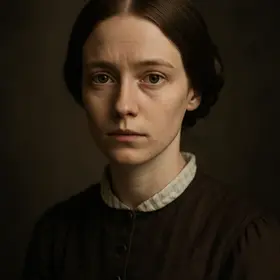
Jane Eyre in Jane Eyre
Protagonist
An orphaned governess-narrator who insists on moral integrity, self-respect, and emotional honesty amid social and personal trials.
Who is Jane Eyre?
Jane Eyre is the novel’s first-person narrator and moral center: an intelligent, proud but poor orphan who seeks independence and dignity in a rigid society. From abusive childhood at Gateshead (locked in the red-room) she is sent to Lowood School where she grows intellectually and spiritually, befriending the patient Helen Burns and gaining the steady mentorship of Miss Temple. As a young woman she becomes a governess at Thornfield, tutors Adèle, and enters a fraught attachment to Mr. Rochester that culminates in a frustrated wedding when Rochester’s lawful wife is revealed. Conscience and principle compel Jane to flee Thornfield rather than be Rochester’s mistress. Destitute, she is taken in at Moor House, discovers kinship with the Rivers, inherits a fortune, and refuses St. John Rivers’s proposal because it lacks love. Ultimately she returns to a wounded Rochester at Ferndean, accepts a marriage based on renewed equality and mutual care, and narrates a later decade of married life in which she preserves autonomy and affection. Throughout, Jane balances passion and principle while constructing a self-defined identity.
In the book: Jane Eyre is the novel’s narrator and moral center, an orphan who becomes a governess and strives to define herself with integrity, intellect, and emotional honesty in a world constrained by class and gender. Through trials at school, in service, and in society, she insists on dignity and self-respect, shaping a story about autonomy, love, and ethical choice without surrendering her principles.
Personality
- Moral rigor
- She refuses Rochester’s offer to live with him when she learns he is still married, choosing conscience over passion (Chapter 27).
- Resilience
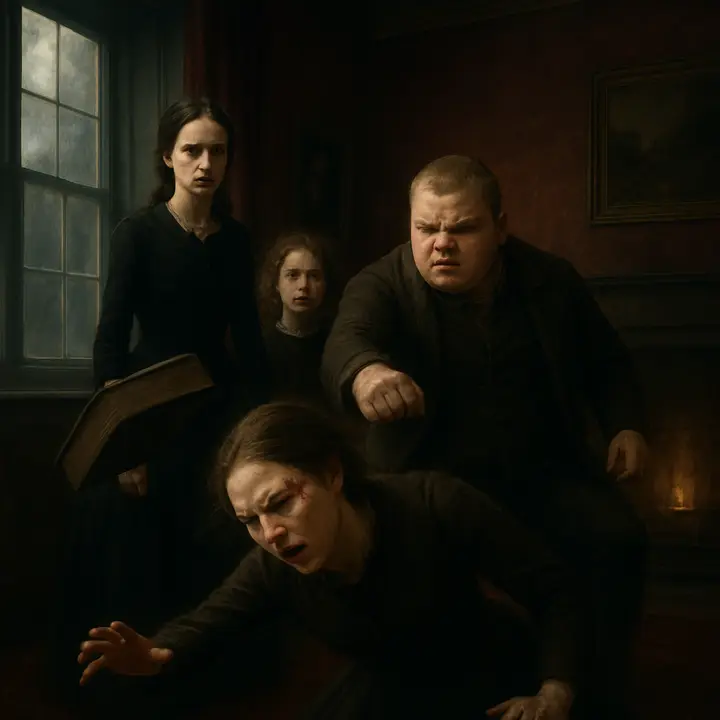
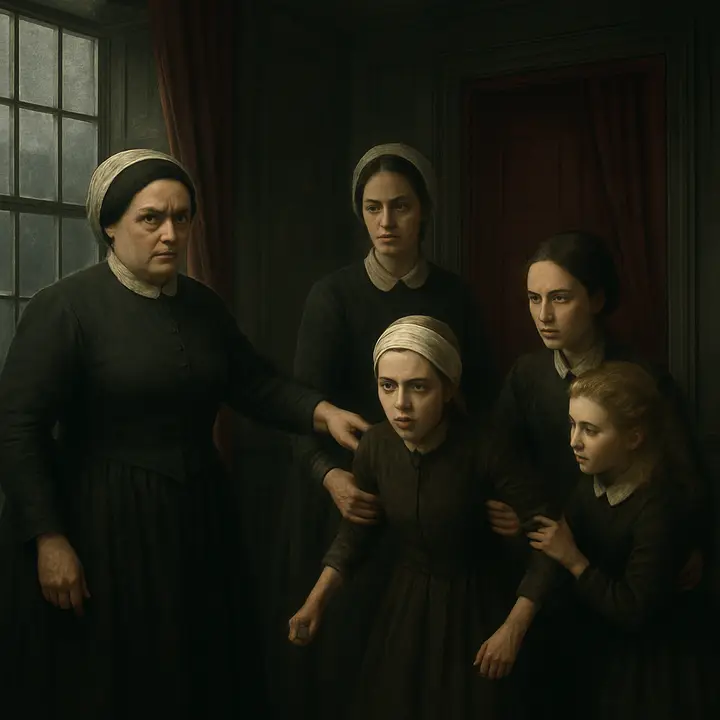
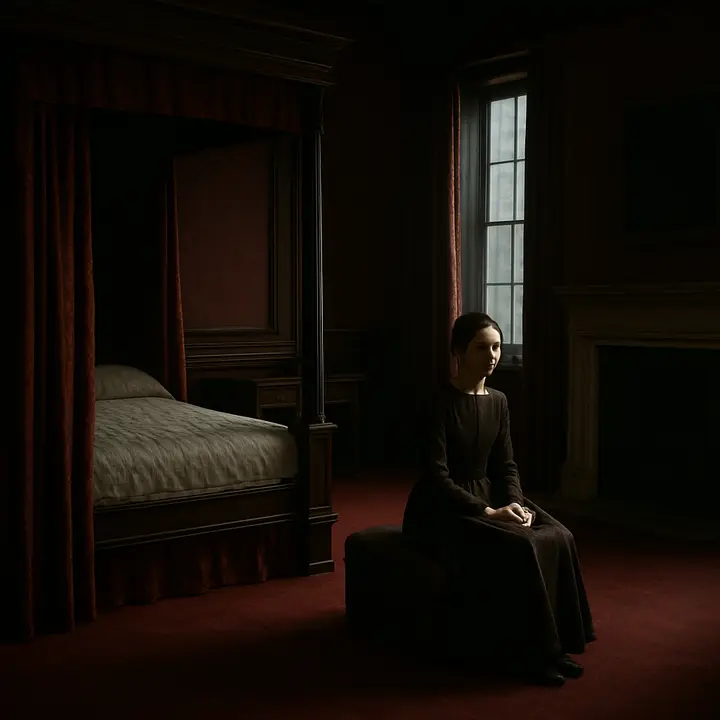
- After being locked in the terrifying red-room and fainting, she survives Gateshead’s cruelty and eventually leaves for Lowood (Chapters 2–5).
- Principled independence
- She advertises for work, becomes a governess at Thornfield, later runs a village school at Morton, and insists on earning and keeping her own modest competence (Chapters 5, 31).
- Compassion
- She risks her safety to extinguish the fire in Rochester’s bedchamber and saves him from suffocation (Chapter 15).
- Intellectual curiosity
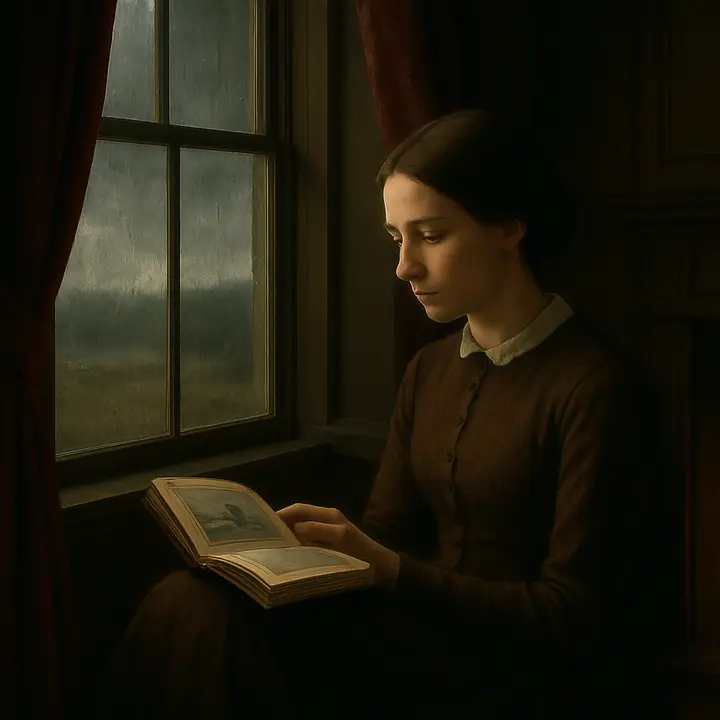
- She studies drawing and languages at Lowood and Moor House, learns Hindostanee with St. John, and pursues self-improvement throughout (Chapters 8, 30, 34).
Character arc
Jane begins as an isolated, mistreated child who endures humiliation at Gateshead and the red-room, then develops moral and intellectual backbone at Lowood through study, friendship with Helen Burns, and Miss Temple’s guidance. As a young governess at Thornfield she awakens to passion and companionship with Rochester but is confronted by a moral crisis when his existing marriage is revealed; rather than compromise, she chooses exile and poverty, testing her principles. Her time at Moor House enlarges her social and familial identity—she learns she has cousins, accepts an inheritance, and proves her commitment to independence by sharing the legacy and working as a schoolmistress. St. John’s proposal forces her to examine vocation versus affection; she refuses a loveless missionary marriage. A mystical summons and inner conviction send her back to Rochester after Thornfield’s destruction; she returns not as dependent governess but as an equal partner who marries him on terms of mutual care. By the close she reconciles passion with autonomy and narrates a decade of married life in which both independence and conjugal love endure.
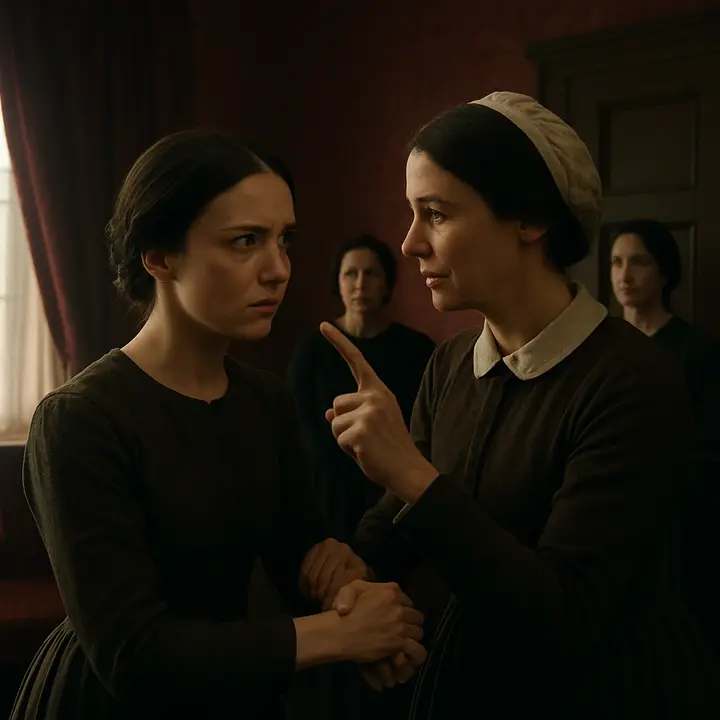
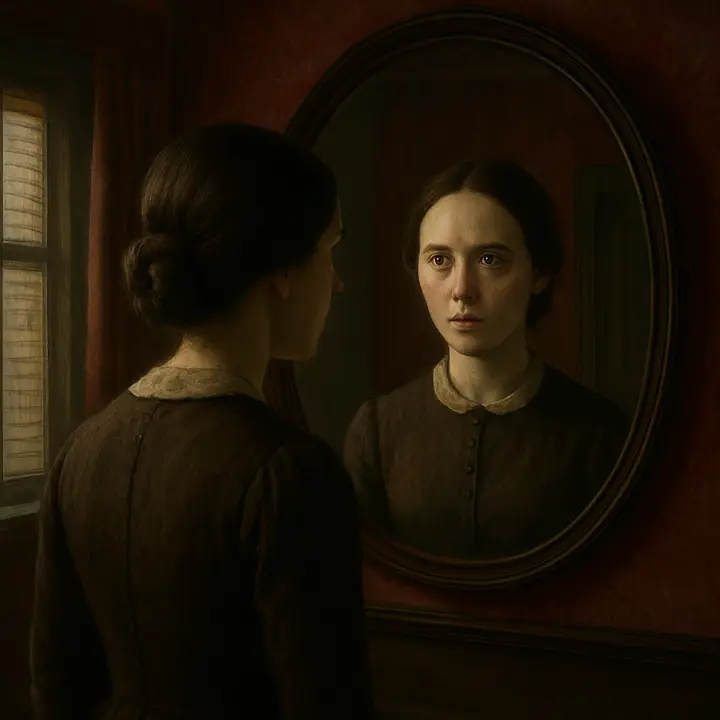
Jane Eyre in pictures
Relationships
- Mrs. Reed Her harsh, controlling aunt who raises her at Gateshead and embodies early cruelty and social rejection.
- Helen Burns A close, spiritually instructive friend at Lowood whose patient philosophy profoundly influences Jane’s moral development.
- Edward Fairfax Rochester Her employer, passionate suitor, and eventual husband; their bond tests Jane’s conscience and ultimately becomes an equal partnership.
- St. John Rivers A stern cousin who offers missionary marriage as duty; Jane resists his proposal because it lacks love and would demand self-erasure.
- Diana Rivers A warm, intellectual cousin and friend at Moor House who provides companionship, counsel, and domestic solace.
- Adèle Varens The young French ward Jane tutors at Thornfield and later places in a gentler school; Adèle connects Jane to maternal care and pedagogy.
Quotes by Jane Eyre
“I cry because I am miserable.”
Chapter 3Jane asserts the true cause of her tears to Mr. Lloyd, distinguishing her sorrow from childish petulance.
“They are not fit to associate with me.”
Chapter 4Jane blurts this audacious retort from the nursery banister after Mrs. Reed forbids her cousins to speak with Jane; it provokes Mrs. Reed’s severe punishment and signals Jane’s rising defiance.
“I am not deceitful: if I were, I should say I loved you; but I declare I do not love you:”
Chapter 4Jane directly confronts Mrs. Reed, refusing the label of deceit and publicly denouncing Mrs. Reed’s cruelty—this is a pivotal assertion of Jane’s moral voice and independence.
“I am not an angel," I asserted; "and I will not be one till I die: I will be myself.”
Chapter 24Jane rejects idealized, saint-like expectations and insists on remaining true to her own nature despite Rochester's romantic language.
“You are mistaken in supposing me a beggar. I am no beggar; any more than yourself or your young ladies.”
Chapter 29Jane rebukes Hannah's initial assumption and defends her dignity despite poverty and recent exposure.
“I am an orphan, the daughter of a clergyman.”
Chapter 29Jane begins the measured disclosure of her background to the Rivers family while withholding details of her recent crisis.
Why Jane Eyre matters
Jane embodies the novel’s central themes: the struggle for self-respect within class and gender constraints, the tension between passion and principle, and the search for spiritual and emotional autonomy. Her insistence on moral integrity—refusing an illicit life with Rochester and declining St. John’s loveless mission marriage—frames the book’s ethical inquiries. At the same time, her intellectual growth and eventual marriage on equal terms argue for a model of love that preserves individuality. Through Jane’s inner narration the novel critiques social hypocrisy, explores the redemptive power of compassion, and insists that personal dignity and conscience guide life choices.
Chapters with Jane Eyre
- Chapter 1
- Chapter 2
- Chapter 3
- Chapter 4
- Chapter 5
- Chapter 6
- Chapter 7
- Chapter 8
- Chapter 9
- Chapter 10
- Chapter 11
- Chapter 13
- Chapter 14
- Chapter 15
- Chapter 16
- Chapter 17
- Chapter 18
- Chapter 19
- Chapter 20
- Chapter 22
- Chapter 23
- Chapter 24
- Chapter 25
- Chapter 26
- Chapter 27
- Chapter 28
- Chapter 29
- Chapter 30
- Chapter 31
- Chapter 32
- Chapter 33
- Chapter 34
- Chapter 35
- Chapter 36
- Chapter 37
- Chapter 38
More Jane Eyre characters
 Mrs. FairfaxMinor character
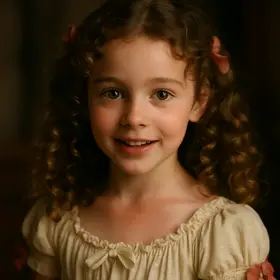 Adèle VarensMinor character
- MMr. RochesterMajor character
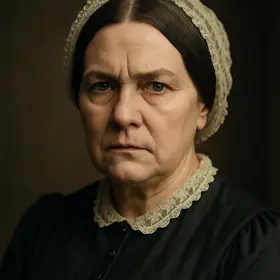 Mrs. ReedAntagonist
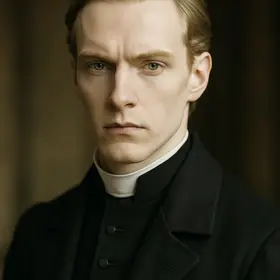 St. John RiversMajor character
 Edward Fairfax RochesterMajor character
 Grace PooleMinor character
 Mr. BrocklehurstAntagonist
All chapter summaries ›Characters ›
Read Jane Eyre illustrated
Every scene in these notes comes from the Book2Life reader, where the full public-domain text is illustrated as you read, with character portraits and narration. Free in your browser and on iPhone.
