Céline Varens in Jane Eyre
Minor character
A French opera-dancer and former lover of Mr. Rochester, mother of Adèle, whose betrayal and abandonment shape Rochester's past.
Who is Céline Varens?
Céline Varens is presented only through Mr. Rochester’s reminiscence as a once-famous French opera-dancer who becomes his passionate but unfaithful lover. According to Rochester, she enjoys admiration, theatrical success, and the pleasures of flirtation; she seeks immediate gratification and social advantage rather than steady attachment. When a vicomte (an officer) appears, Céline chooses him over Rochester, abandoning Rochester’s affection and leaving behind a child, Adèle. Rochester discovers her with the officer, duels the rival, and later rescues Adèle from neglect and poverty, bringing the girl to England to raise her. Céline herself vanishes from the household scene; she does not appear in Thornfield’s present, and her actions exist mainly as the catalyst for Rochester’s guilt, generosity, and his account of earlier moral failure. In the narrative she functions as a remembered figure whose choices explain parts of Rochester’s history and complicate the moral landscape that Jane must navigate.
Personality
- Theatrical
- Rochester describes her as a French opera-dancer—her profession and public persona are central to how he remembers her (Chapter 15).
- Fickle
- Rochester recounts that she abandons him for an officer, betraying the intimacy they had shared (Chapter 15).
- Self-interested
- She leaves Adèle in neglect and pursues a new liaison with an officer rather than protecting her child (Chapter 15).
- Abandoning
- Rochester tells how she deserts both lover and child, forcing him to rescue and provide for Adèle (Chapter 15).
Character arc
Céline does not undergo an onstage transformation in the present narrative; her arc is entirely retrospective and compressed into Rochester’s account. Initially she is cast as the celebrated, alluring opera-dancer who attracts Rochester’s indulgence. In his recollection she moves from being an object of passionate attention to a figure of moral failure when she chooses the officer and leaves Adèle. That betrayal converts her from beloved to a source of Rochester’s shame and regret. After her abandonment she drops out of the Thornfield story-world: she neither returns nor redeems herself onstage. The consequence of her actions—Adèle’s arrival in England and Rochester’s sense of culpability—constitutes her effective narrative closure. Thus Céline’s motion in the story is from present glamour in memory to absence and implication, her missing presence continuing to affect Rochester and the household long after she disappears.
Relationships
- Edward Fairfax Rochester Former passionate lover whose indulgence of her ends when she deserts him for an officer; her betrayal haunts him.
- Adèle Varens Mother who abandons Adèle, leaving the child to destitution before Rochester rescues and brings her to England.
Why Céline Varens matters
Céline functions as a compact embodiment of themes about sexual double standards, the costs of passion, and social reputation. Her abandonment exposes the vulnerability of women and children who depend on mercurial performers, and it intensifies Rochester’s moral complexity—his culpability, mercy, and the consequences of illicit pleasures. Her absence also helps justify and complicate Rochester’s tenderness toward Adèle and his guarded character in the present, sharpening Jane’s moral dilemma when she learns of his past.
Chapters with Céline Varens
More Jane Eyre characters
 Jane EyreProtagonist
 Mrs. FairfaxMinor character
 Adèle VarensMinor character
- MMr. RochesterMajor character
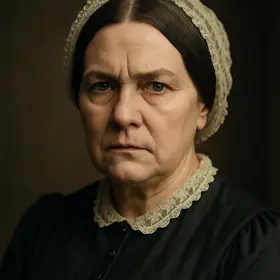 Mrs. ReedAntagonist
 St. John RiversMajor character
 Edward Fairfax RochesterMajor character
 Grace PooleMinor character
All chapter summaries ›Characters ›
Read Jane Eyre illustrated
Every scene in these notes comes from the Book2Life reader, where the full public-domain text is illustrated as you read, with character portraits and narration. Free in your browser and on iPhone.
