Peter Pan Chapter 1 Summary
Peter Breaks Through
Mrs. Darling notices the mysterious name 'Peter' in her children's minds and a strange boy—Peter Pan—breaks through into the nursery one night.

Summary
The chapter introduces the Darling family and their domestic life at number 14: Mr. George Darling, his wife Mary (referred to as Mrs. Darling), and their three children Wendy, John, and Michael, who are carefully tended by their nurse, Nana, a prim Newfoundland dog. Barrie sketches the parents' characters—Mrs. Darling's romantic mind and gently mocking kiss, and Mr. Darling's anxious, ledger-minded respectability—showing how the children's care and home routine are lovingly managed despite modest means. The household scenes establish a tone of whimsical domesticity and affectionate order.
In the course of Mrs. Darling's nightly habit of 'tidying up' her children's minds, she discovers the recurring, puzzling word Peter appearing prominently in Wendy's and the boys' mental map. Wendy insists Peter Pan is real and that he sometimes visits her, leaving leaves by the nursery window. Mrs. Darling doubts this—consulting Mr. Darling, dismissing Nana's influence—and investigates, finding strange skeleton leaves and the improbability of any visitor entering from a third-floor window. The chapter culminates in a dream in which Mrs. Darling glimpses the Neverland rent open; that very night the nursery window blows open and a boy drops in, accompanied by a small darting light. Mrs. Darling recognizes him as Peter Pan at once and notices his odd, entrancing appearance—clad in skeleton leaves and with all his first teeth—while he in turn reacts to her as to a grown-up.
Key events
- Barrie introduces the Darlings, their personalities, and household routine.
- Mrs. Darling practices 'tidying up' her children's minds and discovers the name Peter repeatedly.
- Wendy mentions Peter visiting and leaves found by the nursery window raise Mrs. Darling's curiosity.
- Mrs. Darling inspects the nursery and finds leaves but reasons it is unlikely anyone could enter the third-floor window.
- Mrs. Darling dreams the Neverland breaks through; the window opens and a boy drops into the nursery with a small light.
- Mrs. Darling instantly recognizes the boy as Peter Pan, described in strange, evocative detail.
Chapter 1 in pictures
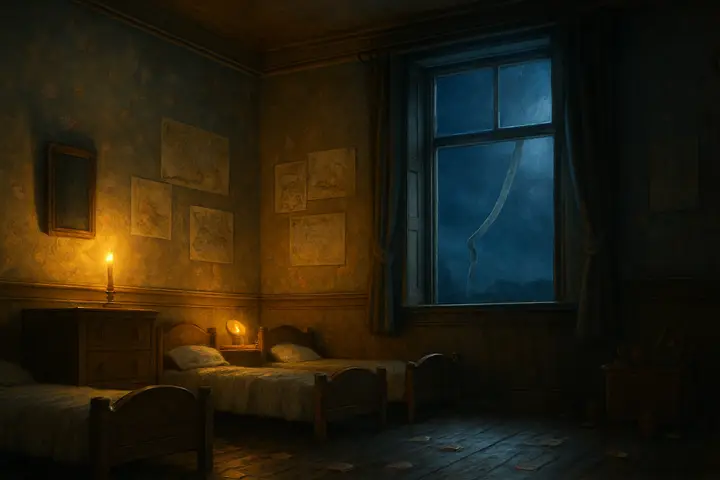

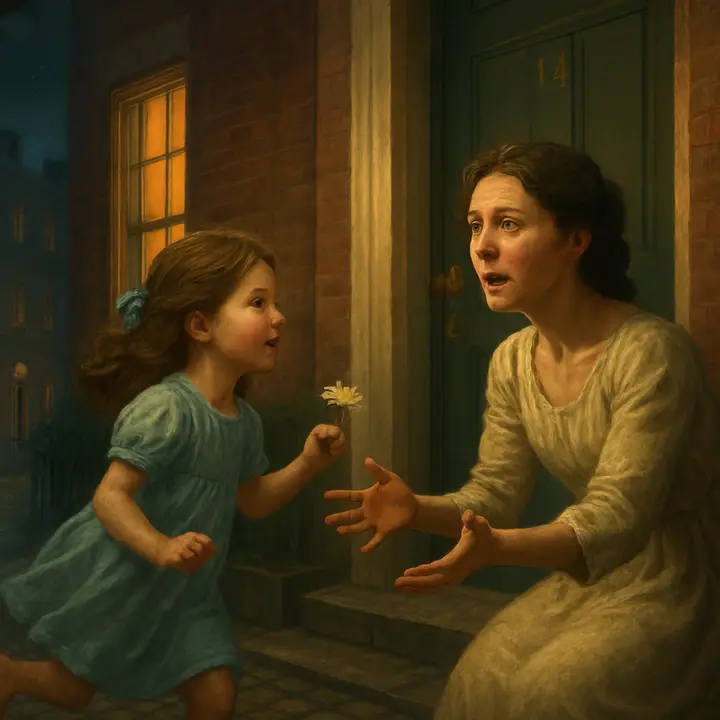
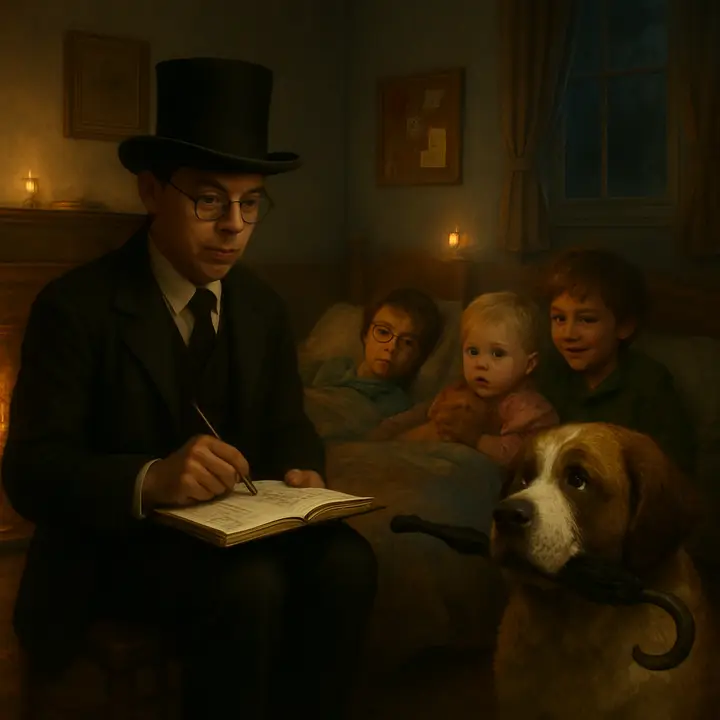
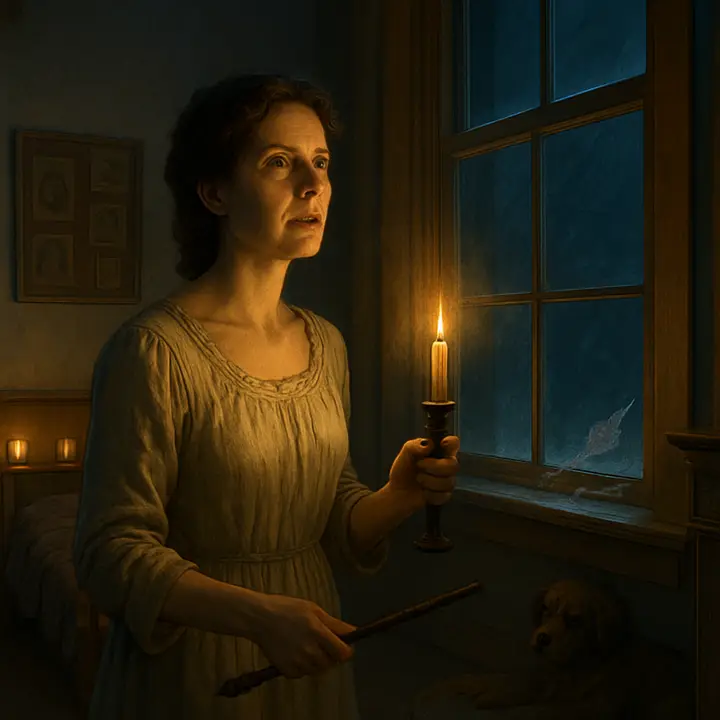
Analysis
This opening chapter establishes the novel's central contrast between orderly domesticity and the incursion of magic. The Darlings represent conventional Victorian family life—Mr. Darling's ledgers, Mrs. Darling's genteel romanticism, and the tidy nursery—while Barrie quickly maps the children's imaginations as miniature 'Neverlands' full of islands and adventures. The nightly ritual of a mother 'tidying up' her children's minds is a deft narrative device: it externalizes childhood inner life for adult scrutiny and prepares the reader for the permeability between imagination and reality that the story will exploit. Peter appears first as a word on these mental maps, a motif that blurs the boundary between thought and being and foreshadows his literal breaking through.
Symbolically, the skeleton leaves and the darting light suggest a world that is both natural and otherworldly—part forest, part fairy. Barrie's playful, ironic narrator both comforts and unsettles: domestic details are treated lovingly yet exposed to the uncanny. The chapter also introduces the theme of growing up by contrast—'All children, except one, grow up'—framing Peter as a figure who resists maturation. Structurally, the chapter shifts from a detailed social scene to a single spectacular intrusion, so the reader experiences the ordinary and the marvelous in immediate juxtaposition, setting the tone for a story about the tension between responsibility and perpetual childhood.
Important quotes
“All children, except one, grow up.”
NarratorThe iconic opening line introduces the theme of growing up and singles out the exception who will drive the story: Peter Pan.
“Two is the beginning of the end.”
NarratorThis succinct line compresses Barrie's wry view of childhood stages and underscores how early the sense of inevitable growth begins.
“He was a lovely boy, clad in skeleton leaves and the juices that ooze out of trees but the most entrancing thing about him was that he had all his first teeth.”
NarratorA vivid description of Peter's strange, otherworldly appearance that contrasts the natural and the uncanny and marks his entrance into the nursery.
Characters in Chapter 1
All chapter summaries ›Characters ›
Reading Peter Pan aloud with kids
Book2Life reads Peter Pan aloud with each word highlighted as it is spoken, and a picture of the scene appears as the chapter goes, so young listeners can follow the story. A parent holds the account and reads along.
Read Peter Pan illustrated
Every scene in these notes comes from the Book2Life reader, where the full public-domain text is illustrated as you read, with character portraits and narration. Free in your browser, on iPhone and on Android.