Robinson Crusoe
1719 · Adventure novel
Free to read in your browser. Public-domain edition from Project Gutenberg, illustrated as you read.
About This Book
Robinson Crusoe is Daniel Defoe’s long-form castaway tale that reads like a journal of survival, industry, and inward change. Crusoe opens with his restless youth and repeated defiance of his parents’ wishes to avoid a life at sea. Early voyages bring storms, capture by pirates, and a chain of fortunes that ultimately leaves him stranded alone on a remote shore after a brutal shipwreck. Alone on the island, Crusoe becomes an improvisor and engineer: he salvages stores from the wreck, fortifies a settlement, invents tools, raises crops and livestock, and records a year-by-year account of his labors. Solitary hardships—illness, violent weather, and the discovery of a human footprint—force him to rethink providence and personal responsibility. His loneliness ends when he rescues a native whom he names Friday; Crusoe teaches him language, crafts, and religion, and together they confront threats from cannibals and other hostile visitors. The novel mixes adventure with practical problem-solving and moral introspection. Its focus on resourcefulness, the tensions between civilization and wilderness, and the evolving relationship between Crusoe and Friday creates a layered narrative that moves beyond adventure to questions of faith, authority, and what it means to remake a life from nothing.
Characters in Robinson Crusoe
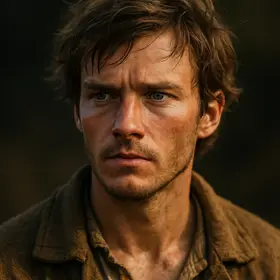 Robinson CrusoeWhen we first meet him, he’s a restless young Englishman who can’t sit still for the safe life his family wants. He bolts from home to chase the sea out of Hull, and a savage early storm quickly teaches him how rough that choice can be. Even then, you can tell he’s stubborn enough to keep going.
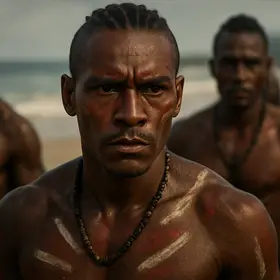 The CannibalsCrusoe first knows them by a single barefoot print in the sand, then spies their canoes landing as a war-party comes ashore to perform a grisly ritual. Their sudden appearances turn his lonely vigilance into outright dread and force him to plan how to hide, watch, and survive.
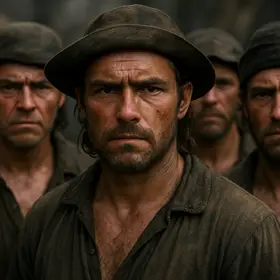 The MutineersWe first meet them as an armed boatload of sailors from an English ship who come ashore quarreling and out of order, clearly at odds with their officers. Their sudden appearance matters because their trouble spills onto Crusoe’s island, forcing him to reckon with strangers and the danger they bring.
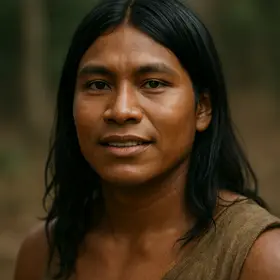 FridayWe first meet Friday as a young islander fleeing a brutal execution on the beach; Crusoe drives off his pursuers and the two cautiously befriend each other. Friday quickly proves brave, eager to help, and bright-eyed with curiosity, becoming Crusoe’s much-needed companion in the lonely rhythms of island life.
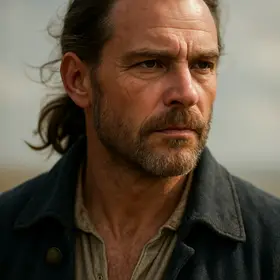 The English CaptainYou first meet him when a small party comes ashore and he’s revealed to be an English merchant captain, worn down by rough handling but still clear-headed and courteous. He matters because his trouble draws Crusoe into dealing with desperate sailors and real danger again, giving the castaway a human problem to solve instead of just surviving the island.
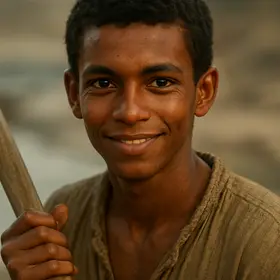 XuryWe first meet Xury as a young servant on the Moroccan coast who ends up in the fishing boat with Crusoe during a bold escape from captivity. He’s fearless, handy with an oar and a knife, and keeps his head when they skirt unknown shores and hunt for food. His loyalty and steady nerves make him the companion Crusoe needs in those first dangerous days.
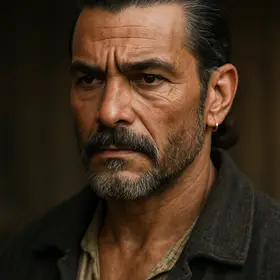 The Portuguese CaptainHe’s the seasoned Portuguese ship captain who first meets Crusoe at sea after a desperate escape, and he comes across as practical, brave, and unfailingly fair. He offers food, safety, and honest dealing, setting Crusoe on a more stable path and showing him rare kindness when he needs it most.
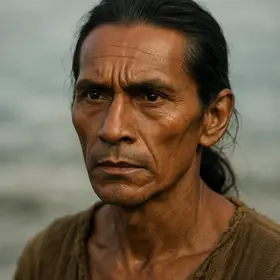 Friday's FatherWe first meet him as the captive in a canoe near Crusoe’s island—the man Friday is desperate to save. He matters because he’s Friday’s father, and his rescue turns a frantic chase into a reunion that quickly earns Crusoe their trust.
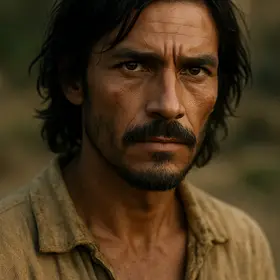 The SpaniardWe first meet him as a battered Spanish castaway rescued alongside Friday’s father from a raiding party on the shore. Courteous and steady even in misery, he quickly proves useful, sharing news of other European survivors and offering practical help that widens Crusoe’s lonely world.
 The WidowWhen we first meet her, she’s a respectable London widow who looks out for Crusoe like a sensible aunt—keeping his money safe and urging him not to rush headlong back to sea. She matters because she’s one of the few people he can trust with both frank advice and his modest fortune.
Study guide
Summaries and analysis of all 20 chapters, and profiles of 10 characters, illustrated with scenes from the book.
Themes
- survival
- colonialism
- religion
- self-reliance
- companionship
Why Read Robinson Crusoe?
Read Robinson Crusoe to experience one of the earliest and most influential narratives of survival and practical ingenuity. The book is full of concrete detail—salvaging, building, farming, and navigation—that makes Crusoe’s solitary life plausibly lived on the page. Those passages still grip readers who enjoy problem-solving and the slow, tactile work of making a home in hostile conditions.
Beyond its technical ingenuity, the novel prompts reflection on belief, authority, and cross-cultural encounter. Crusoe’s inward shifts and his fraught relationship with Friday invite conversation about power, dependency, and moral responsibility. For readers interested in historical fiction, colonial-era perspectives, or character-driven adventure, Defoe’s blend of journalistic detail and philosophical reflection remains a rich, provocative read.
Experience Robinson Crusoe on Book2Life
Read with AI-generated visuals, character portraits, audio narration, smart summaries, and more — free in your browser and on iPhone.