The Awakening
1899 · Literary fiction
Free to read in your browser. Public-domain edition from Project Gutenberg, illustrated as you read.
About This Book
The Awakening is a late-19th-century novel about a New Orleans wife and mother, Edna Pontellier, who confronts the constraints of social expectation, marriage and her own desires. Set between a Gulf-side resort and the city, the story traces a gradual inner transformation as Edna reacts against the rhythm of polite society and the roles assigned to her. At Grand Isle and in New Orleans Edna drifts between her husband Léonce, a prosperous and conventional businessman, and Robert Lebrun, a young man whose easy companionship awakens feelings she does not fully understand. She befriends independent artists — notably the pianist Mademoiselle Reisz — and draws the attention of Alcée Arobin, whose attentions contrast with Robert’s tender regard. As Edna experiments with swimming, sketching and a move into a smaller house of her own, the novel follows her growing appetite for autonomy and the tensions that produces within her marriage and among friends and family. Episodes range from intimate porch conversations and nights at Madame Lebrun’s to critical confrontations with Léonce and brief alliances with figures like Doctor Mandelet and Adèle Ratignolle. Chopin’s narrative remains focused on the psychological detail of Edna’s awakening: the small acts of defiance, aesthetic pursuits and shifting loyalties that document a private struggle for identity against prescribed roles.
Characters in The Awakening
 Edna PontellierWe first meet Edna as a young wife and mother summering at Grand Isle near New Orleans, married to Léonce Pontellier and caring for two small boys. She’s polite and reserved among the Creole vacationers, but you can already feel her curiosity and restlessness as she wanders the beach, talks with Robert Lebrun, and starts listening to her own moods more closely.
 Léonce PontellierWe first meet Léonce as Edna Pontellier’s wealthy New Orleans husband, vacationing on Grand Isle while reading the paper, smoking cigars, and chatting at the club. He’s genial and sociable but very concerned with propriety and comfort, quick to fuss over the children and to expect Edna to fit neatly into the well-ordered life he’s built.
 The ColonelHe’s Edna Pontellier’s father, a retired Kentucky colonel who sweeps into New Orleans to visit his daughter. From the first conversation he’s all command and courtesy—old-school, opinionated, and used to being obeyed—trading stories and cigars with Léonce while expecting Edna to fall in line.
 Robert LebrunRobert Lebrun is Madame Lebrun’s sociable, flirtatious son at the Grand Isle resort, the kind of charming fellow who devotes his summer attention to one lady at a time. When we meet him, he’s hovering around Edna Pontellier—fetching, teasing, talking, and taking long seaside walks—making himself delightful company and stirring feelings she hasn’t named yet.
 Mademoiselle ReiszWhen we first meet her at Grand Isle, she’s the prickly, plainspoken pianist whose uncompromising playing cuts through the chatter and jolts Edna awake inside. She keeps to herself, doesn’t flatter anyone, and becomes the one person whose blunt honesty and artistry make Edna feel truly seen.
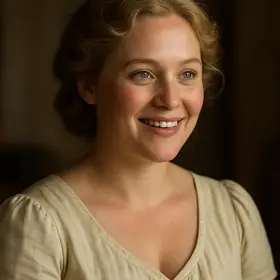 Adèle RatignolleWe first meet Adèle at Grand Isle, a warm, candid Creole woman who takes Edna under her wing during summer gatherings. She’s attentive to her children, openly affectionate with her husband, and—already pregnant again—chatters and sews while making everyone around her feel included.
 Alcée ArobinWhen we first meet Alcée Arobin, he’s the charming, much-whispered-about ladies’ man who moves effortlessly through New Orleans society. He’s introduced around the race track and social calls as the kind of fellow who knows everyone and makes a point of noticing Edna—attentive, witty, and just a bit too smooth to be harmless.
 Doctor MandeletWhen we first meet Doctor Mandelet, he’s the Pontellier family physician and an old friend Léonce trusts enough to confide in about Edna’s unsettling changes. He’s calm, perceptive, and discreet—the sort of doctor who listens more than he lectures—so his counsel quietly steers how the family responds.
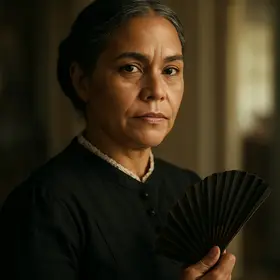 Madame LebrunWhen we first meet her on Grand Isle, she runs the seaside cottages and keeps a sharp, proud house, complete with that noisy parrot everyone hears. She’s Robert and Victor’s mother, attentive to her guests and quick to fuss, so she quietly sets the tone for the summer community Edna steps into.
 Victor LebrunWhen we first meet Victor at Grand Isle, he’s the flirty younger Lebrun brother who’s always hanging around the cottages, bragging a bit and making the ladies laugh. He doesn’t take much seriously, but his swagger and constant attention help sketch the easy, playful social world around Edna while his brother Robert is off being more earnestly attentive.
 MariequitaWe first meet Mariequita as a lively local around Grand Isle and Cheniere Caminada who already knows Robert and needles him with playful chatter while eyeing Edna with open curiosity. She’s a small spark in the social bustle, and her flirtatious banter shows how easily Robert moves in this world and how conspicuous Edna has quietly become.
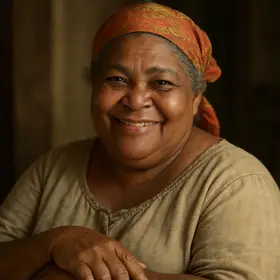 Madame AntoineShe’s the hospitable island matron on Chênière Caminada who takes Edna in when she grows faint, offering a clean bed, simple food, and unhurried kindness. Locals know her place well, and Robert trusts her, so her home becomes a quiet pause where Edna can rest and feel cared for.
 Étienne PontellierÉtienne is one of Edna Pontellier’s little boys, often seen dashing about Grand Isle with his brother, pockets full of shells and sand. Early on, he’s all chatter and skinned knees, tugging at his mother’s attention and reminding us what everyday family life looks like around her.
 Raoul PontellierRaoul is one of Edna and Léonce Pontellier’s two sons, the younger brother who spends the summer running about Grand Isle under the eye of a nurse. We meet him as a lively kid who alternates between play and minor complaints, the sort of everyday needs that keep tugging at his mother during their seaside days.
 The Lady in BlackWe first see her at Grand Isle, quietly drifting along the walks and galleries, praying and keeping to herself. People notice her because she’s always there in mourning black, trailing after the young lovers and moving through the resort like a silent, watchful shadow.
 The Two LoversWe first notice them on Grand Isle as the ever-present young couple who drift in and out of view at twilight, walking, whispering, and keeping close to each other. They matter because their easy, unquestioned togetherness becomes part of the atmosphere Edna moves through, a quiet contrast she keeps bumping into in those early seaside days.
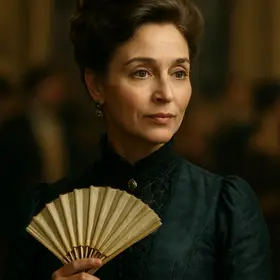 Mrs. HighcampWhen we first meet Mrs. Highcamp, she’s a well-connected New Orleans hostess moving through the racing crowd with her daughter and a knack for charming acquaintances. She’s breezy and flattering, happily pulling Edna into a livelier circle where introductions and amusements come easily.
 Mrs. MerrimanMrs. Merriman is one of the New Orleans social set Edna moves among—gracious, well-connected, and always present at the right visits and musicales. When we first meet her, she’s friendly and observant, the kind of woman whose polished small talk hints at the quiet pressures of how a lady should behave.
 The Farival TwinsWe first meet the Farival twins at Grand Isle, the pair forever side by side at the piano, supplying bright little duets whenever the adults want entertainment. They’re polite, diligent, and a touch showy—exactly the kind of musical darlings who make the summer evenings feel organized and proper.
Study guide
Summaries and analysis of all 39 chapters, and profiles of 27 characters, illustrated with scenes from the book.
Themes
- female autonomy
- social constraint
- desire and longing
- art and identity
- motherhood
Why Read The Awakening?
Read this novel for its close, unsparing portrait of a woman negotiating personal freedom within a tightly coded social world. Chopin traces interior states with economy and sensory detail — from the sea that catalyzes Edna’s self-awareness to the piano that articulates unspoken longings — making the emotional stakes immediate and relatable.
The Awakening remains relevant because it asks questions about identity, choice, and the costs of stepping outside expectations. Its scenes of domestic life, friendship and moral friction provoke reflection rather than easy answers, and the novel’s compact intensity rewards readers who want a character study that examines how culture, desire and art shape a life.
Experience The Awakening on Book2Life
Read with AI-generated visuals, character portraits, audio narration, smart summaries, and more — free in your browser and on iPhone.