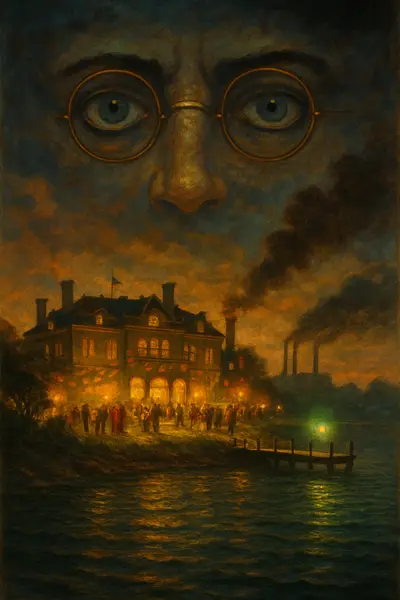
The Call of the Wild
1903 · Adventure novel
Free to read in your browser. Public-domain edition from Project Gutenberg, illustrated as you read.
About This Book
The Call of the Wild is Jack London’s tale of Buck, a strong, large dog living a comfortable life on Judge Miller’s sunny California estate until he is stolen and sold into the brutal world of the Yukon gold rush. Stripped of his domestic security, Buck is thrust into a hierarchy of sled dogs where survival depends on strength, cunning, and the ability to learn harsh northern rules. On the trail Buck encounters a succession of masters and hardships that harden him and awaken deep ancestral instincts. He learns to wear a harness, endure the cold, fight for food and position within the pack, and read the power of men. Rivalry with the lead dog Spitz escalates into a brutal confrontation that determines leadership, and under Buck’s command the team proves efficient even as the mail route’s grind wears the dogs down. Later, mismanagement and starvation under inexperienced owners Hal, Charles, and Mercedes push Buck and his team to the brink, until John Thornton rescues him and tends his recovery. Throughout these events Buck reshapes himself: from pampered pet to a seasoned sled dog whose loyalties are tested and whose deeper nature reawakens. The novel explores survival, leadership, and the tug between domestication and wild instinct through vivid episodes and memorable characters.
Characters in The Call of the Wild
 BuckWhen we first meet Buck, he’s the reigning favorite at Judge Miller’s ranch in California—confident, powerful, and used to getting his way. Then he’s abruptly torn from that easy life and pushed north, where he has to figure out new rules fast, which is why we follow him so closely from the start.
 SpitzWhen we first meet him, Spitz is the lead dog of François and Perrault’s team—confident, calculating, and quick to assert dominance. He needles Buck from the start and rules the traces with sharp teeth and sharper instincts, setting the bar for toughness on the trail.
 HalWhen we first meet Hal, he’s an overconfident greenhorn fresh to the Yukon, traveling with his sister Mercedes and her husband, Charles. He matters because he takes charge of a dog team he doesn’t understand, and his impatience and quick resort to the whip turn every mile of the trail into a bad lesson for man and dog alike.
 CharlesCharles shows up in the Yukon as an overpacked, out-of-his-depth greenhorn traveling with his wife Mercedes and her younger brother Hal. He blusters like he knows the trail, but his bad calls and short temper make trouble from the moment he handles the dog team—and that’s how Buck ends up in his hands.
 MercedesWhen we first meet Mercedes, she’s a pampered newcomer to the trail, traveling with her brother Hal and her husband Charles on their rushed push toward the Klondike. She fusses over baggage, frets over the dogs, and argues about every decision—her inexperience and nerves quickly making a hard trip even harder for everyone around her.
 The Man in the Red SweaterWe meet him the moment Buck is hauled into the city, and he’s the brute in the red sweater who wields the club without a flicker of doubt. He doesn’t hate the dog—he just believes in pain as instruction—and his lesson is Buck’s first crash course in how this new world really works.
 ManuelManuel is the gardener’s helper at Judge Miller’s place, a working man stretched thin by debts and the pull of the Chinese lottery. When we first meet him, he coaxes Buck out for a nighttime walk and hands the dog over to rough men for quick cash, setting the story in motion.
 The YeehatsThe Yeehats are an inland Indigenous hunting party the reader first glimpses moving through the northern woods, alert to camps, dogs, and any sign out of place. Their arrival shifts the mood from wilderness routine to human tension, reminding you the North is already known and patrolled by people who live with it every day.
 John ThorntonYou first meet him on the Yukon trail as a seasoned prospector and dog man who steps in with quiet authority and stops a brutal beating, taking Buck into his care. He matters because he treats Buck with patience and real affection, building trust instead of fear and giving the dog a partner worth following.
 FrançoisWe first meet François as the seasoned French‑Canadian dog‑driver who, with Perrault, buys Buck and hauls mail across the frozen North. He’s brisk, competent, and surprisingly fair, teaching Buck the law of the sled with firm hands and quick instincts, and showing the pack exactly who’s in charge without needless cruelty.
 PerraultPerrault is the sharp‑eyed government courier who buys Buck and gets him north onto the sled team. He’s practical, fair, and quick to spot a good dog, and his steady competence shows Buck what hard work in the frozen trails looks like.
 DaveWhen Buck first meets him, Dave is the quiet, work-obsessed sled dog who wants to be left alone and hates fuss. Put in the traces, he comes alive—steady at wheel, teaching Buck the rules of the trail with quick, corrective nips and impeccable example. He matters because his calm competence shows Buck how a real sled dog works.
 Sol-leksWhen Buck first meets him, Sol-leks is an older, no-nonsense sled dog already on the team—silent, disciplined, and touchy if anyone comes up on his blind side. He matters because his steady work and strict boundaries show Buck the unspoken rules of sled life and how respect is earned on the trail.
 CurlyWe first meet Curly as one of the dogs taken north alongside Buck, a cheerful, tail‑wagging traveler who wants to make friends with everyone. She matters because, right away, her openhearted nature throws Buck’s new world into sharp relief—she’s the kind of dog that makes you hope things will stay gentle even as the journey grows harsher.
 SkeetWe meet Skeet at John Thornton’s camp, where she immediately adopts Buck like a patient little nurse, licking his wounds and hovering until he settles. She matters because her calm, tender care is the first safe warmth Buck feels after brutal treatment, helping him heal and trust again.
 NigYou first meet Nig at a northern camp, where he’s part bloodhound and part deerhound and instantly friendly. He matters because his easy warmth helps Buck feel safe again—he’s one of the first dogs to greet him kindly and make the camp feel like a home.
 The Scotch Half-BreedHe shows up on the Yukon mail run as the new driver who takes over Buck’s team, quiet as stone and all business. He’s methodical and relentless about schedule and load, handling the whip and the dogs with a stern, workmanlike fairness that tells you he knows this trail and expects everyone—man and beast—to pull their weight.
 HansWhen we first meet Hans, he’s one of John Thornton’s quiet, capable partners in the Yukon—steady hands who cooks, mends gear, and helps handle the dogs. He matters because he’s part of the tight little crew that gives Buck real care and a calm, competent camp to belong to.
 PetePete is a quiet, capable partner traveling and working alongside John Thornton in the Yukon, the sort who keeps the fire going, fixes gear, and handles dogs without fuss. When we first meet him, he’s part of the tight little camp that gives Buck competent, decent handling, showing the kind of steadiness that harsh trails depend on.
 Judge MillerJudge Miller is the respected patriarch who owns the lush Santa Clara Valley estate where Buck lives a pampered, orderly life. He sets the calm, civilized world Buck starts in, the home and routine that make the story’s coming upheaval hit so hard.
Study guide
Summaries and analysis of all 7 chapters, and profiles of 24 characters, illustrated with scenes from the book.
The Call of the Wild summary ›The Call of the Wild characters ›
Themes
- survival
- instinct vs. civilization
- leadership
- loyalty
- man vs. nature
Why Read The Call of the Wild?
Read The Call of the Wild to experience a concise, action-driven story that probes what hardship does to identity. London’s episodic structure moves quickly from one crucible to the next, showing how environment and circumstance forge behavior and hierarchy. Buck’s arc makes abstract ideas about nature and nurture concrete and emotionally immediate.
The novel also offers vivid scenes of the Yukon and the sled-dog life, memorable characters who represent different human responses to the frontier, and tough, economical prose that keeps the focus on consequence rather than sentiment. For readers interested in character transformation, moral ambiguity, or a brisk, elemental adventure, this classic remains a powerful, accessible read.
Experience The Call of the Wild on Book2Life
Read with AI-generated visuals, character portraits, audio narration, smart summaries, and more — free in your browser and on iPhone.