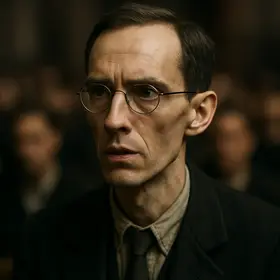
Nicholas Schliemann in The Jungle
Major character
A gaunt, bookish ex‑professor who translates workers' outrage into organized socialist ideas and speeches.
Who is Nicholas Schliemann?
Nicholas Schliemann is an educated, intense socialist intellectual who appears as a speaker and debater at workers' meetings in Packingtown. He wants to give the workers a coherent framework for their suffering—turning scattered complaints about filth, adulterated food, overwork, and exploitation into arguments for collective solutions and political organization. In the meeting that Jurgis attends, Schliemann sketches a scientific and utopian case for cooperation: industrial efficiency under communal control, drastically reduced necessary labor, and the moral indictment of capitalist waste and food adulteration. He argues with fellow speakers about religion and strategy, offering systematic, bookish explanations that contrast with the raw emotions of the crowd. His role is to educate, to furnish the movement with ideas and a program, and to inspire newly active voters to believe that collective political action can remake city life and the workplaces that dominate it.
In the book: When we first meet him, he’s the intense, bookish voice in a crowded hall—an educated socialist who talks fast, asks sharper questions, and seems to have read everything. He matters because he gives the workers’ frustrations a framework, turning raw outrage into ideas they can actually argue about.
Personality
- Erudite
- He speaks rapidly and sharply in the meeting, showing he has "read everything" and supplying a scientific and moral case for Socialism.
- Rhetorical
- At the Fisher settlement-house meeting he sketches a vision of industrial efficiency and communal living to rouse and instruct listeners.
- Idealistic
- He advocates dramatically reduced necessary labor and a cooperative commonwealth as achievable goals for the working class.
- Analytical
- He frames workers' complaints—adulteration, waste, exploitation—into systematic arguments showing capitalism's dysfunction.
Character arc
Nicholas Schliemann's presence in the chapters where he appears is steady rather than transformative: he enters already formed as an ardent, bookish socialist and remains that way through his scenes. He does not undergo a personal conversion or moral reversal; instead his function is pedagogical and catalytic. When Jurgis and other workers first encounter him at the settlement-house meeting, Schliemann is the clarifying force who converts their scattered grievances into an ideological program. He debates religion and practical means with other speakers, offering both scientific critique and utopian designs. By the end of the political chapter, his ideas have contributed to a surge of Socialist votes in Packingtown and an energized call to organize newly awakened voters. Thus Schliemann's arc is one of influence rather than change: he begins as the articulate theorist and ends as the intellectual center whose words help move a demoralized populace toward collective political action.
Relationships
- Jurgis Rudkus An audience member and potential recruit whom Schliemann addresses when explaining socialism to workers at the settlement-house meeting.
- Marija Berczynskas Part of the same community of Packingtown workers whose struggles Schliemann analyzes and seeks to organize politically.
- Comrade Ostrinski A fellow socialist figure in the movement with whom Schliemann debates strategy and ideology at public meetings.
- Ona Lukoszaite Representative of the immigrant family life affected by the social ills Schliemann condemns and wants to reform.
- Teta Elzbieta An elder community member whose household’s suffering exemplifies the conditions Schliemann diagnoses in his speeches.
Why Nicholas Schliemann matters
Schliemann embodies the book's argument that the workers' misery is not merely bad luck or individual failing but a social and economic disease that requires collective understanding and political remedy. As an intellectual organizer, he provides the language and vision that convert private suffering into public grievance and electoral action. His scientific, moral, and utopian rhetoric crystallizes Sinclair's critique of industrial capitalism—highlighting themes of exploitation, adulteration, waste, and the possibility of cooperative alternatives—so that the reader sees political consciousness as the necessary counterforce to systemic brutality.
Chapters with Nicholas Schliemann
More The Jungle characters
 Jurgis RudkusProtagonist
 Teta ElzbietaMajor character
 Marija BerczynskasMajor character
 Ona LukoszaiteMajor character
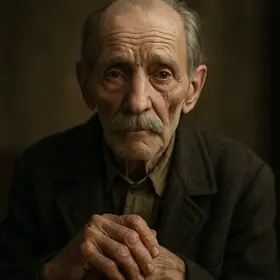 Antanas RudkusMinor character
 JonasMajor character
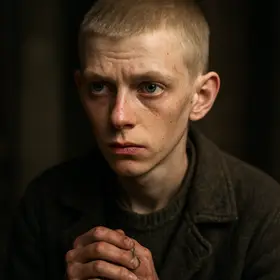 StanislovasMinor character
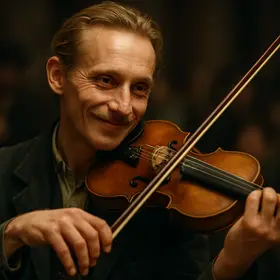 Tamoszius KuszleikaMinor character
All chapter summaries ›Characters ›
Read The Jungle illustrated
Every scene in these notes comes from the Book2Life reader, where the full public-domain text is illustrated as you read, with character portraits and narration. Free in your browser and on iPhone.
