
Louis XII in The Prince
Major character
King of France whose Italian campaigns illustrate the dangers of strategic errors when acquiring and holding states.
Who is Louis XII?
Louis XII appears in Machiavelli’s examples as the French monarch whose Italian ambitions produce a cautionary lesson. He seeks territorial expansion in Italy—most notably the conquest of Milan—and initially attains power through military action and political opportunity. Machiavelli records missions and negotiations (including a 1500 negotiation observed by the author) that reveal Louis’s operational choices. Rather than consolidating rule through native institutions and reliable forces, Louis relies on the shifting politics of the papacy and foreign allies; he empowers ecclesiastical actors and invites complex alliances that ultimately undermine his position. The subsequent formation of anti‑French coalitions, papal hostility under Julius II, and the intervention of other Italian and foreign powers contribute to the loss of territories Louis once held. In Machiavelli’s telling, Louis’s conduct—practical in ambition but mistaken in means—becomes a principal instructive example for princes about how not to secure newly acquired dominions.
In the book: In The Prince, Louis XII, king of France, serves as a central cautionary example: Machiavelli analyzes his campaigns in Italy—especially the conquest and loss of Milan—to illustrate strategic mistakes a ruler must avoid when acquiring and holding new territories, such as empowering the Church and inviting stronger foreign allies.
Personality
- Ambitious
- Machiavelli records Louis’s drive to conquer and control Italian territories, especially his seizure of Milan.
- Overreliant on alliances
- Machiavelli highlights Louis’s dependence on the shifting support of the papacy and other foreign powers, which proves unstable.
- Politically shortsighted
- Machiavelli criticizes Louis for strategic errors observed during negotiations and campaigns that fail to secure long‑term possession of Milan.
- Militarily conventional
- His campaigns exemplify reliance on external military means rather than building firm native foundations, a point Machiavelli emphasizes.
Character arc
Louis’s trajectory in Machiavelli’s account runs from successful acquisition to instructive failure. He begins as a powerful foreign sovereign able to project force into Italy and take key cities like Milan. In the wake of conquest he fails to transform military victories into stable governance: instead of establishing reliable native arms and institutions, he leans on diplomatic pacts, papal favor, and foreign contingents. These choices produce a brittle hold on territory. As Italian and papal politics shift—especially with the rise of an antagonistic pope and the formation of leagues against France—Louis loses the advantages that conquest alone had given him. By the end of Machiavelli’s discussion he has become less a triumphant ruler than a demonstrative case: his decline does not come from lack of ambition or initial success but from errors in consolidating power, making him a lasting negative exemplar in The Prince rather than a model to emulate.
Relationships
- Pope Alexander VI Part of the same Italian diplomatic and ecclesiastical landscape whose maneuvers and papal politics affect Louis’s fortunes.
- Pope Julius A principal antagonist in the papal turn against French interests; Julius’s policies help produce coalitions that weaken Louis.
- Ferdinand II of Aragon A foreign rival whose involvement in Italian affairs, alongside papal alignment, contributes to the pressures on Louis’s positions.
- Francesco Sforza The Milanese dynastic context with which Louis’s conquest and eventual loss of Milan are historically entangled.
- Florentines Members of the Italian republics whose shifting alliances and reactions form the local backdrop to Louis’s campaigns in Italy.
Why Louis XII matters
Louis functions as Machiavelli’s negative exemplar about acquiring and holding new states: success in battle is insufficient unless paired with secure military foundations and prudent political choices. His reliance on external allies, ecclesiastical influence, and opportunistic diplomacy demonstrates the risks Machiavelli warns against—especially the danger of empowering forces that can turn against a prince. Through Louis, Machiavelli underscores central themes: the primacy of good arms over transient favors, the need for autonomy from unreliable auxiliaries, and the imperative that a ruler convert conquest into stable institutions and loyalties.
Chapters with Louis XII
More The Prince characters
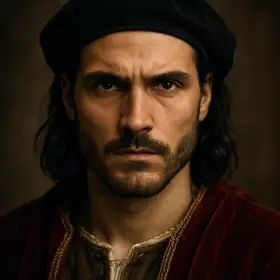 Cesare BorgiaMajor character
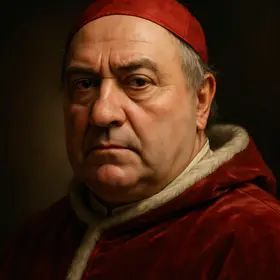 Pope Alexander VIMajor character
 Francesco SforzaMajor character
 Ferdinand II of AragonMajor character
- AAlexander the GreatMajor character
- FFlorentinesMajor character
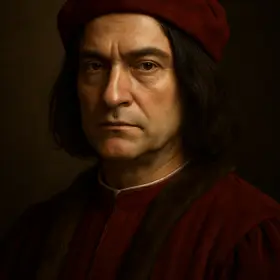 Lorenzo de' MediciMajor character
- PPope JuliusMajor character
All chapter summaries ›Characters ›
Read The Prince illustrated
Every scene in these notes comes from the Book2Life reader, where the full public-domain text is illustrated as you read, with character portraits and narration. Free in your browser and on iPhone.
