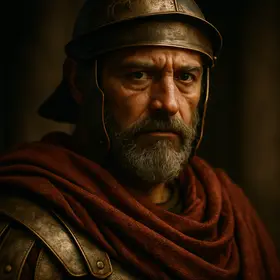
Romulus in The Prince
Major character
Legendary founder of Rome cited as an exemplar of a prince who seizes power and establishes enduring institutions.
Who is Romulus?
Romulus appears in Machiavelli’s discussion of founders who create new principalities by their own virtue and arms rather than by fortune. He embodies the sort of leader who identifies an opportunity in unsettled times and converts it into a durable state through decisive action, force when necessary, and the creation of political and civil structures. Machiavelli cites Romulus alongside Moses, Cyrus, and Theseus to show that such founders owe little to luck; their talents and willingness to use violence and prudence secure their success. As an innovator, Romulus faces the risks inherent in overturning old orders—he makes enemies among those who benefited from the previous arrangement and cannot rely solely on lukewarm supporters—but by relying on his own strength and eliminating rivals he stabilizes the new polity. Romulus thus illustrates Machiavelli’s argument that armed founders who combine boldness with prudence can transform private life into principality and leave lasting institutions.
In the book: In The Prince, Romulus is cited as an exemplar of a founder who seized power decisively and established new political and civil institutions, illustrating Machiavelli’s argument that founding princes often rely on force, prudence, and harsh measures to create stable states.
Personality
- Decisive
- Machiavelli names Romulus as a prime example of a founder who seizes opportunities and converts them into a durable state.
- Violent-pragmatic
- He is presented among innovators who must rely on force and eliminate rivals to secure their rule.
- Innovative
- Romulus is grouped with Moses, Cyrus, and Theseus as a man who creates new political and civil institutions rather than inheriting them.
- Self-reliant
- Machiavelli emphasizes that such founders succeed by their own arms and ability rather than by fortune or others' support.
Character arc
Romulus’s arc, as Machiavelli presents it, runs from private actor to founding prince: he recognizes an opening created by the circumstances of his time, acts boldly to seize power, and then undertakes the hard work of establishing political and civil order. At first he confronts the typical perils of innovators—hostility from those who benefited from the old order and only tepid backing from potential allies—so his survival depends on relying chiefly on his own resources and forces. By decisively using violence and prudence to remove rivals and consolidate control, he moves from the precariousness of a new claimant to the security of a stable principality. By the end of his example in Machiavelli’s argument, Romulus functions as the model of how a founder converts initial danger into long-term stability through a combination of personal virtue, force, and institutional invention.
Relationships
- Moses Presented alongside Romulus as a fellow founder who secures a people by ability rather than fortune.
- Cyrus the Great Grouped with Romulus as an exemplar of founders who build durable states through their talents and arms.
- Theseus Compared with Romulus to illustrate the type of innovator who creates new political orders.
- Florentines Serve as a contemporary example of a populace whose political fortunes highlight the dangers founders like Romulus must overcome.
Why Romulus matters
Romulus functions as a central emblem of Machiavelli’s theme that the founding prince must combine boldness, military capability, and practical cruelty to establish lasting government. His example underscores the book’s argument that enduring states are often born of deliberate violence and innovation rather than gentle reform or mere fortune, and that reliance on one’s own arms and prudence is essential when disrupting entrenched interests.
Chapters with Romulus
More The Prince characters
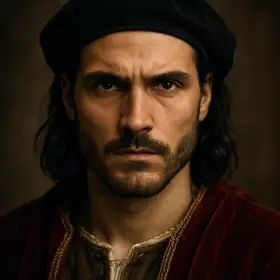 Cesare BorgiaMajor character
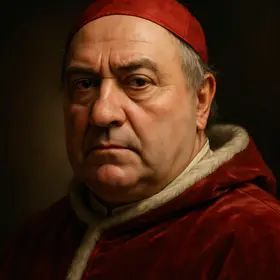 Pope Alexander VIMajor character
 Francesco SforzaMajor character
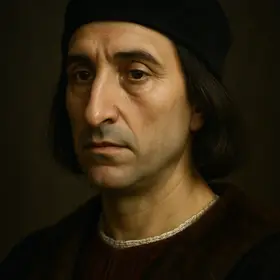 Ferdinand II of AragonMajor character
- AAlexander the GreatMajor character
- FFlorentinesMajor character
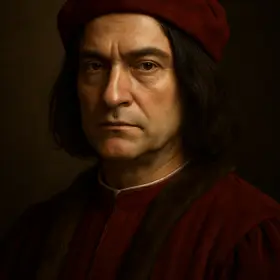 Lorenzo de' MediciMajor character
 Louis XIIMajor character
All chapter summaries ›Characters ›
Read The Prince illustrated
Every scene in these notes comes from the Book2Life reader, where the full public-domain text is illustrated as you read, with character portraits and narration. Free in your browser and on iPhone.
