
Mr. Earnshaw in Wuthering Heights
Major character
The Earnshaw patriarch who brings Heathcliff home, showing a fatal partiality that destabilizes his family.
Who is Mr. Earnshaw?
Mr. Earnshaw is the father of Hindley and Catherine Earnshaw and the master of Wuthering Heights during the early years recounted by Nelly Dean. Returning from Liverpool, he finds an abandoned, ragged boy and insists on bringing him into his household, christening him Heathcliff and favoring him openly. That favour endears Heathcliff to Catherine and draws Hindley’s jealous hatred, setting a pattern of rivalry and resentment. As his health fails he becomes jealous and irritable, aggravating household tensions and allowing Joseph’s stern religiosity and Hindley’s vindictiveness to reshape the home. He dies quietly by the fireside with Catherine and Heathcliff at his side, leaving the estate to be reconstituted under Hindley’s harsher rule and precipitating the moral and social decline that follows. His actions—especially the decision to adopt Heathcliff and to show marked partiality—are the instigating cause of much of the novel’s subsequent conflict.
In the book: The patriarch of Wuthering Heights and father to Hindley and Catherine, Mr. Earnshaw brings the orphan Heathcliff into his household, unintentionally upsetting the family balance. His partiality toward the boy sows seeds of rivalry and resentment that drive much of the novel’s ensuing conflict.
Personality
- impulsive
- He impulsively brings the dirty, ragged boy from Liverpool into his household despite alarm and protest from his family (Chapter 4).
- partial
- He shows clear favour to Heathcliff, which Nelly notes openly and which provokes Hindley’s jealous hatred (Chapter 4).
- suffering
- He becomes irritable, jealous, and self-destructive in grief after his wife's death and as his health declines (Chapters 5 and 8).
- neglectful consequence
- His failure to resolve household tensions and to control Hindley’s retaliation allows Heathcliff’s demotion and the household’s decay (Chapters 5–8).
Character arc
Mr. Earnshaw first appears as a decisive, even eccentric patriarch who rescues and installs Heathcliff in the household, overturning its existing balance. His favour toward the foundling bonds Heathcliff to Catherine and plants the seed of Hindley’s enduring resentment. As events unfold he grows physically weaker and mentally more jealous and irritable; his illness amplifies divisions—Joseph’s religious influence and Hindley’s vindictiveness intensify in his waning authority. He dies relatively quickly after a period of decline, quietly by the fireside with Catherine and Heathcliff present (Chapter 5). His death marks a turning point: Hindley returns, asserts harsh control, degrades Heathcliff, and initiates the household’s long moral and social deterioration. Mr. Earnshaw never recovers the capacity to repair the damage his initial choice creates; he passes away leaving the consequences of his partiality and impulsive kindness to be played out by the next generation (Chapters 5–17).
Relationships
- Catherine Earnshaw His daughter, who is comforted at his bedside when he dies and who shares a close bond with Heathcliff fostered by Mr. Earnshaw’s favour (Chapter 5).
- Hindley Earnshaw His son, whose jealous hatred of Heathcliff intensifies after Mr. Earnshaw favours the foundling and who later seizes control of the household after Mr. Earnshaw’s death (Chapters 4–6).
- Heathcliff The orphan he brings home and openly favours, thus altering household dynamics and becoming the focal point of rivalries (Chapter 4).
- Joseph The household’s rigid, religious servant whose sanctimonious influence grows during Mr. Earnshaw’s illness and hardens the house’s atmosphere (Chapters 3 and 5).
- Nelly Dean The house servant and narrator who cares for Heathcliff at Mr. Earnshaw’s orders and records the household events before and after his death (Chapters 4–5).
- Mr. Kenneth The doctor who attends the family during illnesses; his warnings and visits mark the household’s medical and moral crises as Mr. Earnshaw’s health fails (Chapters 5 and 8).
Quotes by Mr. Earnshaw
“Why canst thou not always be a good lass, Cathy?”
Chapter 5Mr. Earnshaw, affectionate yet reproving, asks Cathy to be good while stroking her hair before he falls asleep.
“Damn the doctor!”
Chapter 8Mr. Earnshaw angrily refuses to accept the doctor's prognosis about his wife's illness, revealing his denial and rage.
““Heathcliff dead!””
Chapter 32Lockwood’s shocked reaction on hearing Nelly’s startling news that Heathcliff has been dead for three months.
Why Mr. Earnshaw matters
Mr. Earnshaw embodies the novel’s exploration of parental choice and its unintended consequences: his compassionate but imprudent act of adopting Heathcliff destabilises class and family hierarchies and ignites the cycles of jealousy and revenge that drive the plot. His weakness and declining authority after that decision let harsher personalities reshape the household, illustrating how brief acts by a patriarch can produce long-lasting moral decay. Through him the book probes themes of favoritism, the fragility of domestic order, and how early attachments shape identities and vendettas across generations.
Chapters with Mr. Earnshaw
More Wuthering Heights characters
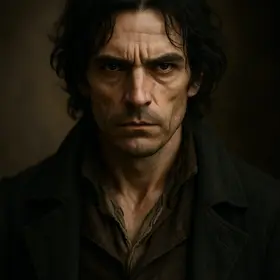 HeathcliffProtagonist
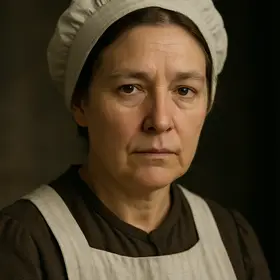 Nelly DeanNarrator
 Catherine LintonMajor character
 JosephMinor character
 Edgar LintonMajor character
 Hareton EarnshawMajor character
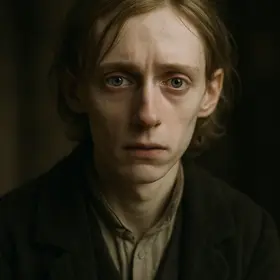 Linton HeathcliffMajor character
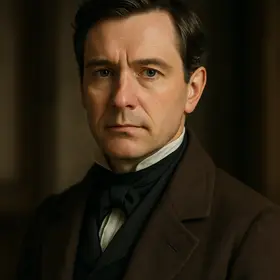 Mr. LockwoodNarrator
All chapter summaries ›Characters ›
Read Wuthering Heights illustrated
Every scene in these notes comes from the Book2Life reader, where the full public-domain text is illustrated as you read, with character portraits and narration. Free in your browser and on iPhone.
