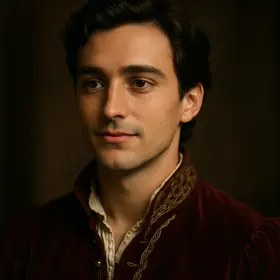
Lysander in A Midsummer Night's Dream
Major character
Young Athenian lover devoted to Hermia who flees Athens and becomes entangled in fairy mischief that alters his affections.
Who is Lysander?
Lysander is one of the four young lovers who drive the central romantic plot. He loves Hermia and, faced with Athenian law and Egeus’s insistence that Hermia marry Demetrius, plans to run away with her to his aunt’s house outside Athens where the law cannot reach. He leads the lovers into the wood to escape the court’s penalties. While asleep in the wood he is mistakenly anointed with a fairy love potion by Puck, which causes him to fall passionately in love with Helena and to reject Hermia. This error sparks conflict among the four lovers—insults, pursuit, and near-violence—until Oberon orders the mistake corrected. Puck later applies an antidote, restoring Lysander’s love so the lovers awaken reconciled; their flight is explained to Theseus and Egeus, and Theseus decides to allow the marriages at his celebration. Throughout, Lysander acts from earnest loyalty to Hermia, but the fairy interference exposes how easily desire can be rearranged and how the lovers’ plans are vulnerable to chaos.
In the book: Lysander is one of the four young lovers at the heart of the comedy, devoted to Hermia and willing to defy Athenian authority to be with her. His plans set the romantic plot in motion, and his entanglement with the fairies’ mischief fuels the play’s themes of desire, confusion, and the unpredictable nature of love, all while maintaining a fundamentally earnest, loyal spirit.
Personality
- Devoted
- He conspires with Hermia to flee Athens to his aunt’s house so they can marry outside Athenian law (Act 1, Scene 1).
- Resolute
- He proposes a concrete plan of escape and vows to meet Hermia in the wood where they once honored May (Act 1, Scene 1).
- Earnest
- Even after being bewitched and professing love for Helena, his earlier actions demonstrate sincere intent to protect Hermia from Athenian punishment (Act 1, Scene 1; Act 2, Scene 2).
- Vulnerable
- He immediately and passionately transfers his affections to Helena after Puck anoints his eyes, showing how easily his desire can be manipulated (Act 2, Scene 2).
- Reconciled
- After Oberon instructs Puck to correct the mistake, Lysander is administered the restorative juice and later awakens reconciled with Hermia (Act 3, Scene 2; Act 4, Scene 1).
Character arc
Lysander begins as a determined lover willing to defy Athenian law to be with Hermia, taking action by planning escape and leading the pair into the wood. His commitment is clear and independent of outside approval. That certainty collapses when Puck mistakenly anoints his eyes: upon waking he instantly forsakes Hermia and professes ardent love for Helena, revealing an abrupt, externally imposed shift that undermines his earlier agency. This bewitched behavior plunges him into conflict with the other lovers and forces a chaotic pursuit and confrontation. Once Oberon recognises the error, he directs Puck to correct it; Puck applies the restorative juice and Lysander’s original attachment to Hermia is restored. By the time the nobles discover the sleeping youths, Lysander resumes his prior role as Hermia’s companion and the lovers are reconciled. His arc moves from determined autonomy, through involuntary confusion and betrayal of his vows, back to restored fidelity—demonstrating both how mutable desire can be and how order is re-established by the play’s end.
Relationships
- Hermia Lover and co-conspirator; they plan to flee Athens together to avoid Egeus’s imposed marriage to Demetrius.
- Helena Unwitting object of his enchanted affections after Puck anoints his eyes, causing him to abandon Hermia and pursue Helena.
- Demetrius Rival in love whose presence in the wood and subsequent enchantment amplify the lovers’ confusion and conflict.
- Puck Unwitting antagonist whose mistaken application of the love-juice to Lysander triggers the main romantic crisis.
- Oberon Indirect arbiter whose plan to correct the enchantment leads to Lysander’s restoration and the lovers’ reconciliation.
- Egeus Hermia’s father whose demand that she marry Demetrius initiates Lysander and Hermia’s flight from Athens.
Quotes by Lysander
“The course of true love never did run smooth.”
Act 1, Scene 1Lysander comforts Hermia by observing that lovers often face obstacles, framing their struggle as typical of true love.
“And run through fire I will for thy sweet sake. Transparent Helena! Nature shows art, That through thy bosom makes me see thy heart.”
Act 2, Scene 2Speaking immediately after being anointed, Lysander declares sudden and excessive love for Helena, showing the potion’s effect.
Why Lysander matters
Lysander embodies the play’s exploration of love as both deliberate choice and irrational force. His initial resolve and plan to elude law show love as active rebellion; his sudden enchantment highlights desire’s instability and the ease with which affection can be misdirected. Through his temporary betrayal and eventual restoration, the play examines the boundary between authentic feeling and externally imposed passion, contributing to themes of confusion, transformation, and the restoration of social order by the end of the story.
Chapters with Lysander
More A Midsummer Night's Dream characters
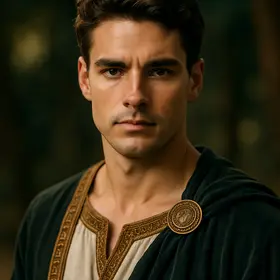 DemetriusMajor character
 HelenaMajor character
 HermiaMajor character
 PuckMajor character
 OberonMajor character
 Peter QuinceMajor character
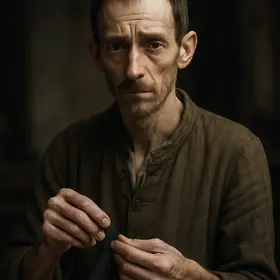 Robin StarvelingMinor character
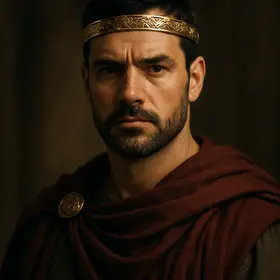 TheseusMajor character
All chapter summaries ›Characters ›
Read A Midsummer Night's Dream illustrated
Every scene in these notes comes from the Book2Life reader, where the full public-domain text is illustrated as you read, with character portraits and narration. Free in your browser and on iPhone.
Read A Midsummer Night's Dream free
