
Puck in A Midsummer Night's Dream
Major character
Oberon's mischievous, shape-shifting attendant who instigates and then helps resolve the play’s magical confusions.
Who is Puck?
Puck (also called Robin Goodfellow) is Oberon’s playful fairy attendant and the chief agent of magic in the wood. Tasked by Oberon to fetch the love-in-idleness flower and to anoint Athenian eyes, Puck carries out enchantments, plays tricks on the rustic mechanicals, and delights in teasing both mortals and fairies. His shape‑shifting knack and taste for mischief lead him to transform Bottom’s head into an ass and to apply the love-juice to the wrong Athenian (Lysander) by mistake. When Oberon discovers Puck’s error, Puck follows orders to correct it: he finds Helena, misleads and disperses the quarrelling lovers, and applies the antidote so the couples awaken reconciled. Puck functions as a comic engine of chaos who nevertheless helps steer events back toward harmony, and in the final scene he addresses the audience directly, framing the night’s events as a dream and offering to amend any offence with more merriment.
In the book: Also called Robin Goodfellow, Puck is Oberon’s playful attendant whose pranks and enchantments set much of the comedy in motion. A clever trickster and shape‑shifter, he delights in mischief but ultimately uses his magic to steer events back toward harmony, serving as a lively bridge between the fairy world and the human lovers.
Personality
- Mischievous
- He silently mocks the mechanicals during their rehearsal and later delights in playing pranks on both mortals and fairies.
- Clever
- Oberon entrusts him with finding the enchanted flower and carrying out delicate enchantments across the wood.
- Impulsive
- He anoints Lysander’s eyes after mistaking him for Oberon’s intended target, acting without confirming identities.
- Obedient
- When Oberon orders corrections, Puck obediently follows commands to fetch Helena, lead the lovers away, and apply the restorative juice.
- Playful
- He transforms Bottom into an ass and then revels in the comic chaos that follows, treating the scene as sport.
Character arc
Puck appears as a gleeful instigator whose magic drives much of the play’s confusion and comedy. Early on he fetches and uses Oberon’s love-juice and, acting on his own judgment, anoints Lysander instead of Demetrius, which escalates the lovers’ quarrel. He also transforms Bottom and enjoys the astonishment of the mechanicals and the enchanted devotion of Titania. Once Oberon realises what has occurred, Puck shifts from prankster to troubleshooter: he locates Helena, scatters and confuses the fighting lovers until they sleep, and then administers the corrective potion to Lysander so the lovers will wake reconciled. By the end he removes Bottom’s ass-head at Oberon’s command and helps restore Titania’s senses. In the final scene Puck adopts a reconciliatory, almost apologetic tone as he blesses the sleeping household alongside Oberon and Titania and addresses the audience to frame the night’s events as a dream, closing his arc from mischief-maker to harmoniser.
Relationships
- Oberon Master and commander; Puck obeys Oberon’s orders and carries out his magical plans.
- Titania Unwitting victim of his magic when she falls in love with Bottom after Puck’s transformation and Oberon’s application of the flower.
- Nick Bottom Object of Puck’s prank—transformed by Puck into an ass—which leads to Titania doting on him.
- Lysander Recipient of Puck’s mistaken anointing, which makes him fall madly in love with Helena and sparks the lovers’ chaos.
- Helena Brought into the scene by Puck after his error; she becomes the focus of the enchanted affections of Lysander and Demetrius.
- The mechanicals (Peter Quince, Snug, Bottom, Francis Flute, Tom Snout, Robin Sta Targets of Puck’s ridicule and magical meddling during their rehearsal in the wood.
Quotes by Puck
“What hempen homespuns have we swaggering here, So near the cradle of the Fairy Queen?”
Act 3, Scene 1Puck arrives and mockingly observes the mechanicals rehearsing close to where the sleeping fairy queen lies.
“My mistress with a monster is in love.”
Act 3, Scene 2Puck reports to Oberon that Titania has awakened to love an ass, summarising his prank with the mechanicals.
“Lord, what fools these mortals be!”
Act 3, Scene 2Puck observes the absurd behaviour of the four lovers, underscoring the play’s comic view of human love as foolish.
“If we shadows have offended, Think but this, and all is mended, That you have but slumber’d here While these visions did appear.”
Act 5, Scene 1Puck’s epilogue offers the audience a comforting frame — the action may be forgiven as a dream — and asks for pardon and goodwill.
Why Puck matters
Puck embodies the play’s tension between disorder and reconciliation: his mischief generates comic chaos that disrupts social and romantic order, yet his obedience to Oberon and final corrections restore harmony. As a liminal figure between fairy and human worlds, he dramatizes themes of transformation, the slipperiness of identity and love, and the porous boundary between waking life and dream. His final address blurs performance and reality, inviting the audience to view the events as playful illusion rather than moral calamity.
Chapters with Puck
More A Midsummer Night's Dream characters
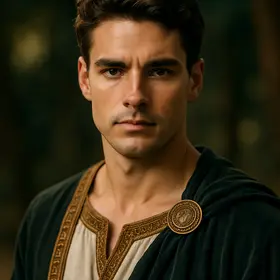 DemetriusMajor character
 HelenaMajor character
 HermiaMajor character
 LysanderMajor character
 OberonMajor character
 Peter QuinceMajor character
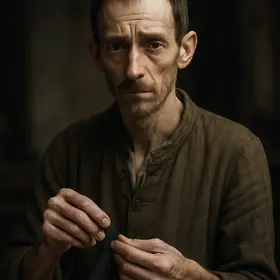 Robin StarvelingMinor character
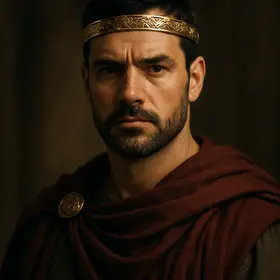 TheseusMajor character
All chapter summaries ›Characters ›
Read A Midsummer Night's Dream illustrated
Every scene in these notes comes from the Book2Life reader, where the full public-domain text is illustrated as you read, with character portraits and narration. Free in your browser and on iPhone.
Read A Midsummer Night's Dream free
