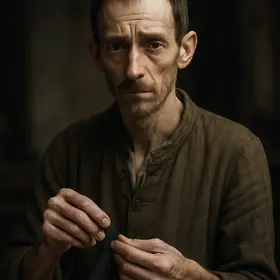
Robin Starveling in A Midsummer Night's Dream
Minor character
A humble Athenian tailor and one of the 'rude mechanicals' who joins an amateur troupe to perform at the Duke’s wedding.
Who is Robin Starveling?
Robin Starveling is a modest tailor and one of the six craftsmen who rehearse Peter Quince’s interlude, Pyramus and Thisbe, for Theseus’s wedding festivities. He is earnest, literal-minded and unassuming: in the initial rehearsal he answers when called and accepts the small part Quince assigns him—Thisbe’s mother—without protest. He travels with the troupe to the wood to rehearse and is present during the chaotic meeting there, where the actors bungle staging and props. Starveling is among those who flee when Bottom is magically transformed, later joining Quince and the others in searching anxiously for their missing player. By the time of the final performance at the palace he takes his place in the deliberately inept presentation, supplying the comic figure of Moonshine and helping provide the play’s farcical contrasts. Throughout, Starveling’s reserve and plainness supply gentle comic relief, underscoring the gap between the craftsmen’s honest intentions and the lofty drama they attempt to imitate.
In the book: Robin Starveling is one of the “rude mechanicals,” a humble artisan (a tailor) who joins his friends to stage an amateur play for the Duke’s wedding festivities. Timid and literal-minded, he provides gentle comic relief—especially in his earnest performance as “Moonshine”—highlighting the gap between lofty drama and everyday folk while helping to stitch together the play’s lighter, farcical scenes.
Personality
- Timid
- In Act 1, Scene 2 he answers when called but does not volunteer or argue for parts, showing a submissive reserve.
- Literal-minded
- In Act 5 he performs as 'Moonshine,' taking the role’s physical and descriptive demands at face value as part of the bumbling show.
- Earnest
- In Act 1 he agrees to Quince’s plan to rehearse 'obscenely and courageously,' committing to the group’s effort despite their ineptitude.
- Practical
- In Act 4 he worries that Bottom has been carried off and participates in preparations and instructions to ensure the play will go on.
Character arc
Robin begins as a quiet, cooperative member of the craftsmen’s troupe who accepts his small assigned role without fuss. In the rehearsal room he is part of the comic bickering but remains mostly deferential, showing his comfort in following Quince’s direction rather than leading. When the group rehearses in the wood and panic erupts at Bottom’s transformation, Starveling’s fear and concern surface—he joins the others in flight and later in the anxious search for Bottom, revealing how invested he is in the troupe’s success despite his reluctance to stand out. By Act 4 he moves from passive participant to active preparer, helping ready costumes and props and taking practical worries seriously so the performance can proceed. At the palace he fulfills his literal, modest comic duty as Moonshine, contributing to the performance’s gentle farce. He does not undergo a dramatic inward transformation, but he shifts from quiet compliance to dependable collaborator whose steady presence helps the troupe achieve their humble goal.
Relationships
- Peter Quince Leader and director of the craftsmen’s troupe who assigns Starveling the part of Thisbe’s mother; Starveling follows Quince’s instructions.
- Nick Bottom Fellow actor whose exuberance and later disappearance deeply affect the troupe; Starveling both fears for and depends on Bottom.
- Francis Flute Fellow craftsman and rehearsing actor who shares the group’s anxieties and preparations with Starveling.
- Tom Snout Companion player present in rehearsals and searches; they collaborate as members of the same amateur company.
- Snug Co-actor who voices practical worries about lines and memory that echo Starveling’s own concerns for the performance.
- Theseus Duke and audience for whom Starveling ultimately performs; Theseus’s acceptance frames the craftsmen’s attempt as gracious entertainment.
Quotes by Robin Starveling
“He cannot be heard of. Out of doubt he is transported.”
Act 4, Scene 2Starveling explains Bottom is missing and suggests he has been carried off, heightening the troupe's panic.
Why Robin Starveling matters
Starveling embodies the play’s affection for ordinary people trying to reach for art beyond their station; his literalness and modesty make the craftsmen’s earnest failure both comic and sympathetic. As a link between the rustic rehearsal scenes and the palace performance, he helps dramatize the gap between high romance and practical life, reinforcing themes about illusion, performance, and social playacting. His steady presence underlines the play’s humane treatment of social outsiders and the idea that theatrical value can be found in sincere effort as much as polished skill.
Chapters with Robin Starveling
More A Midsummer Night's Dream characters
 Demetrius
 Helena
 Hermia
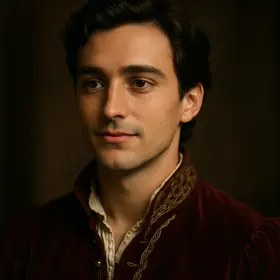 Lysander
 Puck
Puck Oberon
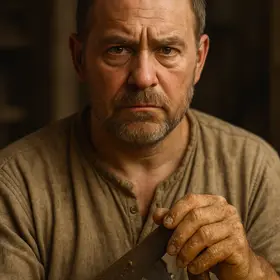 Peter Quince
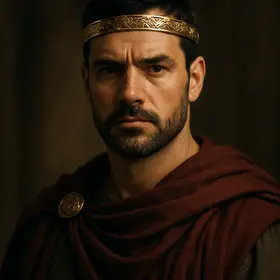 Theseus
All chapter summaries ›Characters ›
Read A Midsummer Night's Dream illustrated
Every scene in these notes comes from the Book2Life reader, where the full public-domain text is illustrated as you read, with character portraits and narration. Free in your browser and on iPhone.
Read A Midsummer Night's Dream free
