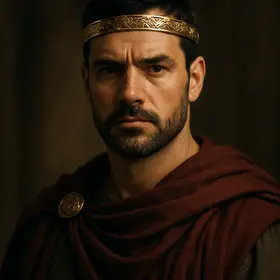
Theseus in A Midsummer Night's Dream
Major character
Duke of Athens whose law, judgment, and planned wedding frame and ultimately reconcile the play’s conflicts.
Who is Theseus?
Theseus is the Duke of Athens who appears as the figure of lawful authority and civic order whose impending marriage to Hippolyta sets the play’s social frame. In the opening court he enforces Athenian law, giving Hermia the stark choice offered by her father Egeus: marry Demetrius, face death, or enter a nunnery; he sets a deadline for her decision. Though firm, he balances severity with mercy: when the four young lovers are discovered asleep in the wood, Theseus hears their story, accepts their explanation, and forgives them, resolving to include their marriages in his own wedding celebrations. He also presides over the palace entertainments, graciously allowing the mechanicals to perform and treating their inept comedy with amused encouragement. Theseus’s judgments and ceremonies move the play from legal rigidity into a festive closure, anchoring the transition from conflict to communal reconciliation without eclipsing the play’s comic spirit.
In the book: Theseus is the Duke of Athens, a figure of law, order, and state authority whose impending marriage to Hippolyta frames the play. His judgments set the stakes for the young lovers and the mechanicals, and his presence anchors the transition from courtly rigidity to festive harmony, helping resolve tensions between rule and desire without overshadowing the comedy’s lighter spirits.
Personality
- Authoritative
- He enforces Athenian law in court by giving Hermia a formal ultimatum—marry Demetrius, die, or become a nun.
- Pragmatic
- He sets a clear deadline (until the next new moon) for Hermia’s decision rather than indulging rhetorical argument.
- Gracious
- At dawn in the wood he forgives the lovers and decides to join their weddings to his own festivities.
- Cultured
- In the palace he listens to Philostrate’s entertainments and courteously allows the mechanicals to perform before his court.
Character arc
Theseus begins as an emblem of civic authority: in the Athenian court he responds to Egeus’s complaint by invoking the strict remedies of the law and presenting Hermia with an uncompromising choice. His early role stresses order and the enforcement of social norms over private desire. As the play progresses, his presence subtly shifts from rigid arbiter to benevolent head of state. When he and his hunting party find the sleeping lovers in the wood, Theseus listens to their account, accepts the explanations of love and flight, and chooses reconciliation rather than punishment—he folds their marriages into his own upcoming celebrations. Later, at the palace, he plays the hospitable patron, entertaining the mechanicals’ play and treating their failings with amused indulgence. By the final act he functions less as an unforgiving judge and more as a unifying social force who sanctions the festive harmony that resolves the play’s tensions between law and desire.
Relationships
- Hippolyta Theseus is the duke engaged to Hippolyta; their planned wedding frames the play’s ceremonies and festivals.
- Egeus Egeus brings Hermia’s complaint to Theseus and relies on the Duke to enforce Athenian paternal authority.
- Hermia Hermia is the aggrieved daughter whose refusal and flight put her under Theseus’s legal jurisdiction and later his mercy.
- Lysander Lysander is Hermia’s chosen lover whose plan to flee Athens prompts the crisis Theseus first adjudicates and later resolves.
- Demetrius Demetrius is the suitor favored by Egeus and the man Hermia is ordered to marry under Theseus’s hearing.
- Peter Quince Quince brings the mechanicals before Theseus’s court to perform, and Theseus receives their play with amused generosity.
Quotes by Theseus
“I woo’d thee with my sword, And won thy love doing thee injuries;”
Act 1, Scene 1Theseus recounts how he won Hippolyta by force, contrasting martial conquest with the celebratory wedding he now promises.
“The lunatic, the lover, and the poet Are of imagination all compact:”
Act 5, Scene 1Theseus reflects on how imagination shapes perception, framing the evening’s entertainments and the play’s themes of illusion.
Why Theseus matters
Theseus represents the tensions between law and love that drive the play: his initial insistence on legal order presents the stakes that force the lovers into flight, while his later clemency helps restore social harmony. By moving from strict adjudicator to benevolent host, he models how civic authority can accommodate human desire without collapsing into chaos. His presence also legitimizes the comic relief of the mechanicals and anchors the transition from conflict to festive reconciliation, reinforcing the play’s theme that social structures and revelry can coexist.
Chapters with Theseus
More A Midsummer Night's Dream characters
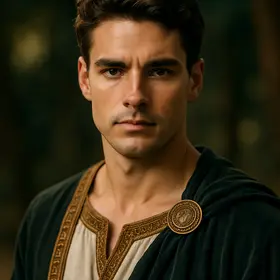 DemetriusMajor character
 HelenaMajor character
 HermiaMajor character
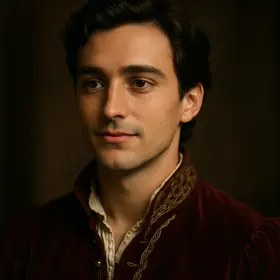 LysanderMajor character
 PuckMajor character
 OberonMajor character
 Peter QuinceMajor character
 Robin StarvelingMinor character
All chapter summaries ›Characters ›
Read A Midsummer Night's Dream illustrated
Every scene in these notes comes from the Book2Life reader, where the full public-domain text is illustrated as you read, with character portraits and narration. Free in your browser and on iPhone.
Read A Midsummer Night's Dream free
