
Oberon in A Midsummer Night's Dream
Major character
King of the fairies who engineers enchantments that tangle and restore the lovers’ affections and reconcile with Titania.
Who is Oberon?
Oberon is the powerful king of the fairies whose quarrel with Queen Titania triggers a chain of magical interventions in the Athenian woods. Angered that Titania refuses to surrender a changeling boy, he seeks both possession of the child and a means to punish or persuade his queen. Discovering a magic “love-in-idleness” flower, Oberon commands his servant Puck to use its juice to make an unloving Athenian fall passionately in love with the next living thing he sees. When Puck errs and enchants Lysander instead of Demetrius, Oberon adjusts the plan—ordering corrective enchantments and staging further tricks—and watches the mortal chaos with amused authority. He also uses the flower to bewitch Titania so he can seize the changeling, then later frees her with an antidote. At the end, Oberon and Titania reconcile and together bless the palace couples, restoring order and harmony.
In the book: Oberon is the king of the fairies whose quarrel with Queen Titania sets the play’s magical machinery in motion. Commanding the mischievous Puck, he engineers enchantments that tangle and retangle the romantic fortunes of mortals in the Athenian woods. Through his will and interventions, the comedy explores themes of desire, power, and reconciliation, with Oberon standing as the orchestrator of much of the play’s wonder and mischief.
Personality
- Calculating
- He instructs Puck to use the love-juice on the Athenian who scorns a maiden to force a change in the human lovers’ affections.
- Authoritative
- He summons Puck multiple times and gives precise orders—first to fetch the flower, then to anoint eyes, and later to correct Puck’s mistake.
- Manipulative
- He deliberately enchants Titania with the flower so she will fall in love and allow him to take the changeling child.
- Reflective
- After observing the mortals’ turmoil and Puck’s errors, he devises a corrective plan to restore the proper lovers’ pairings.
- Restorative
- He removes the enchantment from Titania, returns Bottom’s human head, and later blesses the couples in the palace.
Character arc
Oberon appears as a ruler intent on asserting his will: he wants the changeling boy and seeks to use magic to shape human desire and punish perceived slights. Early on he acts decisively and rather ruthlessly—bewitching Titania and ordering Puck to alter mortals’ affections—treating both fairy and human feelings as instruments of his aims. When Puck’s blunder creates greater confusion among the lovers, Oberon acknowledges the mistake and shifts from commander to problem-solver, directing Puck to lead the men away and apply a restorative charm to Lysander so that the lovers will awaken aligned with the intended matches. By Act 4 he has reclaimed the changeling and lifts the spell from Titania, indicating a move from coercion to reconciliation. In the final act Oberon joins Titania in blessing the human marriages, signaling a restoration of order and a closing of the rift he began, so that his authority ends not only in dominance but in repair and benediction.
Relationships
- Titania Queen of the fairies; they are estranged over a changeling boy but reconcile after Oberon enchants and then releases her.
- Puck Oberon’s mischievous servant whom Oberon commands to apply magical remedies and who executes (and sometimes bungles) his orders.
- Demetrius A mortal target of Oberon’s plan—Oberon intends Demetrius to be made to love Helena and directs Puck accordingly.
- Lysander An unintended victim of Oberon’s scheme when Puck mistakenly anoints his eyes, prompting Oberon to order a corrective potion.
- Helena The object whom Oberon wishes a scornful Athenian to love; her pursuit and suffering motivate Oberon’s intervention in the lovers’ affairs.
- Theseus A human leader whose final celebrations Oberon and Titania attend and whom Oberon helps bless by restoring order among the lovers.
Quotes by Oberon
“Fetch me that flower, the herb I showed thee once: The juice of it on sleeping eyelids laid Will make or man or woman madly dote Upon the next live creature that it sees.”
Act 2, Scene 1Oberon explains the magical means by which he will manipulate love — a central plot device that initiates supernatural interference in human relationships.
“This falls out better than I could devise.”
Act 3, Scene 2Oberon initially approves of Puck’s mischief but then realises the lovers’ matter is mishandled and must be fixed.
“And now I have the boy, I will undo This hateful imperfection of her eyes.”
Act 4, Scene 1Oberon explains his motive for restoring Titania: having obtained the changeling, he will remove the spell from her.
Why Oberon matters
Oberon embodies the play’s exploration of desire, power, and reconciliation: his use of magic exposes how volatile and malleable love can be, and his authority drives the comic disruptions that reveal human folly. At the same time, his willingness to undo his own enchantments and to bless the human unions shows that power can move from control toward restoration. Through Oberon Shakespeare probes the ethics of manipulating feelings and ultimately presents reconciliation—between lovers and between fairy sovereigns—as the play’s moral center.
Chapters with Oberon
More A Midsummer Night's Dream characters
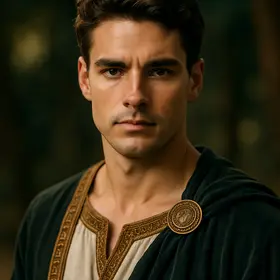 DemetriusMajor character
 HelenaMajor character
 HermiaMajor character
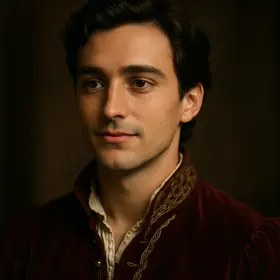 LysanderMajor character
 PuckMajor character
 Peter QuinceMajor character
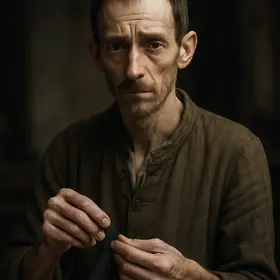 Robin StarvelingMinor character
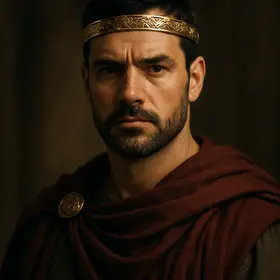 TheseusMajor character
All chapter summaries ›Characters ›
Read A Midsummer Night's Dream illustrated
Every scene in these notes comes from the Book2Life reader, where the full public-domain text is illustrated as you read, with character portraits and narration. Free in your browser and on iPhone.
Read A Midsummer Night's Dream free
