
John Barsad in A Tale of Two Cities
Antagonist
An English professional informer and spy whose false testimony and furtive work further prosecutions and operate under a respectable guise.
Who is John Barsad?
John Barsad appears as a polished, self-assured professional informer who profits from spying and giving testimony. He wants to preserve his cover, maintain his usefulness to authorities in both England and France, and avoid exposure of his deceptions. In the courtroom he provides key testimony that supports the prosecution’s charge against Charles Darnay, helping push the trial toward a guilty verdict before the jury’s disagreement. In Saint Antoine he poses as a polite traveler, probes local feeling, and reveals to Defarge the fact of Lucie Manette’s marriage to Darnay, which alarms the revolutionary leader. In Paris he is recognized by Miss Pross as Solomon and meets Sydney Carton, who pressures him and turns his furtive access into a lever; ultimately Barsad performs the practical role of carrying an apparently condemned man from the Conciergerie to a coach, unknowingly becoming an instrumental but reluctant part of Carton’s plan. Throughout his appearances Barsad balances a civilized exterior with persistent opportunism and moral slipperiness.
In the book: John Barsad is a professional informer who operates under an assumed respectability, serving as a witness and spy whose testimony and betrayals help set major legal and political events in motion. His duplicity threads through both London and Paris, and his concealed connection to another character eventually makes him a pivotal, if reluctant, tool in a critical plan without which the story’s climax could not unfold.
Personality
- Duplicitous
- He testifies in London as an unimpeachable patriot yet in Paris is discovered operating as an English spy, showing two-faced conduct (courtroom testimony; wine-shop confession).
- Opportunistic
- He ingratiates himself in the wine-shop, praising the cognac and gathering information about local feeling and notable families for his own ends.
- Self-preserving
- When confronted and maneuvered by Sydney Carton at Tellson’s, he balks and then yields, seeking to avoid denunciation and protect his position.
- Composed
- He presents a confident, sociable façade in the Defarges’ wine-shop, paying his bill and leaving calmly after probing.
- Instrumental
- He carries the unconscious man from the Conciergerie to the coach, performing the necessary physical role in Carton’s escape plan.
Character arc
Barsad’s outward character remains largely consistent: he begins and ends as a self-interested, furtive operative who navigates official and revolutionary worlds by maintaining a respectable mask. Early, he appears in the courtroom as a patriotic witness whose testimony strengthens the prosecution’s case against Darnay. When next seen in Saint Antoine he is still the same kind of spy, politely probing and reporting back details—this steadiness is noticed by the Defarges and knitted into Madame Defarge’s secret record. His only notable change is pragmatic rather than moral: under pressure from Sydney Carton and the practical exposures around Roger Cly’s false burial, Barsad shifts from confident denier to a man who yields cautious cooperation to preserve himself. That cooperation culminates in his unwitting participation in the escape arrangement—he performs the physical task of carrying the apparent Evrémonde to the coach. He does not reform or repent; instead he adapts, complying when threatened with exposure and acting to secure his own safety while remaining essentially the same calculating informer by the end.
Relationships
- Charles Darnay Barsad testifies against Darnay in the English trial and later handles the apparent condemned Evrémonde in Paris, functioning as an antagonistic force to Darnay's safety.
- Sydney Carton Carton confronts and maneuvers Barsad into cooperation, using Barsad’s vulnerability to secure access and practical aid for the escape plan.
- Ernest Defarge Barsad speaks with Defarge in the wine-shop, supplying intelligence about events and revealing Darnay’s English marriage that alarms Defarge.
- Madame Defarge Madame Defarge notices Barsad in the shop and registers him in her knitting—his presence becomes one more name in her systematic record of enemies.
- Miss Pross Miss Pross recognizes Barsad as Solomon, her brother, exposing his furtive, shifty identity to the English characters in Paris.
- Roger Cly Barsad is associated with Roger Cly in the prosecution and the revelations about Cly’s false burial increase Barsad’s peril and make him susceptible to Carton’s pressure.
Quotes by John Barsad
“I am sometimes.”
Chapter 8Barsad confirms, reluctantly, that he can pass in and out of the Conciergerie, information Carton needs for his plan.
Why John Barsad matters
Barsad embodies the novel’s themes of hypocrisy, betrayal, and the corrosive commerce of political information. As an apparently respectable witness and an undercover spy, he shows how institutions and personal survival rely on falsehood and denouncement. His presence links London legal theater to Paris revolutionary violence, demonstrating how testimony and secret reporting can have life-or-death consequences. At the same time his coerced role in Carton’s plan underscores the moral ambiguities of survival: a man who fosters ruin for others can be pressed, unwillingly, into facilitating a righteous rescue, highlighting the novel’s interest in complicity, irony, and the tangled means by which redemption and ruin interact.
Chapters with John Barsad
More A Tale of Two Cities characters
 Dr. ManetteMajor character
 Lucie ManetteMajor character
 Jarvis LorryMajor character
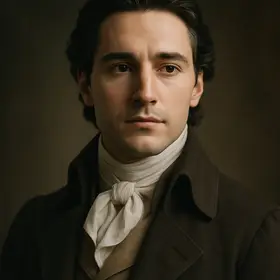 Charles DarnayProtagonist
 Ernest DefargeMajor character
 Madame DefargeAntagonist
 Miss ProssMajor character
 Sydney CartonProtagonist
All chapter summaries ›Characters ›
Read A Tale of Two Cities illustrated
Every scene in these notes comes from the Book2Life reader, where the full public-domain text is illustrated as you read, with character portraits and narration. Free in your browser and on iPhone.
Read A Tale of Two Cities free
