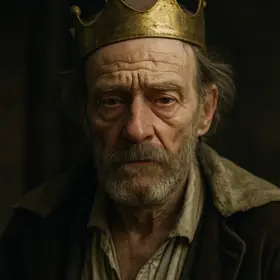
The King in Adventures of Huckleberry Finn
Antagonist
An older con man who poses as a displaced king to swindle towns; brazen, theatrical, and morally bankrupt.
Who is The King?
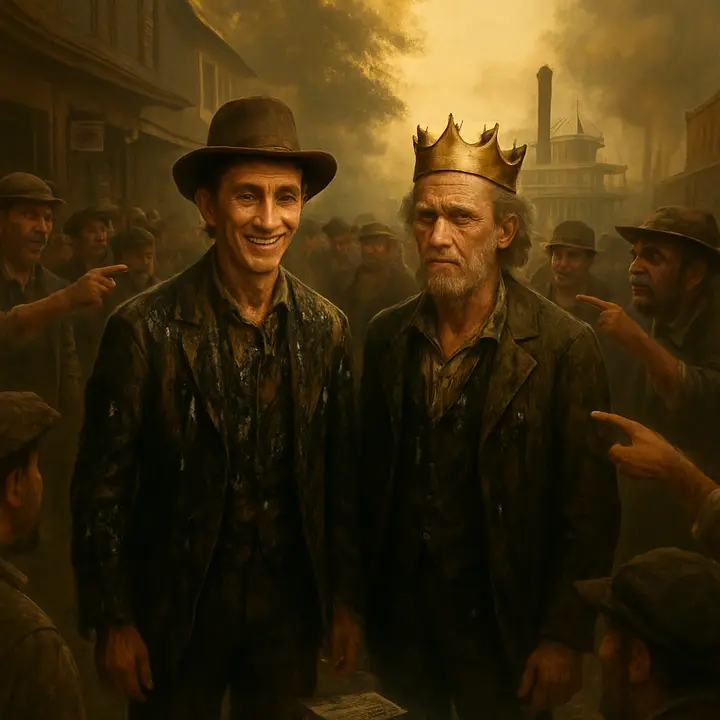
Introduced as the older half of a pair of traveling swindlers, the King claims to be the Dauphin of France and immediately adopts regal posturing to flatter and deceive. He teams with the Duke to run a series of scams—staged revivals, sham theatrical shows, and the calculated exploitation of a runaway-slave handbill—to make money while Huck and Jim provide labor and cover. The King masterminds the Wilks fraud: he pretends to be a grieving brother, reads a bogus will, helps appropriate six thousand dollars, and then hides the money in the straw tick of a featherbed. His schemes escalate cruelty when he eagerly auctions the Wilks slaves and justifies manipulations for profit. Tensions with the Duke culminate in public quarrels and an eventual confession about the hidden bag of gold. The King’s reckless drinking, compulsion to perform, and willingness to endanger others lead to violent consequences for Jim and social punishment: the townspeople later tar and feather the impostors. Throughout, the King’s theatrics drive episodes that test Huck’s conscience and expose community gullibility.
In the book: The King is the older half of a duo of traveling swindlers who attach themselves to Huck and Jim, styling himself as a displaced monarch to gull small-town audiences. His brazen lies, theatrical schemes, and moral cynicism drive several episodes, sharpening the novel’s satire of credulity, fraud, and social hypocrisy while complicating Huck’s moral awakening—especially in contrast to Jim’s integrity.
Personality
- Brazen
- He hijacks a camp-meeting pulpit with a fabricated conversion tale and boldly collects money and whisky from the crowd (Ch. 20).
- Theatrical
- He dresses in paint and prances in the sham Shaksperean Revival, relishing the role and the audience’s deception (Ch. 23).
- Exploitative
- He engineers the Wilks funeral ruse, reads the fake will, and conspires to steal the six thousand dollars meant for the heirs (Ch. 25–26).
- Cynical
- He proposes using a printed runaway notice and a staged capture of Jim to travel by day and collect rewards, willing to profit from Jim’s peril (Ch. 20).
- Self‑destructive
- His drinking and quarrels with the Duke lead to public scenes, confession over the buried purse, and ultimately the pair’s humiliation (Ch. 30–33).
Character arc
From first appearance the King presents himself as an injured dignitary craving deference; his identity is theatrically constructed and immediately accepted by Huck and Jim until Huck privately sees him as a fraud. Over successive schemes the King grows bolder and meaner: his revival speech, the Shaksperean hoax, and the Wilks impersonation show increasing moral bankruptcy. He moves beyond simple trickery into actions with real victims—selling the Wilks slaves and participating in schemes that directly endanger Jim. Tensions between showmanship and greed surface in his quarrels with the Duke; in one explosive exchange he admits, in humiliation, to hiding the stolen purse in the Wilks house. That confession briefly humanizes him only as a source of ridicule; afterward he rapidly returns to vice, drinking and staging, and finally suffers communal punishment when townspeople tar and feather him. The King thus refuses meaningful moral reform: he oscillates between comic bravado and disgrace, punished but unrepentant, and remains an instrument of cruelty whose actions catalyze Huck’s ethical choices rather than seeking redemption himself.
The King in pictures
Relationships
- The Duke Partner in crime — a volatile duo who plan and perform swindles together and repeatedly quarrel over methods and spoils.
- Huckleberry Finn Exploits Huck’s labor and silence but also inspires Huck’s moral resistance; Huck both serves and secretly opposes him.
- Jim Regardless of Jim’s humanity, the King uses Jim’s status as a fugitive to scheme for rewards and ultimately contributes to Jim’s capture.
- Mary Jane Wilks Target of the Wilks fraud whose grief he cynically manipulates to legitimize the con and seize the family money.
- Susan Wilks Another grieving sister whom the King deceives during the funeral and estate arrangements.
- Joanna Wilks The suspicious sister whose questions threaten the con but who is soothed by the household’s invented honesty.
Quotes by The King
“Gentlemen," says the young man, very solemn, "I will reveal it to you, for I feel I may have confidence in you. By rights I am a duke!”
Chapter 19The Duke dramatically announces his claim to nobility, initiating the con that disrupts the raft's peace.
“Bilgewater, I am the late Dauphin!" You bet you, Jim and me stared this time.”
Chapter 19The older man’s even more extravagant claim (to be the lost Dauphin) compounds the deception, shocking Huck and Jim.
“’Tis my fate to be always ground into the mire under the iron heel of oppression. Misfortune has broken my once haughty spirit; I yield, I submit; ’tis my fate.”
Chapter 20The duke performs a melodramatic speech to surrender the better straw bed, showcasing his theatricality and penchant for grandiose falsehoods.
“Sick Arab—but harmless when not out of his head.”
Chapter 24The duke nails this sign in front of Jim’s wigwam as part of the disguise to discourage questions while freeing Jim from being tied up.
“Broke his arm—very likely, ain’t it?—and very convenient, too, for a fraud that’s got to make signs, and ain’t learnt how.”
Chapter 29The king mocks the visitors' story about a broken arm and lost baggage to cast doubt on their claims.
“Tryin’ to give us the slip, was ye, you pup! Tired of our company, hey?”
Chapter 30The king seizes Huck and accuses him of trying to escape, setting off the chapter’s confrontation.
Why The King matters
The King embodies the novel’s critique of fraud, theatricality, and moral hypocrisy. His elaborate impostures expose how easily public feeling and religious sentiment can be manipulated for profit, and his readiness to exploit Black people and grieving families highlights social cruelty. As a foil to Jim’s humanity and Huck’s growing conscience, the King sharpens the ethical stakes: Huck must choose between complicity, self‑preservation, and doing right. The King’s spectacle and ultimate humiliation underline Twain’s satire of authority and respectability based on appearance rather than integrity.
Chapters with The King
More Adventures of Huckleberry Finn characters
 Huckleberry FinnProtagonist
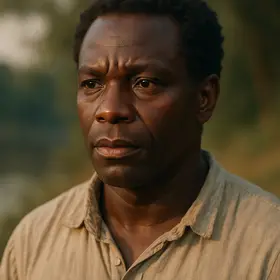 JimMajor character
 Tom SawyerMajor character
 The DukeMajor character
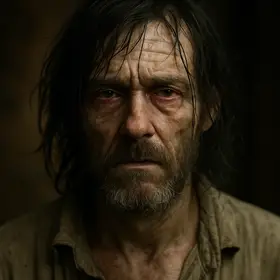 Pap FinnAntagonist
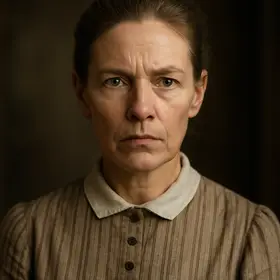 Aunt SallyMajor character
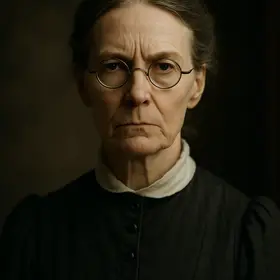 Miss WatsonMajor character
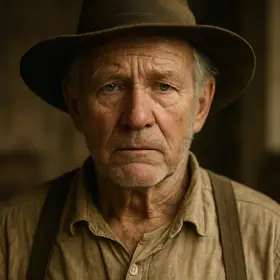 Silas PhelpsMinor character
All chapter summaries ›Characters ›
Read Adventures of Huckleberry Finn illustrated
Every scene in these notes comes from the Book2Life reader, where the full public-domain text is illustrated as you read, with character portraits and narration. Free in your browser and on iPhone.
Read Adventures of Huckleberry Finn free
