
Huckleberry Finn in Adventures of Huckleberry Finn
Protagonist
A plainspoken, free-spirited boy who escapes civilization and journeys down the Mississippi with Jim, questioning right and wrong.
Who is Huckleberry Finn?
Huckleberry Finn is the narrator and central figure who rejects the constraints of Widow Douglas’s attempt to "sivilize" him and escapes an abusive father by faking his own death and fleeing to Jackson’s Island. There he meets Jim, Miss Watson’s runaway slave, and the two form a close, mutually dependent bond while drifting on a raft down the Mississippi. Huck wants autonomy and safety but is repeatedly forced to choose between the laws and morals he has been taught and his personal loyalty to Jim. Along the way he observes and reacts to violent families, fraudulent conmen (the Duke and the King), and the hypocrisies of townsfolk, often using plain wit and practical cunning to protect himself and Jim. Huck repeatedly lies, disguises himself, and takes physical risks—sneaking into towns, stealing the Wilks money to protect the Wilks sisters, and ultimately deciding to rescue Jim from captivity at great personal moral cost. His narration frames the novel’s satire of Southern society and guides the reader through episodes of adventure, cruelty, and conscience.
In the book: Huckleberry Finn is the resourceful, free-spirited narrator who flees stifling “civilization” and journeys down the Mississippi River, forming a deep bond with Jim, an enslaved man seeking freedom. Through Huck’s plainspoken wit and uneasy conscience, the story satirizes hypocrisy and interrogates the moral codes of the antebellum South, making him a pivotal lens for themes of freedom, identity, and moral growth.
Personality
- Practical
- He fashions a convincing fake murder scene to escape Pap and later devises plans (like hiding the raft) to keep Jim safe.
- Independent
- He chooses to run away from Widow Douglas’s household and live on Jackson’s Island rather than submit to "sivilizing."
- Empathetic
- He comforts and consoles Mary Jane Wilks and chooses to tell her the truth about the King and the Duke.
- Morally conflicted
- He wrestles with betraying Jim—writing a letter to Miss Watson—then tears it up and resolves to steal Jim back.
- Imaginative
- He accepts and participates in Tom Sawyer’s elaborate, romantic rescue plans even when they are impractical.
Character arc
Huck begins as a restless boy who mistrusts the hypocritical rules of 'civilization' and seeks freedom from authority. Early chapters show him tolerating lessons at the Widow’s but dreading Miss Watson’s moralizing; his escape from Pap marks the shift from passive endurance to active self-determination. Alone on Jackson’s Island he forms a bond with Jim that humanizes the fugitive slave in his eyes and introduces Huck to sustained moral decisions. As they drift, Huck moves from childlike pragmatism and amusement at stories to serious ethical choices: he lies to protect Jim from captors, steals the Wilks money to prevent further harm, and finally refuses to betray Jim despite believing doing so is expected. The crisis at the Phelps farm forces Huck to choose solidarity over the law—he tears up a letter that would expose Jim and decides to free him, saying "I'll go to hell." In the end Jim is freed through Tom’s theatrics, but Huck’s final resolution to "light out for the Territory" shows that he remains committed to personal freedom and wary of being reabsorbed into the society whose values he has repeatedly rejected.
Huckleberry Finn in pictures


Relationships
- Jim Huck’s close companion and moral touchstone; Huck protects, learns from, and grows emotionally attached to Jim during their river journey.
- Pap Finn Huck’s abusive, drunken father whose confinement and violence drive Huck to fake his death and escape.
- Tom Sawyer Huck’s imaginative friend whose romantic, bookish schemes influence Huck’s later rescue plan for Jim and contrast with Huck’s pragmatism.
- Widow Douglas The woman trying to 'sivilize' Huck; she represents the domestic, moral expectations Huck resists.
- The Duke One of two conmen who join Huck and Jim on the raft, exploiting townspeople and creating moral crises Huck must navigate.
- The King The other conman whose swindles (including the Wilks scheme) force Huck into secretive, risky acts to protect innocents and Jim.
Quotes by Huckleberry Finn
“I ain't a-going back there, anyways.”
Chapter 8Huck vows not to return to his former life, signaling a commitment to his new situation and to protecting Jim's secret.
“I says: “Le’s land on her, Jim.””
Chapter 12Huck’s curiosity and appetite for adventure propel them toward the wreck despite Jim’s caution, setting up the dangerous encounter.
“Miss Mary Jane, you can’t a-bear to see people in trouble, and I can’t—most always. Tell me about it.”
Chapter 28Huck uses this plea to get Mary Jane to open up about her sorrow, showing his empathy and prompting the confession that sets the scene's moral choice.
“I put it in the coffin. It was in there when you was crying there, away in the night. I was behind the door, and I was mighty sorry for you, Miss Mary Jane.”
Chapter 28Huck admits where he hid the stolen money, a shocking disclosure that reveals both his culpability and his desire to right wrongs for Mary Jane's sake.
“When I start in to steal a nigger, or a watermelon, or a Sunday-school book, I ain’t no ways particular how it’s done so it’s done.”
Chapter 36Huck voices his pragmatic, unprincipled approach to stealing tools for Jim’s escape, contrasting with Tom’s moral posturing.
Why Huckleberry Finn matters
Huck functions as the reader’s moral guide and satirical lens: his plainspoken narration exposes the gulf between professed values and actual behavior in antebellum society. Through Huck’s evolving conscience—especially his decision to help Jim despite believing it sinful—Twain interrogates the roots of morality, loyalty, and freedom. Huck’s refusal to be "civilized" and his final plan to flee highlight the novel’s critique of social institutions that confine individuality and justify injustice, while his compassion for Jim foregrounds human empathy against legal and cultural hypocrisy.
Chapters with Huckleberry Finn
- Chapter 1
- Chapter 2
- Chapter 3
- Chapter 4
- Chapter 5
- Chapter 6
- Chapter 7
- Chapter 8
- Chapter 9
- Chapter 10
- Chapter 11
- Chapter 12
- Chapter 13
- Chapter 14
- Chapter 15
- Chapter 16
- Chapter 17
- Chapter 18
- Chapter 19
- Chapter 20
- Chapter 21
- Chapter 22
- Chapter 23
- Chapter 24
- Chapter 25
- Chapter 26
- Chapter 27
- Chapter 28
- Chapter 29
- Chapter 30
- Chapter 31
- Chapter 32
- Chapter 33
- Chapter 34
- Chapter 35
- Chapter 36
- Chapter 38
- Chapter 39
- Chapter 40
- CHAPTER THE LAST
More Adventures of Huckleberry Finn characters
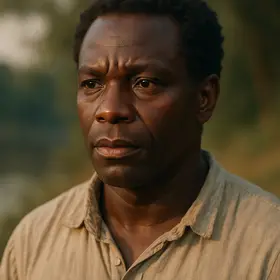 JimMajor character
 Tom SawyerMajor character
 The DukeMajor character
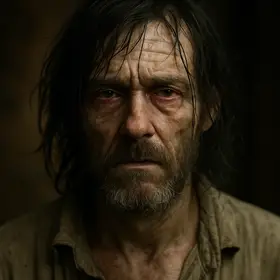 Pap FinnAntagonist
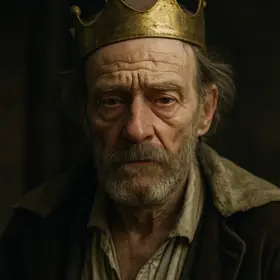 The KingAntagonist
 Aunt SallyMajor character
 Miss WatsonMajor character
 Silas PhelpsMinor character
All chapter summaries ›Characters ›
Read Adventures of Huckleberry Finn illustrated
Every scene in these notes comes from the Book2Life reader, where the full public-domain text is illustrated as you read, with character portraits and narration. Free in your browser and on iPhone.
Read Adventures of Huckleberry Finn free
