
Tom Sawyer in Adventures of Huckleberry Finn
Major character
Huck’s imaginative, rule‑loving friend whose theatrical schemes and adherence to adventure‑book ritual contrast with Huck’s practical conscience.
Who is Tom Sawyer?
Tom Sawyer is Huck Finn’s childhood friend and the ringleader of fanciful, bookish adventures. He organizes Tom Sawyer’s Gang, dictates elaborate oaths and rules, and treats real situations as if they must conform to the romantic novels he reveres. When Tom returns to the Phelps farm he immediately adopts a theatrical false identity, stages elaborate performances, and recruits Huck into a series of highly dramatized plans to free Jim. Tom insists on doing everything “regular” according to the adventure‑book canon: elaborate disguises, ritual inscriptions, contrived signals, and needlessly complicated escape devices. He wants excitement, authenticity of role, and the satisfaction of living out a heroic script; he values rules, ritual, and the aesthetics of adventure over practical efficiency. Throughout the latter part of the novel Tom drives the rescue plot with imagination and comic extravagance, forcing Huck to adopt theatrical methods he finds ethically puzzling but ultimately follows to help Jim.
In the book: Tom Sawyer is Huck’s imaginative friend and a ringleader of make‑believe adventures whose love of rules, theatrics, and “proper” romance-novel heroics contrasts with Huck’s practical, moral sense. His presence highlights the tension between fanciful convention and real-world conscience, shaping key turns in Huck’s journey and underscoring the novel’s satire of society and storytelling.
Personality
- Imaginative
- He founds ‘Tom Sawyer’s Gang’ and invents elaborate rituals and role‑playing drawn from adventure books (Chapter 2).
- Theatrical
- He insists on a highly dramatic, impractical rescue for Jim—rope ladders in pies, journals written in blood, and heraldic devices (Chapters 34–38).
- Rule‑bound
- He repeatedly rejects simpler, practical solutions in favor of doing things “regular” the way his books prescribe, even when Huck points out easier methods (Chapters 2, 34).
- Playful/romantic
- He adopts false names, stages comic flirtations at the Phelps house, and frames every scheme as part of a heroic romance (Chapters 33, 35).
- Oblivious to consequences
- His insistence on theatrical steps prolongs Jim’s imprisonment and exposes the household to danger and panic (Chapters 36–40).
Character arc
Tom’s role begins as the boy author of adventurous lies in Huck’s introduction and develops into a catalyst for the novel’s final, comic‑dramatic episode. After reappearing at the Phelps, Tom immediately assumes disguise and theatrical guile: he plays stranger, flirts with Aunt Sally, and joyfully accepts Huck’s confession of intent to free Jim. Once committed, Tom refuses obvious, efficient plans and instead elaborates a multi‑stage, ritualized rescue that treats Jim as a character in a romance rather than a man needing immediate help. Throughout the rescue Tom remains largely unchanged in temperament: he is consistently playful, ceremonious, and enamored of rules from books. However, his actions indirectly force ethical reckonings: Huck must choose between Tom’s romantic code and his own practical conscience, and the rescue’s eventual success (and the comic wounds Tom endures) reveal both the limits and the human consequences of Tom’s insistence on theatricality. By the end Tom is restored to boyish health and appetite for adventure, unchanged in spirit but implicated in the novel’s moral complexities.
Tom Sawyer in pictures


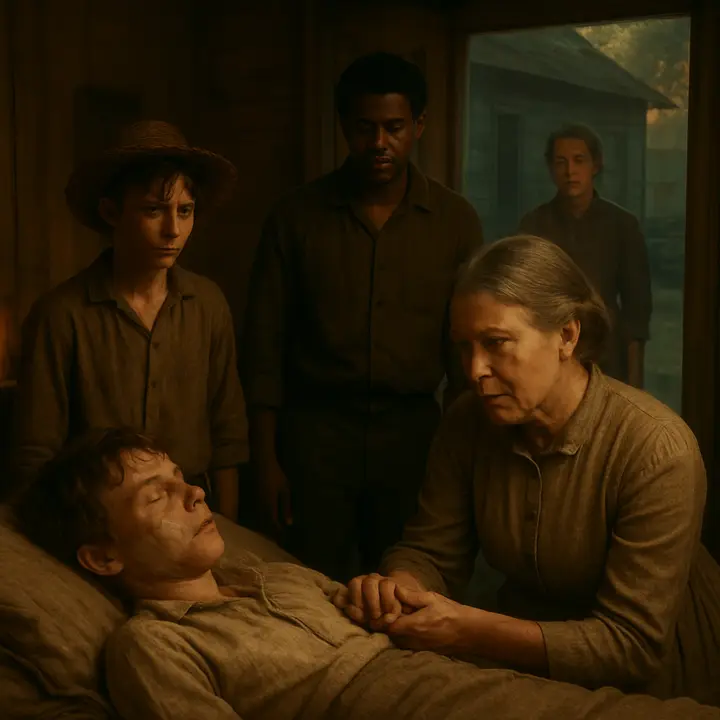
Relationships
- Huckleberry Finn Close friend and co‑conspirator who admires Tom’s daring but often questions his impractical methods; Tom leads Huck into theatrical plans.
- Jim Object of Tom’s romantic rescue script—Tom treats Jim like a hero in a story and orchestrates an ornate escape rather than choosing the quickest route to freedom.
- Aunt Sally Host and affectionate foil; she embraces Tom when he returns in disguise and becomes the unwitting target of his and Huck’s pranks and deceptions (Chapters 33, 40–41).
- Aunt Polly Mentioned in Huck’s opening comments and later present in the closing celebration—Aunt Polly represents the conventional, domestic world Tom fits into as a boy of society (Chapter 1, Last).
- Silas Phelps Landowner at whose farm Tom stages his false identity and leads the rescue; Silas is fooled by Tom’s acting and becomes entangled in the ruse (Chapters 32–33).
- The Duke One of the conmen whose humiliation Tom and Huck witness; Tom helps warn or attempt to warn the impostors earlier in the Phelps episode (Chapter 33).
Quotes by Tom Sawyer
“Now, we’ll start this band of robbers and call it Tom Sawyer’s Gang.”
Chapter 2Tom proclaims the formation of the Gang and frames the boys’ play as a solemn, book-inspired enterprise.
“Don’t ever let on to know us. And if you hear any digging going on nights, it’s us; we’re going to set you free.”
Chapter 34Tom whispers instructions and reassurance to Jim after their daylight meeting in the hut, promising to free him.
“Blame it, this whole thing is just as easy and awkward as it can be. And so it makes it so rotten difficult to get up a difficult plan.”
Chapter 35Tom complains that the lack of obstacles makes it necessary to invent complicated, bookish difficulties for Jim's escape.
“It ain’t no use to try to learn you nothing, Huck. Run along and smouch the knives—three of them.”
Chapter 35Tom dismisses Huck's objections and orders him to steal three case-knives needed for the theatrical digging plan.
“It ain’t no use, Huck, it ain’t a-going to work. If we was prisoners it would, because then we’d have as many years as we wanted, and no hurry;”
Chapter 36Tom explains why slow, meticulous digging with knives won’t work for their urgent escape plan.
“On the scutcheon we’ll have a bend or in the dexter base, a saltire murrey in the fess, with a dog, couchant, for common charge, and under his foot a chain embattled, for slavery, with a chevron vert in a chief engrailed, and three invected lines on a field azure...”
Chapter 38Tom reads an elaborate, learned-sounding coat-of-arms prescription—showing his taste for romantic, unnecessary detail and the comic mismatch with their situation.
Why Tom Sawyer matters
Tom embodies the novel’s satire of romantic adventure stories and social performance. His insistence on rules, ritual, and theatricality exposes how literary conventions can distort moral judgment and delay practical justice. At the same time Tom’s energy and loyalty propel the plot’s climax and reveal the collision between boyish fantasy and real human needs—most clearly in Jim’s prolonged suffering. By juxtaposing Tom’s elaborate make‑believe with Huck’s emerging conscience, the novel interrogates how storytelling, social roles, and nostalgia for heroic forms shape ethical choices and highlight societal hypocrisy.
Chapters with Tom Sawyer
More Adventures of Huckleberry Finn characters
 Huckleberry FinnProtagonist
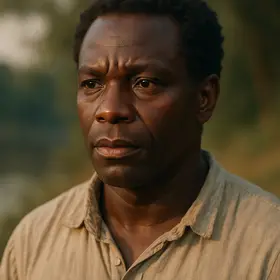 JimMajor character
 The DukeMajor character
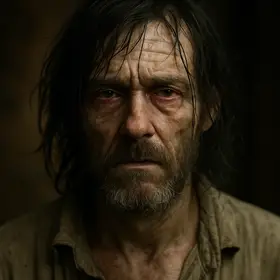 Pap FinnAntagonist
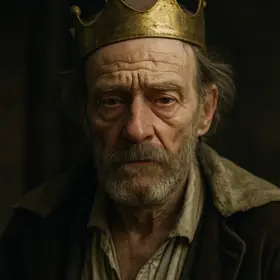 The KingAntagonist
 Aunt SallyMajor character
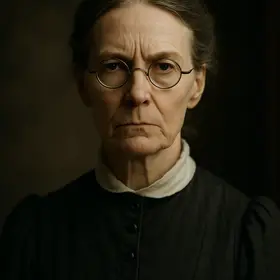 Miss WatsonMajor character
 Silas PhelpsMinor character
All chapter summaries ›Characters ›
Read Adventures of Huckleberry Finn illustrated
Every scene in these notes comes from the Book2Life reader, where the full public-domain text is illustrated as you read, with character portraits and narration. Free in your browser and on iPhone.
Read Adventures of Huckleberry Finn free
