Don Quixote Chapter 25 Summary
The braying tale and the divining ape
Don Quixote hears a comic story of two men who bray for a lost ass, then watches Master Pedro’s puppet-show and the ape that 'divines'.
Summary
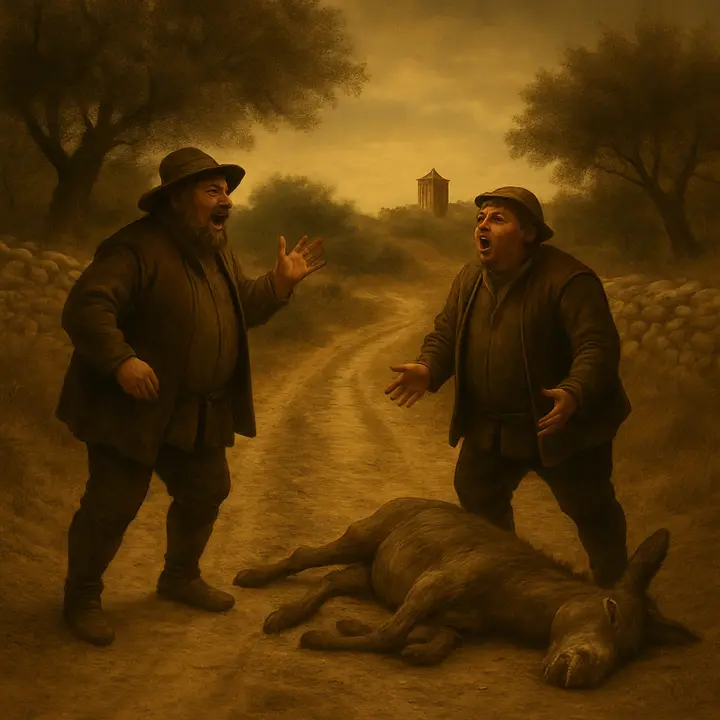
Don Quixote seeks the man who promised to tell him wondrous things; the man obliges, telling a long comic anecdote about two regidores who try to locate a lost ass by imitating its bray, only to find the animal eaten by wolves. The tale becomes a town joke, spreading to other villages and provoking enmity for the men of the braying town. The storyteller uses the anecdote to explain why he bears arms for an impending local fight.
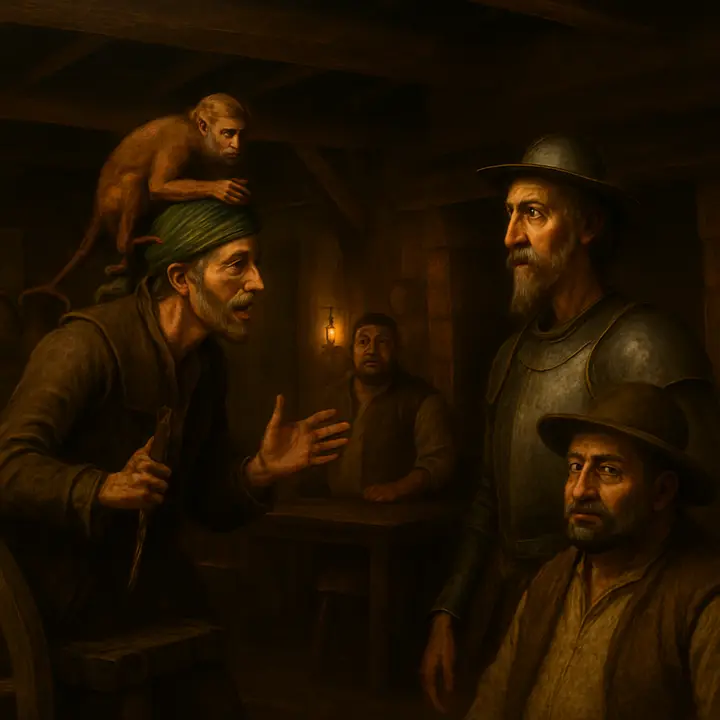
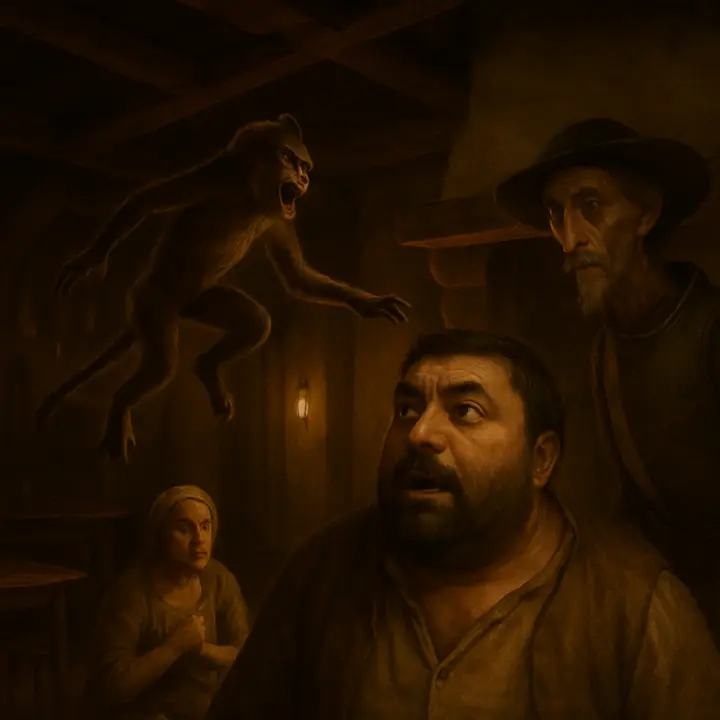
At that moment Master Pedro, a puppet-showman, arrives with a tailless ape that is said to answer questions by whispering into his master’s ear. The inn prepares for the performance; Don Quixote and Sancho watch while the ape correctly reports what Sancho’s wife Teresa is doing. Master Pedro flatters Don Quixote wildly when the ape reports in his favour, then offers a free show. Don Quixote, skeptical and morally anxious, tells Sancho he suspects the ape’s power comes from a pact with the devil because it speaks only of past and present, not the future. Still intrigued, Don Quixote asks whether the ape can say if events in the cave of Montesinos were dream or reality; the ape answers that some were true and some false, and that its power is exhausted until Friday. The chapter closes with the show about to begin and the showman’s interpreter promising the reader what will be explained next.
Key events
- A storyteller relates the comic 'braying' anecdote about two regidores and a lost ass devoured by wolves.
- The braying anecdote spreads and becomes a lingering town insult that provokes disputes.
- Master Pedro arrives with a puppet-show and a divining ape that whispers answers to him.
- The ape accurately reports Teresa Panza’s present activity, surprising Sancho.
- Master Pedro flatters Don Quixote and offers a free show to the inn’s guests.
- Don Quixote suspects diabolical agency behind the ape and questions it about the cave of Montesinos; the ape gives a mixed answer and postpones fuller replies till Friday.
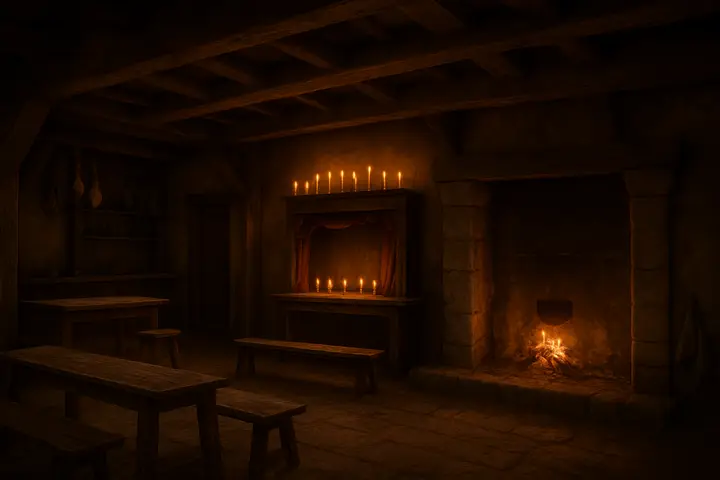
- The puppet-show is set up and the audience prepares to watch.
Chapter 25 in pictures
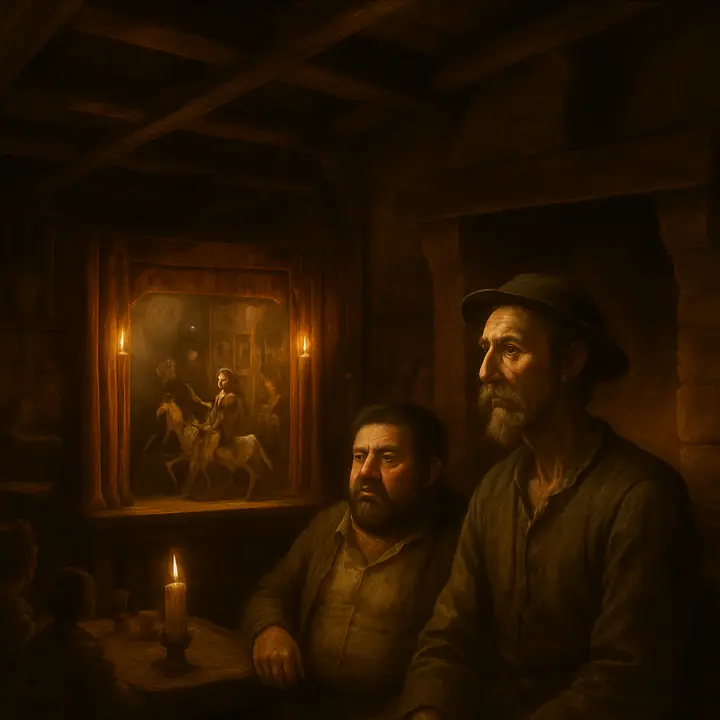
Analysis
This chapter mixes comic anecdote, popular entertainment, and Don Quixote’s serious moral reasoning, deepening the novel’s interplay between reality, performance, and belief. The braying story functions as a folkloric, satirical episode: it ridicules human vanity and self-deception (two men praising each other’s braying) and shows how small jokes metastasize into communal conflict. It also offers a miniature of social contagion—how an absurd action becomes an identity marker for an entire town.
The puppet-show and the divining ape introduce theatricality and questions about authority of knowledge. The ape’s power—reporting past and present but not certain future events—provokes Don Quixote’s theological objection (only God truly knows the future) and his suspicion of diabolic agency. This moment crystallizes a recurring theme: Don Quixote’s commitment to moral order and orthodoxy even as he partakes in and enjoys staged, ambiguous wonders. Narratively, Cervantes shifts between nested storytellers (the regidor’s tale, Master Pedro’s show) and keeps the reader aware of mediation: claims about truth are always filtered through entertainers, witnesses, and interpreters, so the novel asks readers to weigh testimony and performance. The chapter also foreshadows public spectacles and tests of credibility that will continue to trouble Don Quixote and his companions.
Important quotes
“These legs do I embrace as I would embrace the two pillars of Hercules, O illustrious reviver of knight-errantry, so long consigned to oblivion!”
Master PedroMaster Pedro grovels before Don Quixote after the ape's flattering report, revealing theatrical flattery and the showman's opportunism.
“Be of good cheer, for thy good wife Teresa is well, and she is at this moment hackling a pound of flax;”
Master Pedro (for the ape)The ape (through Master Pedro) answers Sancho's question, startling the company by naming Teresa Panza’s present activity.
“The ape says that the things you saw or that happened to you in that cave are, part of them false, part true;”
Master Pedro (for the ape)The ape gives a mixed verdict about Don Quixote's experience in the cave of Montesinos, introducing doubt and postponing a fuller explanation.
Characters in Chapter 25
- Don Quixote
- Sancho Panza
- Teresa Panza
- Master Pedro
- the ape
- The Innkeeper
- the cousin
- the page
- the owner of the ass
- the other regidor
All chapter summaries ›Characters ›
Read Don Quixote illustrated
Every scene in these notes comes from the Book2Life reader, where the full public-domain text is illustrated as you read, with character portraits and narration. Free in your browser and on iPhone.
