Don Quixote Chapter 8 Summary
Journey to El Toboso
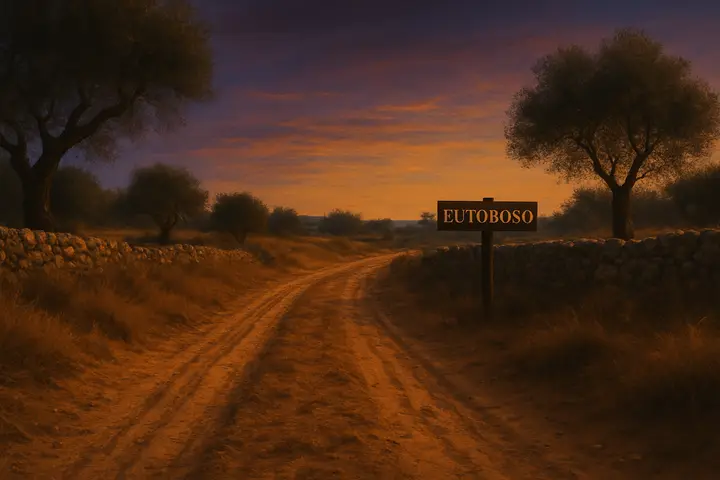
Don Quixote and Sancho travel toward El Toboso, argue about fame, saints and Dulcinea, and finally enter the town at night.
Summary
Hamete Benengeli opens the chapter by blessing Allah and announcing that Don Quixote and Sancho are now properly afield as their new series of adventures begins on the road to El Toboso. Left alone after Samson Carrasco departs, Don Quixote and Sancho interpret their horses’ sounds as omens; Sancho’s donkey seems the more vocally fortunate. Don Quixote insists on reaching El Toboso to obtain Dulcinea’s blessing, while Sancho doubts they can even find or speak with her and insists the place he saw her looked like a yard wall.
They talk through the night and the following day, debating the nature of fame, saintliness, and heroism. Don Quixote defends the chivalric quest for fame and compares it to ancient examples of daring feats and sacrifices; Sancho argues that the fame attached to saints (relics, lamps, and devotions) is more tangible and useful than the glory of fallen knights or giants. Their banter moves from rustic misunderstandings about Dulcinea’s supposed chores to digressions on famous tombs and the motives that drive men to seek lasting renown. At dawn they see El Toboso: Don Quixote is elated, Sancho nervous because neither has actually seen Dulcinea. They decide to enter the town at nightfall, waiting among oaks, and promise that something notable will befall them on their entry.
Key events
- Hamete Benengeli blesses Allah and frames the new phase of adventures.
- Samson Carrasco leaves; Rocinante and Dapple make noises taken as omens.
- Don Quixote resolves to visit Dulcinea at El Toboso; Sancho doubts the plan.
- Extended dialogue on fame, saints, tombs, and motives for great deeds.
- They sight El Toboso at dawn; Don Quixote’s spirits rise, Sancho’s fall.
- They wait by oak trees and enter El Toboso at nightfall, expecting an event.
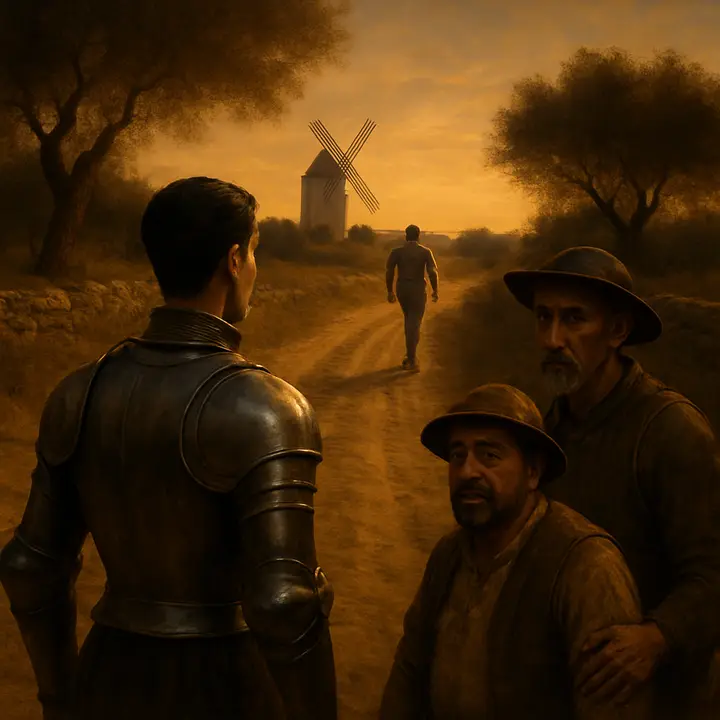
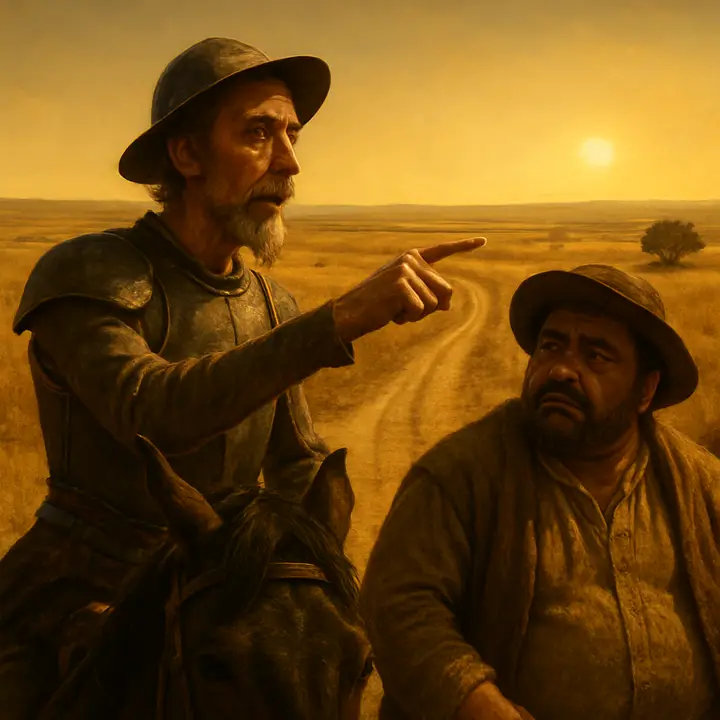
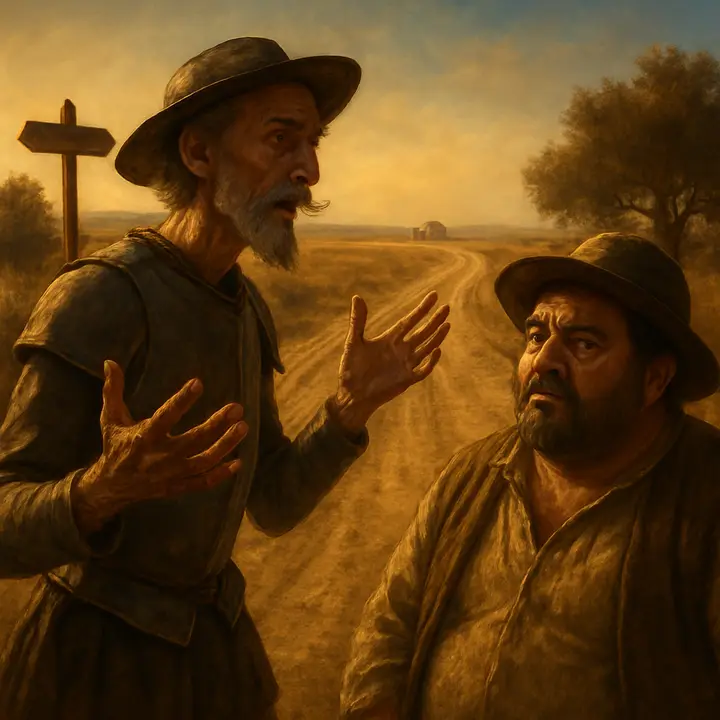
Chapter 8 in pictures
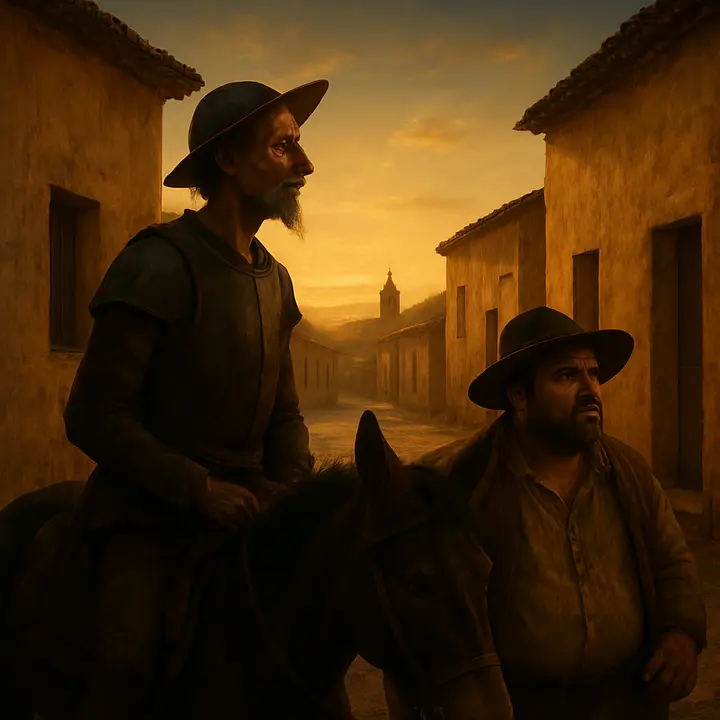
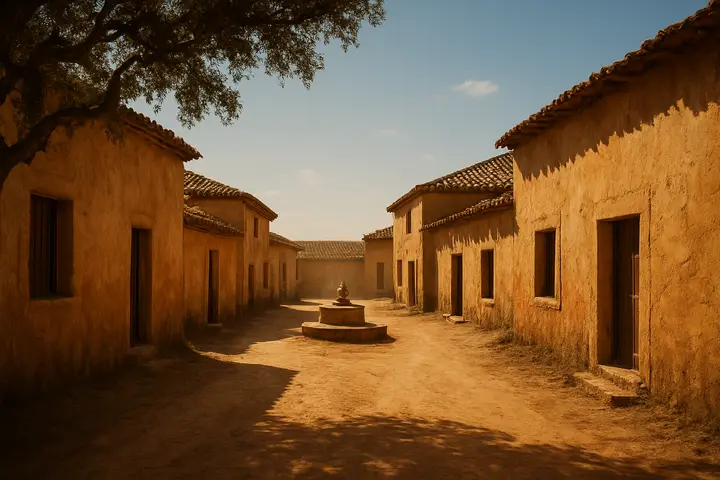
Analysis
This chapter shifts the novel from earlier isolated episodes to a clearer quest-oriented phase: the road to El Toboso becomes the immediate structural goal that will shape subsequent incidents. Cervantes uses Hamete Benengeli’s prefatory blessing to remind readers of narrative mediation and to signal a new sequence of events, foregrounding the metafictional narrator. The long dialogue between Don Quixote and Sancho functions on several levels: it develops character (Don Quixote’s romantic idealism and rhetoric about fame and virtue; Sancho’s earthy pragmatism and comic common sense), it supplies thematic contrast between spiritual/religious fame and secular/martial glory, and it stages ideological debates about values—saintliness versus knighthood, illusion versus social reality. Symbolically, Dulcinea serves as the unattainable object that motivates questing and provides a test of perception (is she a noble lady or a peasant sifter?), which exposes the gap between Don Quixote’s imagination and Sancho’s observation. The narrative technique—digressive, anecdotal, and full of learned classical allusions—both satirizes and venerates the romances of chivalry: Cervantes lets Don Quixote deploy heroic exempla even as comic portraiture undercuts them. The chapter ends with the prospect of an urban episode, creating suspense: the nighttime entry into El Toboso promises confrontation between the knight’s idealism and the town’s everyday world, advancing plot while deepening thematic contrast between fame, faith, and illusion.
Important quotes
““Blessed be Allah the all-powerful!” says Hamete Benengeli on beginning this eighth chapter; “blessed be Allah!” he repeats three times; and he says he utters these thanksgivings at seeing that he has now got Don Quixote and Sancho fairly afield, and that the readers of his delightful history may reckon that the achievements and humours of Don Quixote and his squire are now about to begin;”
NarratorHamete Benengeli inaugurates the new phase of the narrative and signals the metafictional framing of the forthcoming adventures.
“for any beam of the sun of her beauty that reaches my eyes will give light to my reason and strength to my heart, so that I shall be unmatched and unequalled in wisdom and valour.”
Don QuixoteDon Quixote explains why even a glimpse of Dulcinea will restore his knighthood, revealing his idealizing imagination and the central motivating myth of his quest.
Characters in Chapter 8
- Cide Hamete Benengeli
- Samson Carrasco
- Sancho Panza
- Don Quixote
- Dulcinea del Toboso
- Rocinante
- Dapple
- Erostratus
- Julius Cæsar
- Hadrian
- Artemisia
- Mausolus
- Horatius
- Mutius
- Curtius
- Cortés
- Charles V
All chapter summaries ›Characters ›
Read Don Quixote illustrated
Every scene in these notes comes from the Book2Life reader, where the full public-domain text is illustrated as you read, with character portraits and narration. Free in your browser and on iPhone.
