Don Quixote Chapter 7 Summary
Sancho's Terms and Departure
Sancho bargains for wages and pledges to accompany Don Quixote; Samson persuades the knight to set out again and they depart for El Toboso.
Summary
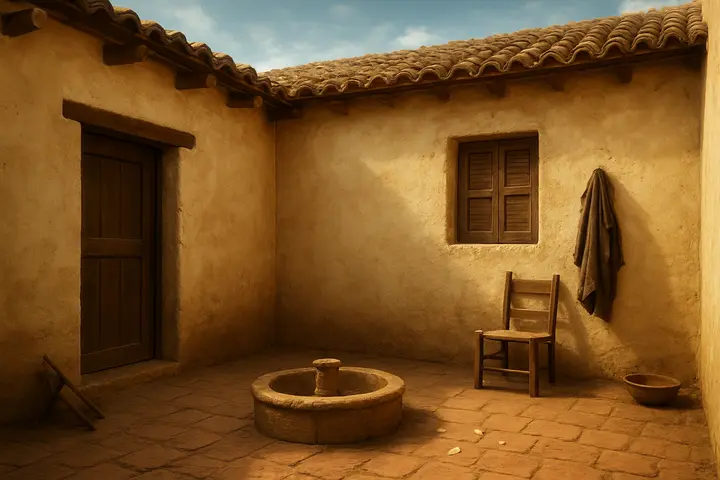
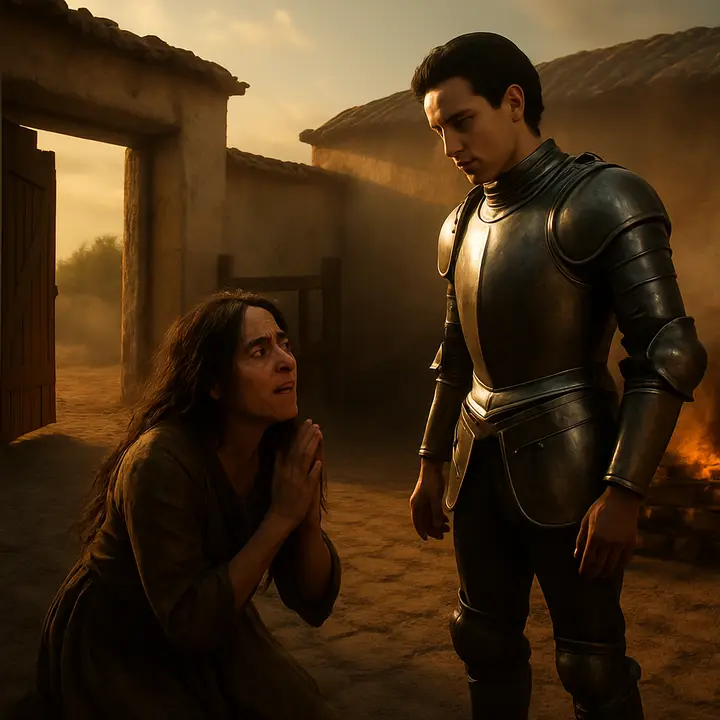
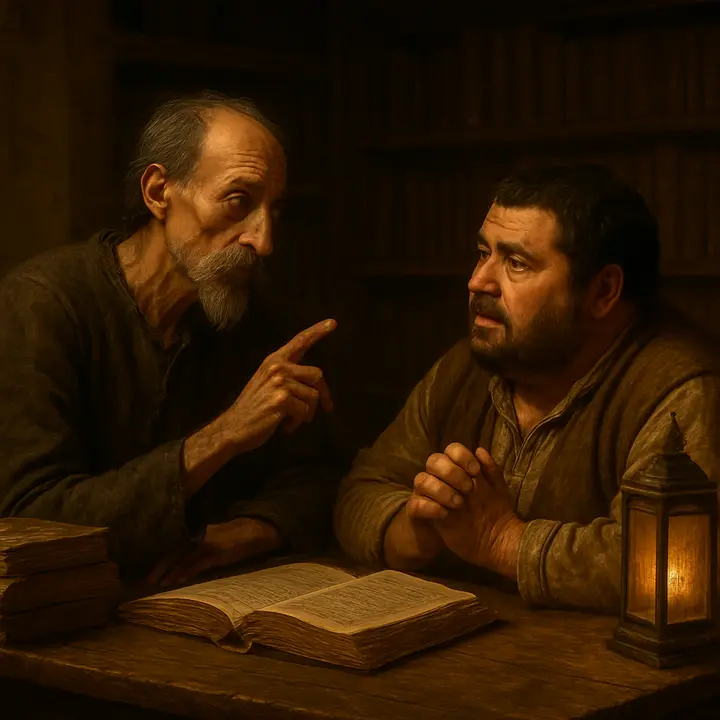
In the house at La Mancha, the housekeeper, alarmed that Don Quixote plans a third sally, hurries to summon Samson Carrasco to dissuade him. Samson greets her with mock solemnity, promises to intervene, and goes in search of the curate and barber to coordinate their response. Meanwhile Don Quixote and Sancho Panza hold an earnest private discussion about Sancho’s terms for service. Sancho reports that his wife, Teresa, has agreed to let him go only if his wages and future are secured; he asks Don Quixote for a fixed stipend to be paid from the knight’s estate or, failing that, clear assurances about eventual reward (even joking about how an island might be handled).
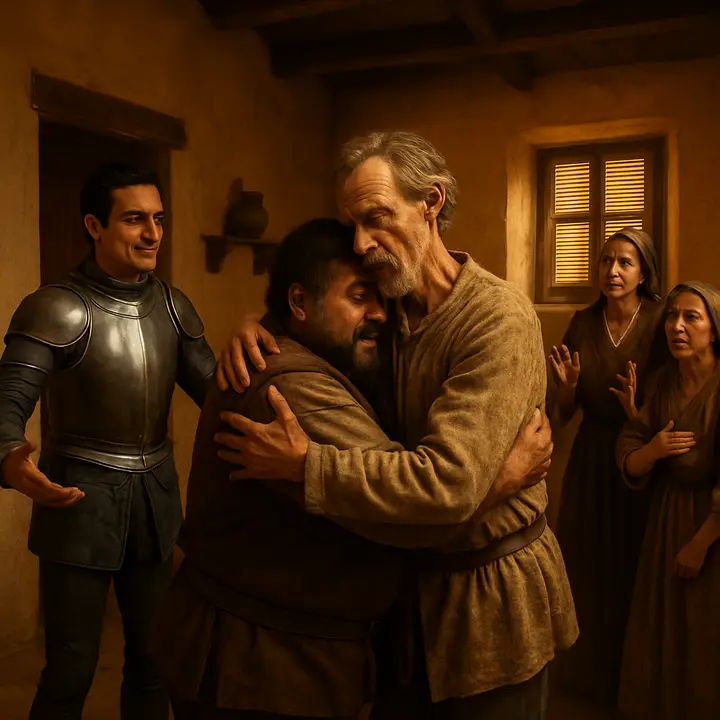
Don Quixote replies in a learned, chivalric register: he cannot find precedent among romances for fixed wages to a squire, only rewards won by fortune—titles, lordships, or islands given unexpectedly. He offers proverbs and counsel, stressing the ancient customs of knight-errantry and warning that he will not overturn those traditions. Stung but loyal, Sancho accepts his master’s terms and reaffirms his willingness to follow him. Samson arrives and, after mock-heroic flattery, urges Don Quixote to resume his adventures; the housekeeper and niece lament. The friends reconcile, agree on a three-day delay to prepare, and arrange for a (rusty) closed helmet. Samson escorts them partway, and Don Quixote and Sancho set out at night toward El Toboso with provisions and a modest sum of money for Sancho.
Key events
- Housekeeper fears Don Quixote will sally out and fetches Samson Carrasco.
- Sancho negotiates wages and security with Don Quixote; Teresa is involved in his bargaining.
- Don Quixote explains knightly precedent: squires serve for reward, not fixed pay.
- Samson mockingly encourages another sally and volunteers as squire in jest.
- Sancho commits to accompany Don Quixote; they plan departure in three days.
- They procure a closed helmet and leave at night, Samson escorting them partway.
Chapter 7 in pictures
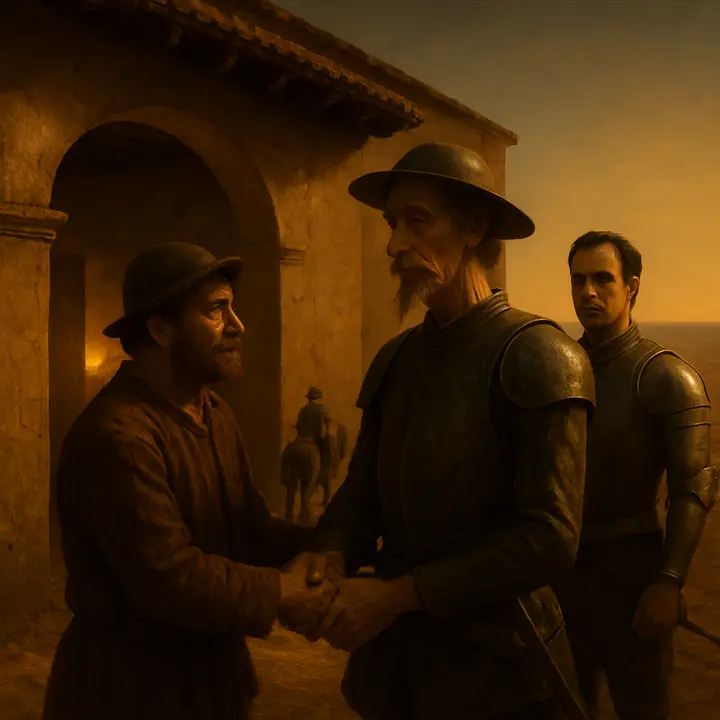
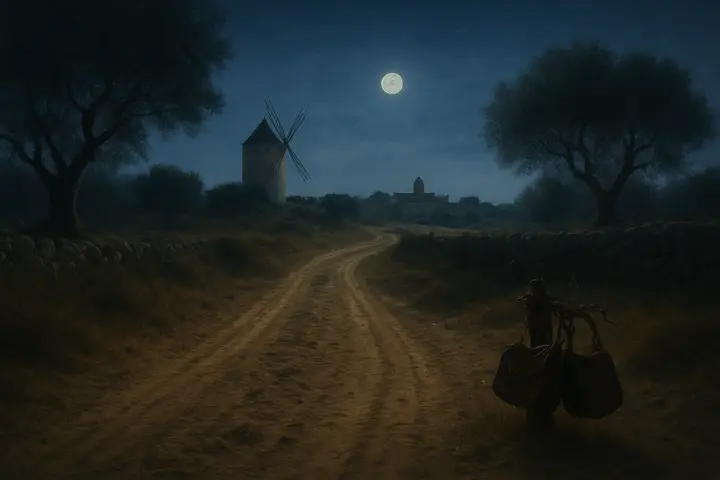
Analysis
This chapter deepens the relationship between master and squire while advancing plot toward a new journey. The negotiation scene foregrounds the practical, earthy Sancho—concerned with wages, food, and legal clarity—against Don Quixote’s idealizing, anachronistic temperament, who justifies action by appeal to literary precedent and chivalric rhetoric. Their exchange crystallizes a recurring theme: the contrast between lived material needs and lofty ideals. Don Quixote’s learned parables and proverbs parody rhetorical authority, showing how literature shapes his identity and decisions. Samson Carrasco functions as a foil and catalyst: his mock-heroics and social cleverness both press Don Quixote toward action and expose the vulnerability of those enabling the knight’s delusions. The housekeeper and niece embody communal consequences of Don Quixote’s behavior; their lament underscores domestic cost and social embarrassment.
Structurally, the chapter closes the preparatory domestic episode and sets the novel back into motion, supplying practical details (helmet, provisions, escort) that mark a transition from talk to journey. The narrative voice balances irony and sympathy, reproducing dialogue with playful correction and verbal confusion (Sancho’s malapropisms) that humanize both characters. Symbolically, the promised 'island' and talk of wages foreshadow later motifs of reward and governance tied to Sancho’s ambitions. The chapter’s comic register coexists with genuine emotional weight—Sancho’s tears, the housekeeper’s distress—highlighting Cervantes’s steady mixture of satire and humane observation.
Important quotes
“Sancho said to his master, “Señor, I have educed my wife to let me go with your worship wherever you choose to take me.””
Sancho PanzaSancho opens the negotiation by reporting Teresa’s reluctant consent to his joining Don Quixote on another sally.
““Oh, now I have hit it,” said Don Quixote; “thou wouldst say thou art so docile, tractable, and gentle that thou wilt take what I say to thee, and submit to what I teach thee.””
Don QuixoteDon Quixote interprets and corrects Sancho’s garbled self-description, revealing his patronizing but affectionate role as master and teacher.
Characters in Chapter 7
All chapter summaries ›Characters ›
Read Don Quixote illustrated
Every scene in these notes comes from the Book2Life reader, where the full public-domain text is illustrated as you read, with character portraits and narration. Free in your browser and on iPhone.
