Middlemarch
1871 · Realist novel
Free to read in your browser. Public-domain edition from Project Gutenberg, illustrated as you read.
About This Book
Middlemarch is a sweeping social novel set in a provincial English town during a time of political and economic change. Opening with a meditation on idealism, the book follows interwoven lives across Middlemarch’s households and institutions, observing how private intentions meet public pressures. At its heart are Dorothea Brooke, an earnest young woman who seeks meaning beyond ordinary domestic life and marries the scholarly but cold Casaubon; Tertius Lydgate, an ambitious young doctor bent on scientific reform; Rosamond Vincy, whose social hopes affect Lydgate’s fortunes; Will Ladislaw, a restless artist with principles that unsettle convention; and a wide supporting cast—Fred and Mary Vincy, Caleb Garth, Mr. Brooke, and Mr. Bulstrode—whose choices reveal the town’s networks of debt, gossip, philanthropy, and power. The narrative follows courtships, professional struggles, moral crises, and the slow unspooling of reputations as characters confront love, duty, and constraint. Eliot’s eye ranges from intimate psychology to civic life, tracing how individual lives are shaped by marriage, money, ambition, and public opinion. The novel refuses simple judgments, portraying its characters with moral complexity and situating personal dramas within broader social forces.
Characters in Middlemarch
 Dorothea BrookeDorothea Brooke is an idealistic, intelligent heiress whose hunger for moral purpose and meaningful work sets much of Middlemarch in motion. Her choices—especially in love and marriage—test her principles against the constraints of provincial society, making her a focal point for the novel’s exploration of ambition, duty, compassion, and the search for a life that matters.
 Edward CasaubonA learned clergyman and obsessive scholar, Edward Casaubon is consumed by his grand, unfinished project, which he believes will synthesize all ancient myths. His marriage to the idealistic Dorothea Brooke places him at the center of the novel’s exploration of ambition, duty, and emotional deprivation, and he stands as a symbol of arid intellectualism and the costs of living more in books than in life.
 Will LadislawAn idealistic, artistic outsider in Middlemarch society, Will Ladislaw becomes a catalyst for change through his independence, liberal politics, and restless pursuit of meaningful work. He serves as a foil to more rigid, scholarly characters, challenges social and class expectations, and forges emotionally significant connections that test the town’s conventions and loyalties.
 Tertius LydgateAn idealistic young physician newly arrived in Middlemarch, Lydgate champions modern medical science and institutional reform. His ambition and principled theories bring him into friction with local customs and powerbrokers, while his personal choices tie his professional hopes to the town’s tangled social expectations, testing both his ethics and endurance.
 Rosamond VincyRosamond Vincy is the well-bred, musically accomplished daughter of a prosperous Middlemarch family, prized for her beauty and manners. Socially ambitious and keenly attuned to status and appearances, she often measures happiness against comfort and prestige. Her choices and expectations exert quiet but powerful pressure on those around her, shaping key relationships and exposing tensions between personal desire and provincial constraints.
 Fred VincyFred Vincy is the amiable but pleasure-loving son of a prosperous Middlemarch family. Well liked and good-looking, he drifts through early adulthood on charm and expectations of inheritance, generating debts and scrapes that ripple through the town’s social web. His arc tests whether affection, work, and moral steadiness can replace easy luck, making him a touchstone for themes of maturity, responsibility, and class aspiration.
 Mary GarthMary Garth is the sensible, principled daughter of Caleb Garth whose practicality and quiet integrity make her a moral anchor in Middlemarch. Employed for a time as a companion in a wealthy household, she observes the town’s ambitions at close range and often speaks with clear-eyed judgment. As a longtime friend and confidante to several central figures—especially Fred Vincy—she helps steer choices about money, duty, and character without seeking attention or advantage.
 Caleb GarthA principled and industrious land agent, Caleb Garth embodies the novel’s ethic of honest labor and practical competence. As husband to Mrs. Garth and father to Mary Garth, he anchors several households with his reliability, quietly influencing business dealings and moral choices in Middlemarch while mentoring younger characters through example rather than authority.
 Nicholas BulstrodeNicholas Bulstrode is Middlemarch’s wealthy banker and a prominent evangelical moralist whose money and piety give him outsized influence over the town’s institutions and people. His patronage shapes careers, charities, and local politics, and his insistence on propriety highlights the novel’s exploration of power, conscience, and community judgment—especially as questions about his integrity begin to shadow his authority.
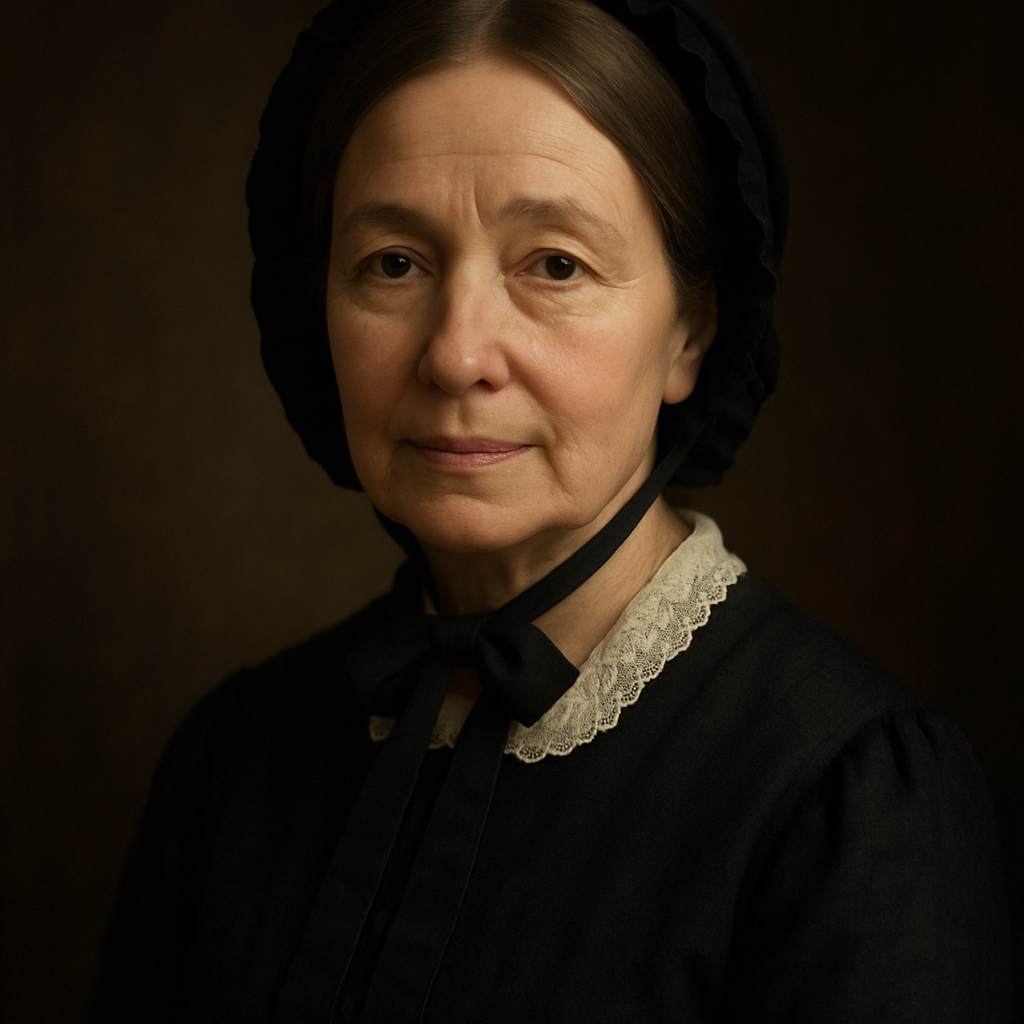 Mrs. BulstrodeMrs. Bulstrode is the pious, kindly wife of the influential banker Nicholas Bulstrode. She moves within respectable Middlemarch circles, offering domestic steadiness and social grace, and her quiet loyalty and conscience help illuminate the town’s moral climate and the pressures of reputation without driving the plot’s public confrontations.
 Mr. BrookeMr. Brooke is Dorothea and Celia Brooke’s well-meaning but dithering uncle and guardian, a comfortably off landowner whose amiable vagueness, hobbyhorses, and half-formed “improving” notions provide both comic lightness and social texture to the world of Middlemarch. He connects major characters and settings, nudging plots into motion while exemplifying the era’s muddled liberal paternalism without driving the central tragedies.
 Celia BrookeCelia Brooke is Dorothea’s younger sister and a practical, good-natured counterpoint to Dorothea’s lofty idealism. Moving comfortably within the social norms of Middlemarch, she provides commonsense commentary, emotional steadiness, and a domestic perspective that highlights the novel’s themes of duty, affection, and the everyday texture of provincial life—often acting as confidante and foil to her sister.
 Sir James ChettamSir James Chettam is Dorothea Brooke’s earnest, generous suitor and a steady country gentleman whose practical kindness and conventional good sense contrast with the loftier ideals and ambitions that preoccupy others in Middlemarch. He serves as a reliable foil and social anchor, and his considerate choices quietly influence the fates of those around him without dominating the story.
 Camden FarebrotherReverend Camden Farebrother is the conscientious vicar of St. Botolph’s, a gifted scholar and amateur naturalist whose kindness and integrity make him a trusted friend and counselor in Middlemarch. Living modestly while supporting his family, he balances worldly pressures with moral principle, offering guidance to younger characters and quietly shaping several key relationships and decisions without seeking the spotlight.
 Peter FeatherstonePeter Featherstone is the miserly, manipulative owner of Stone Court whose wealth and expected bequests make him the focus of anxious attention from relatives and dependents. His intrigues, deathbed maneuverings, and disputed wills set off key conflicts among Middlemarch’s families, entangling characters like Fred Vincy and Mary Garth and shaping crucial turns in the town’s social and financial fortunes.
 John RafflesJohn Raffles is a disreputable drifter who turns up in Middlemarch carrying knowledge of a prominent citizen’s buried past. His opportunistic meddling and hints of blackmail make him a catalyst for moral reckoning, pushing hidden histories toward exposure and intensifying the novel’s themes of conscience, reputation, and social consequence.
 Joshua RiggThe illegitimate son of Peter Featherstone, Joshua Rigg arrives in Middlemarch at the reading of the old man’s will and, unfazed, steps into an unexpected inheritance. Practical, self‑possessed, and motivated by money, he quickly turns Stone Court into a means to pursue his own ambitions elsewhere. Though he is not a central figure, his actions and connections help set off events that ripple through the town’s social and moral fabric without requiring him to remain in the foreground.
 Mr. VincyMr. Vincy is a prosperous Middlemarch manufacturer and town leader whose genial, status‑conscious outlook embodies the mercantile middle class. As the indulgent father of Rosamond and Fred Vincy, his priorities—comfort, reputation, and practical success—shape family expectations and ripple into key relationships and choices that drive several plot threads, without placing him at the novel’s moral center.
 Mrs. VincyMrs. Vincy is the genial, indulgent mother of Rosamond and Fred and the wife of a prosperous Middlemarch manufacturer. She anchors the Vincy household, embodying comfortable middle-class tastes and priorities, and often favors ease and social standing over stern principle. Her affectionate partiality—especially toward Fred—and her conventional hopes for her children shape several domestic choices, adding warmth, humor, and pressure to the family’s fortunes without driving the novel’s central plot.
 Mr. HawleyMr. Hawley is a prominent Middlemarch lawyer whose sharp tongue and assertive manner make him an influential voice in local politics and public opinion. He often shapes conversations in the town’s professional and social circles, serving as a barometer of respectable Middlemarch sentiment and a foil to more idealistic characters without dominating the central plot.
Study guide
Summaries and analysis of all 88 chapters, and profiles of 32 characters, illustrated with scenes from the book.
Themes
- Marriage and duty
- Social change
- Ambition and idealism
- Reputation and morality
- Community and reform
Why Read Middlemarch?
Readers today will find Middlemarch timely for its examination of how personal choices collide with social structures. Its portraits of marriage, professional ethics, and the compromises demanded by respectability illuminate dilemmas still familiar: how to reconcile inner convictions with economic pressures and communal expectations.
The novel rewards close attention to character and context—Eliot’s psychological realism, careful social observation, and moral nuance offer a rich experience for readers who enjoy layered narratives. It also prompts reflection on civic life: how reform efforts start, stall, or succeed amid human weakness. Middlemarch is valuable both as an absorbing story of individuals and as a study of the social fabric that shapes them.
Experience Middlemarch on Book2Life
Read with AI-generated visuals, character portraits, audio narration, smart summaries, and more — free in your browser and on iPhone.