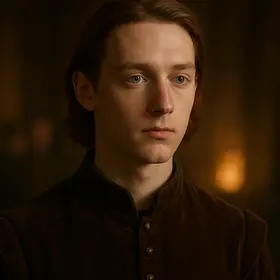
Donalbain in Macbeth
Minor character
Younger son of King Duncan; polite, cautious, and retreats to Ireland after his father’s murder.
Who is Donalbain?
Donalbain is the younger of King Duncan’s two sons, present at court as a quiet, observant figure who keeps a low profile among powerful men. He stands near his father and brother during celebrations of Macbeth’s battlefield success and listens while the king rewards his generals. After Duncan is murdered, Donalbain reacts with fear and self-preservation: together with Malcolm he concludes that staying in Scotland is dangerous, so Donalbain flees to Ireland. His departure is brief in stage-time but consequential in its effects—nobles cast suspicion on the king’s sons for fleeing, and their escape helps create political disorder that Macbeth exploits. Donalbain otherwise remains offstage and peripheral, a frightened prince whose primary action is to remove himself from immediate danger rather than to contest power or investigate his father’s death.
In the book: We first meet Donalbain at King Duncan’s court as the younger son, standing close to his father and brother, Malcolm. He’s polite and observant, speaking little but showing a steady, cautious presence that hints he weighs every word around powerful men.
Personality
- Polite
- Stands close to his father and brother at court and takes part in formal royal company without drawing attention (Act 1 scenes).
- Observant
- Speaks little but registers announcements and court movements, notably when Duncan names Malcolm Prince of Cumberland (Act 1, Scene 4).
- Cautious
- After Duncan’s murder he promptly advises flight, choosing safety over remaining at court (Act 2, Scene 3).
- Reticent
- Rarely speaks and avoids public displays, keeping a steady, watchful presence during royal gatherings (Act 1 scenes).
Character arc
Donalbain’s dramatic movement is brief but decisive. He first appears as a composed, polite courtier at Duncan’s side during reports of Macbeth’s victories and the king’s public business, showing only mild inner response while the court celebrates. The turning point arrives with Duncan’s murder: Donalbain and Malcolm immediately perceive danger in staying near the court and choose separation—Malcolm to England and Donalbain to Ireland. That flight ends Donalbain’s active role in the play; he does not return to contest the throne or to seek justice. Instead, his absence becomes part of the political ripples that follow: nobles and observers point to the sons’ flight as suspicious, and their removal from Scotland helps clear the way for Macbeth’s rapid accession. In short, Donalbain moves from quiet court presence to frightened exile and remains an offstage symbol of disrupted succession and fear.
Relationships
- Duncan His father and the murdered king, at whose court Donalbain stands before the crime.
- Malcolm His elder brother; they decide together to flee after Duncan’s murder, splitting for safety.
- Lennox A noble present at court alongside Donalbain during announcements and the aftermath of the murder.
- Ross A court messenger and observer who enters scenes where Donalbain is present and helps report events.
- Macbeth The warrior whom the court praises before Duncan’s death and whose subsequent rise to the throne is facilitated by Donalbain’s flight.
- Banquo A fellow noble and military leader present at court gatherings when Donalbain is onstage.
Why Donalbain matters
Donalbain functions as a small but thematically important presence: his flight after Duncan’s murder underscores the play’s collapse of order and the instinct for self-preservation in a suddenly dangerous court. Although he does not act to reclaim power or seek justice, his decision to flee produces political consequences—nobles interpret his absence as suspicious, helping to isolate the royal line and smoothing Macbeth’s path to kingship. Donalbain’s silence and withdrawal thus amplify themes of appearance versus reality, the fragility of succession, and how fear reshapes human choices in a corrupting political climate.
Chapters with Donalbain
More Macbeth characters
 Macbeth
 Banquo
 Macduff
 Malcolm
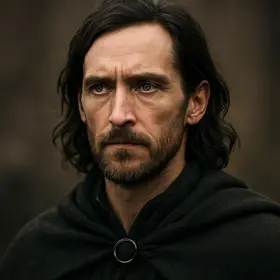 Ross
Ross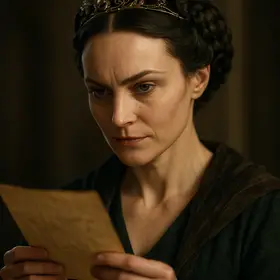 Lady Macbeth
 Lennox
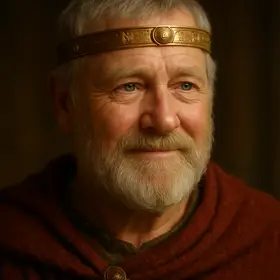 Duncan
All chapter summaries ›Characters ›
Read Macbeth illustrated
Every scene in these notes comes from the Book2Life reader, where the full public-domain text is illustrated as you read, with character portraits and narration. Free in your browser and on iPhone.
