
Banquo in Macbeth
Major character
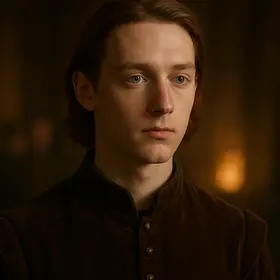
A loyal Scottish captain and friend to Macbeth, skeptical of the witches and father to Fleance.
Who is Banquo?
Banquo is introduced as a respected commander who fights alongside Macbeth and shares the battlefield glory. He encounters the Three Witches on the heath and hears a prophecy that his descendants will be kings; unlike Macbeth, Banquo reacts with caution and suspicion, warning that the witches may be instruments of darkness. He attends court and the king as a trusted noble, notices omens of safety at Macbeth’s castle, and later expresses uneasy curiosity about the witches’ predictions. Banquo remains outwardly loyal but inwardly wary as Macbeth rises. He rides out with his son Fleance the night Macbeth arranges murder; Banquo is ambushed and killed, though Fleance escapes. Banquo’s death and the later sighting of his ghost at Macbeth’s banquet mark him as both victim and moral counterpoint in the court’s unraveling.
In the book: When we first meet him, Banquo is a respected Scottish captain riding with Macbeth after a hard-won battle. He’s cool-headed and wary, especially when strange prophecies crop up, and he comes off as the friend who keeps his feet on the ground while others get dazzled.
Personality
- Loyal
- Fights alongside Macbeth in battle and arrives at court with him to receive the king’s praise (Act 1 scenes 2 and 4).
- Skeptical
- Warns Macbeth that the witches are ‘instruments of darkness’ and counsels caution after their prophecies (Act 1, Scene 3).
- Protective
- Walks with and cares for his son Fleance on the castle grounds late at night before departing (Act 2, Scene 1).
- Honorable
- Maintains courtly duty and appears at Duncan’s arrival and at the king’s banquet, preserving appearances despite inner doubts (Act 1, Scene 6; Act 3, Scene 4).
- Fated
- Receives the witches’ prophecy that his descendants will be kings, a destiny that haunts Macbeth and motivates deadly action (Act 1, Scene 3; Act 4, Scene 1).
Character arc
Banquo begins as a steady, respected warrior and friend who meets the witches with measured distrust. Early on he functions as a moral and rational foil to Macbeth’s ambition: he questions the sisters and warns Macbeth against accepting their half-truths. He continues to perform his duties—welcoming Duncan, attending court, and caring for his son—while privately pondering the witches’ promise that his line will inherit the throne. As Macbeth grows more anxious and violent, Banquo’s cautious integrity places him in danger; Macbeth interprets Banquo’s existence and his seed as a threat to the crown. Rather than seize power or conspire, Banquo maintains honor and restraint, which leads Macbeth to order his murder. Banquo is assassinated in an ambush, though Fleance escapes, leaving Banquo’s promise of posterity unfulfilled but intact as a looming possibility. In death Banquo transforms into an uncanny presence—his murder and Macbeth’s subsequent hallucination of Banquo’s ghost underline the moral cost of Macbeth’s crimes and Banquo’s role as the principled counterweight who refuses corruption until he is silenced.
Relationships
- Macbeth Comrade-in-arms and friend whose rise and secret ambitions Banquo watches with growing suspicion; Macbeth later orders Banquo’s murder.
- Fleance Banquo’s young son, whom he protects and escorts; Fleance flees when Banquo is ambushed and killed.
- Duncan The king whom Banquo serves loyally and who praises Banquo’s service alongside Macbeth.
- The Three Witches Prophetic agents who predict Banquo’s line will inherit the throne, prompting his wary response.
- Ross A noble who accompanies news and court movements; Ross appears with Banquo at key moments such as arrivals from Fife.
- Lady Macbeth Hostess to the king at Inverness whose staged hospitality coincides with Banquo’s observation of the castle’s welcoming signs.
Quotes by Banquo
“This guest of summer, The temple-haunting martlet, does approve, By his loved mansionry, that the heaven’s breath Smells wooingly here:”
Act 1, Scene 6Banquo uses the image of nesting martlets to signal that the place seems safe and well-ordered, reinforcing the scene's domestic calm.
“I dreamt last night of the three Weird Sisters: To you they have show'd some truth.”
Act 2, Scene 1Banquo tells Macbeth he dreamed of the witches and acknowledges that some of their prophecies have come true, linking their prophecies to Macbeth's rise.
“Thou hast it now, King, Cawdor, Glamis, all, As the Weird Women promis’d; and, I fear, Thou play’dst most foully for’t; yet it was said It should not stand in thy posterity; But that myself should be the root and father Of many kings.”
Act 3, Scene 1Banquo muses on the witches’ prophecies, recognizing Macbeth’s titles and worrying that the prophecy names Banquo’s descendants as future kings.
“O, treachery! Fly, good Fleance, fly, fly, fly!”
Act 3, Scene 3Banquo's final cry urging his son to escape, showing sudden violence and his concern for Fleance's safety.
Why Banquo matters
Banquo embodies the ethical alternative to Macbeth’s ambition: skeptical, honorable, and filial. His refusal to exploit the witches’ prophecy highlights the moral choices characters face when confronted with temptation. Banquo’s murder marks the point where Macbeth chooses to secure power through blood, and the survival of Fleance preserves the witches’ promise as a future threat—keeping the political and supernatural tensions alive. Banquo’s presence and death deepen the play’s exploration of fate vs. free will, the corrupting effects of unchecked ambition, and the cost of moral integrity in a violent court.
Chapters with Banquo
More Macbeth characters
 Macbeth
 Macduff
 Malcolm
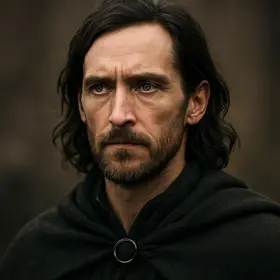 Ross
Ross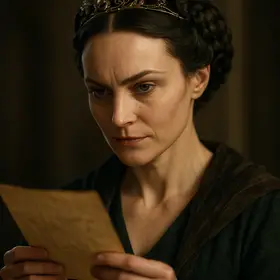 Lady Macbeth
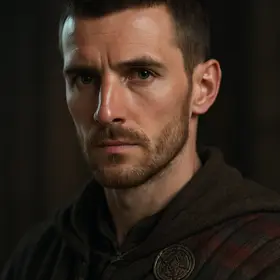 Lennox
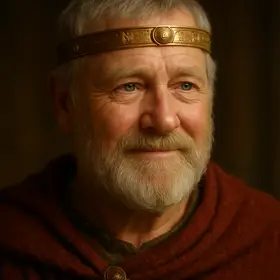 Duncan
 Donalbain
All chapter summaries ›Characters ›
Read Macbeth illustrated
Every scene in these notes comes from the Book2Life reader, where the full public-domain text is illustrated as you read, with character portraits and narration. Free in your browser and on iPhone.
