
Queequeg in Moby-Dick
Major character
Tattooed South Sea Islander, Ishmael’s devoted friend and the Pequod’s calm, formidable first harpooneer.
Who is Queequeg?
Queequeg is a tattooed harpooneer from the South Sea island Rokovoko who becomes Ishmael’s bunkmate and closest friend and is signed as Starbuck’s harpooneer aboard the Pequod. He wants steady work, companionship, and to see “Christendom,” but settles into life among sailors while retaining his own island rituals and faith (Yojo). Queequeg repeatedly demonstrates exceptional skill (striking a tarspot for Peleg, throwing in small-boat chases, and driving in irons during captures), practical courage (diving to save a man on the Moss, leaping into the sea to rescue Tashtego), and a composed dignity that wins respect at the cabin-table and in action. He is also quietly generous and loyal: he shares money, his pipe and boat with Ishmael, joins in Ishmael’s will preparations, and later lends his coffin to the ship as a life-buoy. Throughout the voyage he performs the dangerous labor of a harpooneer — descending on whales, standing the monkey-rope, and fighting off sharks — firmly rooted in his hybrid identity as both island noble/priestly stock and seasoned whaleman.
In the book: Queequeg is Ishmael’s bunkmate-turned-best friend and the most formidable harpooneer aboard the Pequod, whose skill, courage, and calm self-possession earn universal respect. As a South Sea Islander with his own customs and beliefs, he broadens Ishmael’s view of humanity and becomes a touchstone of loyalty, practicality, and moral generosity throughout the voyage. His presence anchors the novel’s exploration of kinship across cultures and the dignity found in lives lived far from conventional society.
Personality
- Skilled
- Peleg is impressed when Queequeg leaps into a boat and accurately plants his harpoon on a distant tarspot during the signing (Ch. 18).
- Calm
- He sits unflinchingly at the Spouter-Inn breakfast with his harpoon and smokes his tomahawk-pipe while others sit sheepish (Ch. 5).
- Loyal
- He and Ishmael declare themselves 'bosom friends' after sharing a pipe and exchange money and gifts, vowing to share watch, boat and fortune (Ch. 10–13).
- Practical
- He strips and dives into icy water to retrieve a man who fell from the Moss, then secures a runaway spar with a lasso (Ch. 13).
- Resilient
- Struck by a severe fever and placed in a coffin, Queequeg suddenly recovers, reclaims his duties, and repurposes the coffin as a sea-chest (Ch. 110).
Character arc
Queequeg’s arc runs from exotic stranger to integrated, indispensable crewmember and emblem of cross-cultural kinship. He first appears as a startlingly tattooed islander at the Spouter-Inn, frightening Ishmael but quickly revealing civility by sharing a bed, pipe, and money; this domestic intimacy becomes the foundation for their mutual devotion (Chs. 3–11). He signs on willingly, proving himself supremely competent to Peleg and Bildad and securing his place as Starbuck’s harpooneer (Chs. 16–18). Throughout the Pequod’s outfitting and early cruising he performs the expected, dangerous harpooneer work: in boat chases, lowers, and butchering scenes he displays steady courage and technical mastery (Chs. 48, 61, 72, 81). He endures extreme perils—the shark massacre guarding a carcass, the monkey-rope’s exposure on a turning whale—yet remains composed and resourceful (Chs. 66, 72). Near death, he follows island rites and anticipates a traditional burial by having a coffin made; when he miraculously recovers the coffin is transformed into a practical chest and later into a life-buoy, symbolically folding his native customs into shipboard life (Chs. 110, 126–127). By the voyage’s middle he has become a moral and practical touchstone for Ishmael and the crew: both fearsome in skill and quietly human in loyalty, he refuses no duty and affirms a shared, cross-cultural humanity until the later catastrophe overtakes the Pequod.
Queequeg in pictures

Relationships
- Ishmael Bunkmate-turned 'bosom friend' who shares pipe, money, and intimate trust; Ishmael serves as his attendant and admirer.
- Starbuck Queequeg is Starbuck’s chosen harpooneer, paired professionally as mate and squire in whale-chases.
- Peleg Ship-owner who tests and hires Queequeg after witnessing his harpooning skill and offers him a generous lay.
- Tashtego Fellow harpooneer and comrade in the cabin and at flensing; Queequeg rescues Tashtego when the whale’s head sinks (Ch. 78).
- Daggoo Companion harpooneer who works beside Queequeg during dangerous butchering and rescues (Chs. 78, 81).
- Ahab Serves under Ahab’s monomaniacal command as one of the harpooneers and takes part in Ahab’s quarter-deck oath with the other chiefs (Ch. 36).
Quotes by Queequeg
“Me sabbee plenty”
Chapter 3Queequeg’s brief, phonetic reply when the landlord asks if he will look after Ishmael in bed; it humanizes him and calms Ishmael’s fear.
“Queequeg no kill-e so small-e fish-e; Queequeg kill-e big whale!”
Chapter 13Queequeg dismisses the idea that he would harm a small man, asserting that he reserves his prowess for whales—showing pride and a peculiar moral code.
“Cap’ain, you see him small drop tar on water dere? You see him? well, spose him one whale eye, well, den!”
Chapter 18Queequeg explains and then demonstrates his harpooning skill by aiming at and striking a tar spot across the deck.
“Oh! perry dood seat," said Queequeg, "my country way; won’t hurt him face.”
Chapter 21Queequeg’s explanation—part joke, part cultural anecdote—characterizes his candid strangeness and the novel’s recurring mixing of comic insight with cultural difference.
““Queequeg no care what god made him shark,” said the savage, agonizingly lifting his hand up and down; “wedder Fejee god or Nantucket god; but de god wat made shark must be one dam Ingin.””
Chapter 66Queequeg’s wounded, superstitious remark that personifies the shark’s power and highlights cultural responses to inexplicable natural violence.
Why Queequeg matters
Queequeg embodies the novel’s insistence on humane kinship across cultural divides: his friendship with Ishmael dismantles prejudices, and his composed dignity challenges notions of 'civilization.' As a skilled, non-Christian islander who both keeps native rites and thrives among sailors, he represents a hybrid humanity that broadens the Pequod’s moral community. His practical bravery in the hunt and his symbolic coffin—later repurposed as a life-buoy—compress themes of mortality, cultural exchange, and the porous boundary between life and death, showing how personal ritual and seafaring pragmatism coexist on the whale-ship.
Chapters with Queequeg
- Chapter 3
- Chapter 4
- Chapter 5
- Chapter 6
- Chapter 7
- Chapter 10
- Chapter 11
- Chapter 12
- Chapter 13
- Chapter 15
- Chapter 16
- Chapter 17
- Chapter 18
- Chapter 19
- Chapter 20
- Chapter 21
- Chapter 22
- Chapter 24
- Chapter 27
- Chapter 34
- Chapter 35
- Chapter 36
- Chapter 47
- Chapter 48
- Chapter 49
- Chapter 61
- Chapter 66
- Chapter 72
- Chapter 74
- Chapter 78
- Chapter 81
- Chapter 84
- Chapter 87
- Chapter 95
- Chapter 99
- Chapter 110
- Chapter 113
- Chapter 119
- Chapter 126
- Chapter 127
- Chapter 130
- Chapter 135
More Moby-Dick characters
 Ahab
Ahab Ishmael
 Stubb
Stubb Starbuck
 Flask
Flask Tashtego
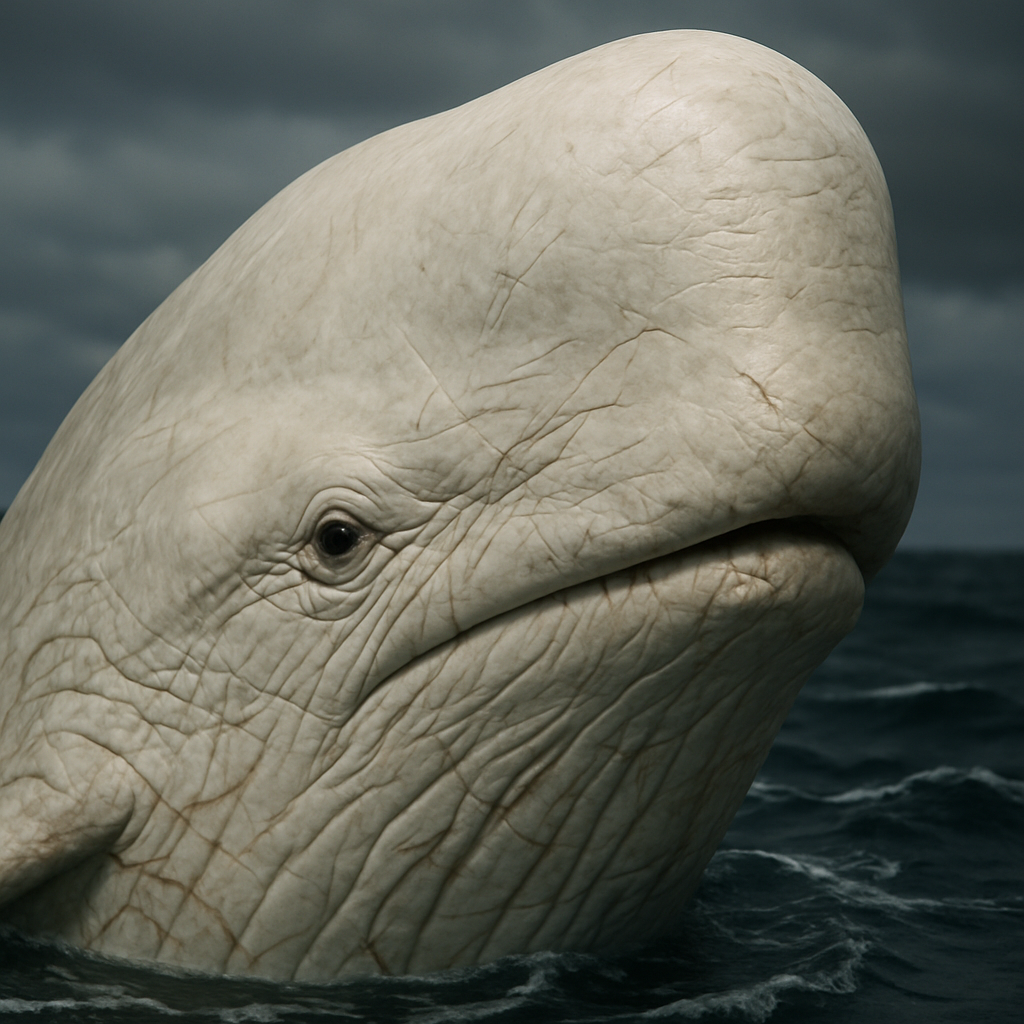 Moby Dick
 Daggoo
All chapter summaries ›Characters ›
Read Moby-Dick illustrated
Every scene in these notes comes from the Book2Life reader, where the full public-domain text is illustrated as you read, with character portraits and narration. Free in your browser and on iPhone.
