
Stubb in Moby-Dick
Major character
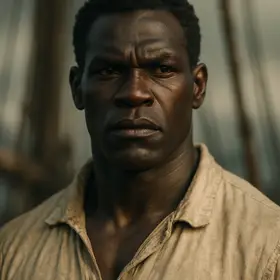
Pequod’s second mate: a seasoned Cape Cod whaleman whose humor, steadiness, and fatalistic cheer steady the crew amid danger.
Who is Stubb?
Stubb is the Pequod’s second mate, introduced as a carefree, pipe-smoking Cape Cod man who meets danger with amused indifference and practical competence. He leads his boat crews in multiple chases, showing calm seamanship (notably in the pitchpoling and during the long kills), and provides comic relief and social mediation aboard ship—mocking, teasing, and keeping spirits up while still directing hard work. Stubb often uses laughter, song, and fatalism as psychological defenses (seen in his fore-top monologue and cabin exchanges), and he oscillates between jocular insolence and sober decisiveness when required: he commands the cutting-in and supervises supper, orders the boats, and insists on discipline when a boy’s safety is at stake. Though not central to Ahab’s obsession, Stubb witnesses and interprets much of it, reacting with a blend of irony, resignation, and professional focus that both contrasts with and complements Starbuck’s conscience and Ahab’s mania.
In the book: Stubb is the Pequod’s second mate, a seasoned Cape Cod whaleman whose humor, sangfroid, and fatalistic cheer steady the crew amid danger. He serves as a tonal counterweight to the ship’s grimmer forces, leading men with competence and good nature, providing comic relief, and revealing how levity and skill can coexist with brutality at sea—thereby deepening the novel’s portrait of life aboard a whaling ship without driving its central conflict.
Personality
- Good-humored
- He tells Flask a vivid, absurd dream about Ahab’s ivory leg (Chapter 31) and conducts a comic supper over his whale (Chapter 64).
- Fatalistic
- In the fore-top monologue he claims laughter and the idea of predestination ease him: "it’s all predestinated" (Chapter 39).
- Steady
- He calmly commands his boat through a furious pitchpoling and repeatedly lances the running whale to bring it down (Chapter 84).
- Practical
- During cutting-in and blubber work he takes charge of operations and food distribution, insisting on tasks being done (Chapters 67, 64).
- Authoritative
- He orders Pip’s rescuing stance and later commands discipline when Pip is berated after being left in the sea (Chapter 93).
Character arc
From his first appearances Stubb functions as the shipboard comic and steady second mate: jaunty, pipe-smoking, and outwardly unconcerned. Early scenes show him deflating fear through humor and ritual laughter (Chapter 27, 39), and he repeatedly reframes danger as part of the trade, using fatalism to maintain morale. As the voyage progresses he proves his seamanship and leadership in action—taking charge in the lowering, killing, and cutting-in of whales (Chapters 61, 67, 84) and displaying practical decisiveness when men or whales require hard decisions (e.g., the Pip incident, Chapter 93). He witnesses increasingly ominous signs of Ahab’s monomania (his ill-judged night encounter with Ahab in Chapter 29 and later Ahab’s public rituals) but never becomes Ahab’s moral foil in the way Starbuck does; instead Stubb largely preserves his outlook of amused resignation and professional performance. By the final chase episodes where the Pequod pursues Moby Dick, Stubb remains essentially the same temperamentally—skillful, jocular, and fatalistic—though his competence is now framed amid catastrophic consequences he neither can nor will fundamentally oppose. He refuses deep moral resistance to Ahab’s quest, maintaining his role as the crew’s steady practical officer to the end.
Relationships
- Ahab Stubb greets Ahab with levity and is rebuked (Chapter 29); he observes and comments on Ahab’s oddities but does not openly confront him.
- Starbuck Stubb contrasts with Starbuck’s conscientious gravity—teasingly deflating fears while still recognizing Starbuck’s authority (Chapters 26, 121).
- Flask Stubb regularly banters and works with Flask; they share comic conversations and practical duties (Chapters 27, 121).
- Tashtego Tashtego is Stubb’s harpooneer; together they accomplish dangerous lance and pitchpoling work (Chapters 27, 84, 78).
- Queequeg Stubb interacts as fellow boatman and shipboard companion—he brings grog to Queequeg after the monkey-rope work and mocks gentler remedies (Chapter 72).
- Pip Stubb directly supervises Pip in the boats, orders his retrieval when endangered, and later must contend with Pip’s breakdown after abandonment (Chapter 93).
Quotes by Stubb
“It’s very queer. Stop, Stubb; somehow, now, I don’t well know whether to go back and strike him, or—what’s that?—down here on my knees and pray for him?”
Chapter 29Stubb’s private monologue reveals his confused mixture of anger, fear, and reluctant compassion after Ahab’s outburst.
“Such a queer dream, King-Post, I never had.”
Chapter 31Opens Stubb's account of a strange, shifting dream that frames his later conclusions about Ahab.
“Ha! ha! ha! ha! hem! clear my throat!—I’ve been thinking over it ever since, and that ha, ha’s the final consequence.”
Chapter 39Stubb explains that laughter is his final, wise response to odd or troubling things and begins his soliloquy.
“Be sure the old Mogul has fixed him, too.”
Chapter 39Stubb reflects on Starbuck’s demeanour, suggesting an overwhelming influence has already affected him.
“We’ll drink to-night with hearts as light, To love, as gay and fleeting As bubbles that swim, on the beaker’s brim, And break on the lips while meeting.”
Chapter 39Stubb breaks into a jaunty stave, using song to maintain a cheerful façade and imagine lighter domestic scenes.
““That’s the stroke for a thousand pounds; that’s the stroke to sweep the stakes!””
Chapter 48Stubb roars encouragement to his oarsmen while keeping morale high even amid alarm at the strange boat and the chase.
Why Stubb matters
Stubb embodies a pragmatic, stoic seamanship that counters both Ahab’s grim monomania and Starbuck’s moral alarm. His humor, fatalism, and steady competence reveal how crews survive protracted danger: through ritualized laughter, skilled labor, and small domestic economies of appetite and song. Stubb’s presence humanizes the Pequod’s work life and shows that levity and brutality coexist aboard a whaler—his actions and attitude illuminate the novel’s themes of fate versus agency, the social mechanisms that bind a ship’s company, and the everyday professional courage that persists even as Ahab’s obsession escalates toward catastrophe.
Chapters with Stubb
- Chapter 22
- Chapter 26
- Chapter 27
- Chapter 29
- Chapter 30
- Chapter 31
- Chapter 34
- Chapter 36
- Chapter 39
- Chapter 41
- Chapter 43
- Chapter 48
- Chapter 49
- Chapter 50
- Chapter 55
- Chapter 61
- Chapter 64
- Chapter 65
- Chapter 66
- Chapter 67
- Chapter 70
- Chapter 71
- Chapter 72
- Chapter 73
- Chapter 78
- Chapter 81
- Chapter 84
- Chapter 91
- Chapter 92
- Chapter 93
- Chapter 94
- Chapter 96
- Chapter 99
- Chapter 108
- Chapter 113
- Chapter 114
- Chapter 118
- Chapter 119
- Chapter 121
- Chapter 123
- Chapter 124
- Chapter 126
- Chapter 128
- Chapter 129
- Chapter 130
- Chapter 133
- Chapter 134
- Chapter 135
More Moby-Dick characters
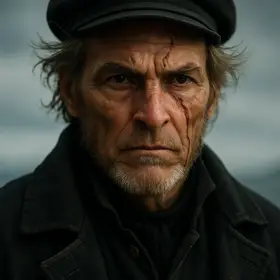 Ahab
Ahab Ishmael
 Queequeg
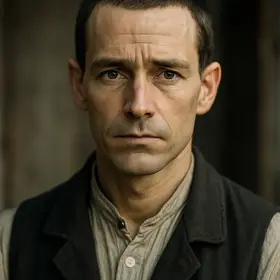 Starbuck
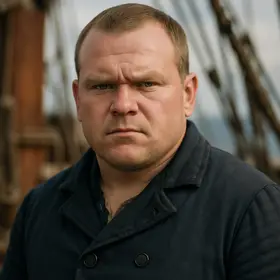 Flask
Flask Tashtego
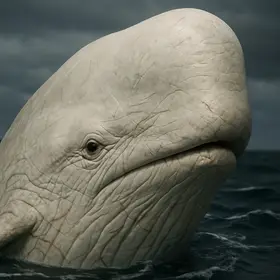 Moby Dick
 Daggoo
All chapter summaries ›Characters ›
Read Moby-Dick illustrated
Every scene in these notes comes from the Book2Life reader, where the full public-domain text is illustrated as you read, with character portraits and narration. Free in your browser and on iPhone.
