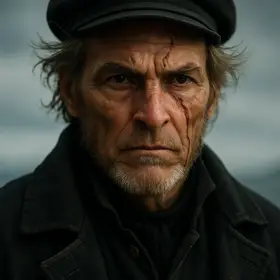
Ahab in Moby-Dick
Protagonist
The Pequod’s iron-willed captain whose consuming vengeance against the white whale turns a whaling voyage into a single-minded quest.
Who is Ahab?
Captain Ahab commands the whaler Pequod with a magnetic, terrifying authority. Wounded by Moby Dick—who cost him his leg—Ahab reframes personal injury as a cosmic wrong and transforms a commercial whaling voyage into a vendetta. He carefully manages shipboard routines and rewards (the doubloon, preserves ordinary whaling practice) to keep the crew aligned, while privately surrounding himself with mysterious allies (notably Fedallah) and forging a blood-tempered harpoon for a final reckoning. Ahab oscillates between moments of eerie tenderness (a private tear, talk with Starbuck) and violent theatricality (quarter-deck oaths, smashing the quadrant, striking the steersman). He asserts absolute command (leveling a musket at Starbuck) and repeatedly rejects calls to mercy (refusing the Rachel’s plea). In the three-day climactic chase he leads the Pequod and its boats into escalating catastrophe, culminating in the ship’s destruction and his own death, while the narrator survives by clinging to Queequeg’s coffin-turned-life-buoy.
In the book: Ahab is the formidable captain of the whaling ship Pequod, whose commanding presence and single-minded will set the voyage’s course. Charismatic yet fearsome, he forges the crew into instruments of his personal mission, turning a routine whaling expedition into an audacious quest. His character embodies obsession, leadership, and defiance, shaping the novel’s tension between human will and the vast, indifferent powers of the ocean.
Personality
- Obsessive
- On the quarter-deck he converts the voyage into a sworn hunt for Moby Dick and forces the crew to drink and swear “Death to Moby Dick!” (ch. 36).
- Domineering
- He levels a loaded musket at Starbuck to enforce obedience and declares himself sole lord over the Pequod (ch. 109).
- Charismatic
- Men of the crew, despite misgivings, rally to Ahab’s cause—he nails the doubloon to the mast and makes it a talisman that binds the crew in shared meaning (ch. 99).
- Ritualistic
- He forges a single blood-tempered harpoon, has mates drink from harpoon sockets, and performs compass and needle rites to assert control (chs. 113, 36, 124).
- Defiant
- He smashes the quadrant in contempt of celestial instruments and declares reliance on his own will rather than science (ch. 118).
Character arc
Ahab first appears as a confined, restless presence aboard the outfitting Pequod, increasingly revealed as a man consumed by a single purpose. Early scenes show restrained menace—he paces nights and smokes from an ivory stool—before erupting into public spectacle when he commandeers the ship’s mission on the quarter-deck and binds the crew with rites and promises (ch. 36). He maintains outward whaling practice to keep men occupied (ch. 46) while privately deepening his omens and instruments of fate: assembling Fedallah’s shadowy crew, tempering a blood-forged harpoon, and performing manifold rituals (chs. 50, 113, 114). Confrontations with Starbuck reveal occasional moments of self-disclosure and human regret (ch. 132) but do not divert him. He rejects appeals to humane duty (the Rachel’s lost boy, ch. 128) and flouts navigational and moral norms—smashing the quadrant (ch. 118), reconstituting the compass (ch. 124), and ordering reckless lowering of boats. His pursuit culminates in the three-day chase where his obsession literally destroys the Pequod; Ahab dies in the wreck he leads, his will realized only in mutual annihilation with Moby Dick (chs. 133–135).
Relationships
- Starbuck The chief mate who admires Ahab’s skill yet passionately opposes his vengeance; he pleads, almost assassinates in thought, but ultimately cannot stop Ahab (chs. 109, 123, 132).
- Fedallah Ahab’s secretive Parsee ally and pilot-like shadow whose presence accompanies Ahab’s darkest omens and whose fate is entwined with the chase (chs. 50, 117, 135).
- Queequeg Ahar briefly observes Queequeg’s inscrutable life and the coffin that later becomes the narrator’s life-buoy; Ahab notices Queequeg but remains primarily preoccupied with his quest (chs. 34, 110, epilogue).
- Stubb Ahab provokes uneasy reactions from Stubb—mockery, fear, and awe—after nocturnal encounters and Ahab’s abrupt orders (chs. 29–31, 36).
- Pip Ahab alternates brusque protection and exclusion toward the boy, giving Pip a cabin chair and later ordering him kept from the deck before the final chase (chs. 126, 129).
- Moby Dick The white whale is the living object of Ahab’s hatred and meaning; Ahab personifies Moby Dick as the agent of his wound and the ultimate target for vindictive destiny (chs. 36, 41, 133–135).
Quotes by Ahab
““Am I a cannon-ball, Stubb,” said Ahab, “that thou wouldst wad me that fashion?”
Chapter 29Ahab lashes out at Stubb’s suggestion to muff the noise of his ivory heel, showing sudden scorn and volatility.
“If ye see a white one, split your lungs for him!”
Chapter 31Ahab's shout from the deck following Stubb's dream; it marks the white whale as a focus of intense, urgent attention.
“Dinner, Mr. Starbuck,”
Chapter 34Ahab's single, measured summons opens the ritual of the captain's table, announcing his dominance while he himself remains mute.
“Whosoever of ye raises me a white-headed whale with a wrinkled brow and a crooked jaw; whosoever of ye raises me that white-headed whale, with three holes punctured in his starboard fluke—look ye, whosoever of ye raises me that same white whale, he shall have this gold ounce, my boys!”
Chapter 36Ahab offers a gold coin reward, specifying the whale’s distinctive features to focus the crew on a single quarry.
“Aye, aye! and I’ll chase him round Good Hope, and round the Horn, and round the Norway Maelstrom, and round perdition’s flames before I give him up.”
Chapter 36Ahab makes an impassioned vow to pursue the white whale across the globe, converting personal vengeance into a cosmic pursuit.
“Death to Moby Dick! God hunt us all, if we do not hunt Moby Dick to his death!”
Chapter 36During the ritualized drinking from harpoon sockets, Ahab seals the crew’s oath of vengeance, transforming their hunt into a collective solemn covenant.
Why Ahab matters
Ahab embodies the book’s central collision between human will and inscrutable nature. His monomania turns measurable whaling labor into metaphysical warfare: ritual, superstition, and domination displace ordinary seafaring motives. Through Ahab’s theatrical commands, rites, and sacrificial forging of instruments, Melville explores themes of obsession, the limits of reason and science, and the moral cost of making the world an enemy. Ahab’s refusal to yield—to compass, to conscience, or to communal appeals—drives the Pequod toward catastrophic fate, making him a symbol of overreaching will and the tragic consequences when personal rage attempts to master an indifferent cosmos.
Chapters with Ahab
- Chapter 20
- Chapter 21
- Chapter 22
- Chapter 27
- Chapter 29
- Chapter 30
- Chapter 31
- Chapter 34
- Chapter 36
- Chapter 37
- Chapter 38
- Chapter 40
- Chapter 41
- Chapter 42
- Chapter 46
- Chapter 47
- Chapter 48
- Chapter 50
- Chapter 51
- Chapter 52
- Chapter 53
- Chapter 59
- Chapter 61
- Chapter 64
- Chapter 70
- Chapter 71
- Chapter 73
- Chapter 81
- Chapter 87
- Chapter 91
- Chapter 99
- Chapter 100
- Chapter 101
- Chapter 104
- Chapter 106
- Chapter 108
- Chapter 109
- Chapter 110
- Chapter 111
- Chapter 113
- Chapter 114
- Chapter 115
- Chapter 116
- Chapter 117
- Chapter 118
- Chapter 119
- Chapter 123
- Chapter 124
- Chapter 125
- Chapter 126
- Chapter 127
- Chapter 128
- Chapter 129
- Chapter 130
- Chapter 131
- Chapter 132
- Chapter 133
- Chapter 134
- Chapter 135
- Epilogue
More Moby-Dick characters
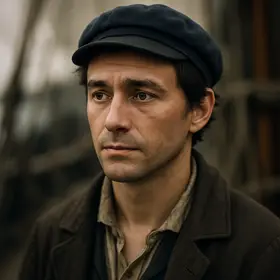 Ishmael
 Stubb
Stubb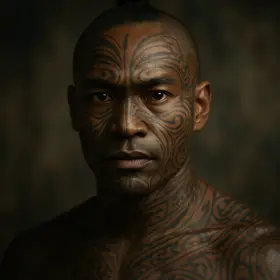 Queequeg
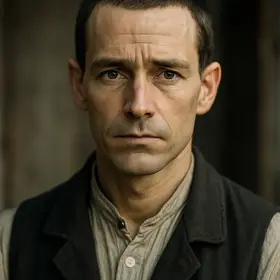 Starbuck
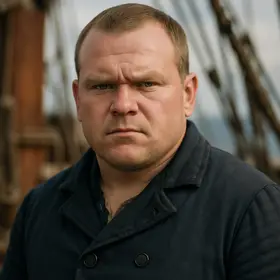 Flask
Flask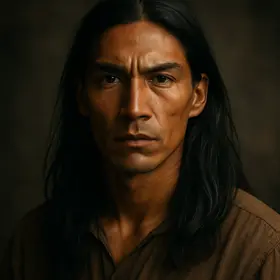 Tashtego
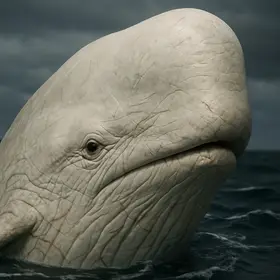 Moby Dick
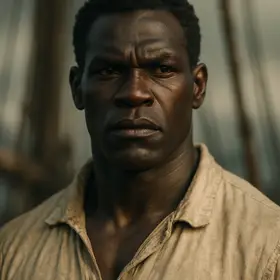 Daggoo
All chapter summaries ›Characters ›
Read Moby-Dick illustrated
Every scene in these notes comes from the Book2Life reader, where the full public-domain text is illustrated as you read, with character portraits and narration. Free in your browser and on iPhone.
