
Balthasar in Romeo and Juliet
Minor character
Romeo Montague’s faithful servant who carries messages, keeps watch, and unwittingly propels the play’s final haste.
Who is Balthasar?
Balthasar is Romeo’s loyal servant and companion who performs practical tasks, keeps watch, and carries news between places. He appears first at the street brawl as one of the Montague servants supporting his household. In Mantua he arrives with urgent, catastrophic news that Juliet lies dead in the Capulet vault; this report spurs Romeo’s immediate decision to return to Verona and act without delay. Balthasar follows Romeo back and accompanies him to the Capulet tomb; Romeo orders him away when he intends to enter, but Balthasar remains a nearby witness. At the tomb he is present for the violent confrontation that kills Paris and later gives an eyewitness account of the scene when authorities arrive. Though he rarely drives events by intent, his reliability, timing, and presence at critical moments make him a necessary link in the chain of actions that produce the tragedy.
In the book: Balthasar is Romeo Montague’s loyal servant and companion, a quiet presence who helps with practical tasks, keeps watch, and carries messages between places and people. Though seldom at the center of the action, his reliability and devotion make him an important link in the chain of events, and his timely news and assistance underscore the play’s themes of loyalty, urgency, and the unintended consequences of haste.
Personality
- Loyal
- He travels from Mantua to Verona to bring Romeo urgent news and accompanies Romeo to the Capulet tomb despite danger.
- Practical
- He carries messages, fetches supplies when asked, and performs the tangible tasks of service for Romeo.
- Quiet
- He remains a subdued presence in the street brawl and at the tomb, witnessing events more than initiating them.
- Reliable
- Romeo trusts Balthasar to deliver and act on information—Balthasar’s report of Juliet’s burial prompts Romeo’s immediate return.
Character arc
Balthasar begins as a background but dependable member of the Montague household, present at the opening disturbance yet not a central instigator. His role intensifies in Act 5 when he brings news of Juliet’s apparent death to Romeo in Mantua; this single, truthful report triggers the chain of impulsive decisions that follow. He shifts from domestic servant to an unwilling participant and eyewitness of the tragedy: he accompanies Romeo to Verona, is forced away at the tomb, watches Paris fall, and later recounts what he saw to the authorities. Balthasar does not undergo a deep personal transformation—he remains steadfast and dutiful—but his experience changes his position from service to testimony. By the end he stands among those who supply the factual pieces that allow the Prince and families to reconstruct the sequence of events, his steady presence turning from quiet assistance into crucial evidence of the feud’s fatal consequences.
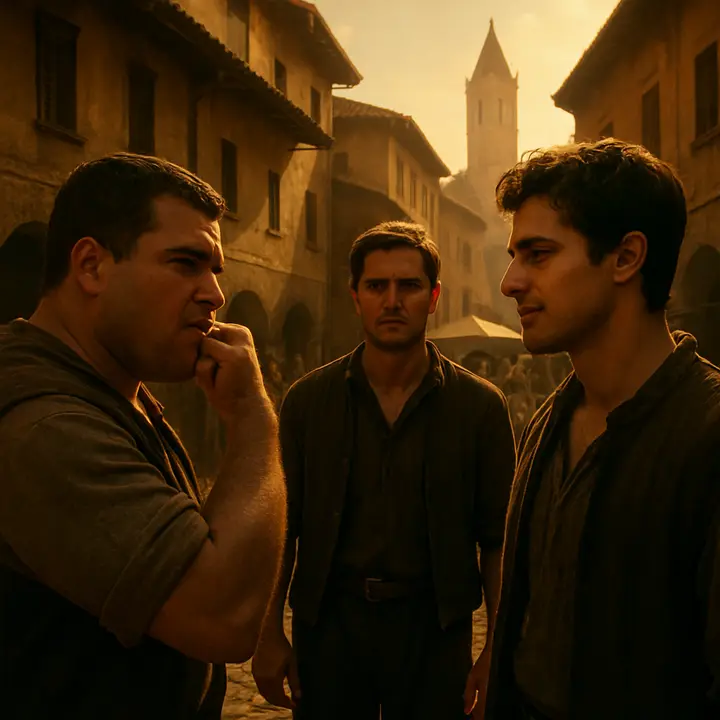
Balthasar in pictures
Relationships
- Romeo Master and young lord whom Balthasar serves loyally and who trusts him with urgent errands and companionship.
- Montague Member of the Montague household; Balthasar supports the family’s interests and participates in early disturbances as a servant.
- Paris Confrontational presence at the tomb: Balthasar witnesses Paris’s encounter with Romeo and the subsequent fatal duel.
- Page Fellow witness at the Capulet monument scene, as the Page hides and observes while Paris waits and mourns.
- Prince Escalus Balthasar provides an eyewitness account to the Prince and authorities after the deaths, helping to clarify what occurred.
- Friar Laurence Indirectly connected; Balthasar’s testimony supplements the Friar’s confession and helps reconstruct the secret plan’s failure.
Quotes by Balthasar
“Her body sleeps in Capel’s monument, And her immortal part with angels lives.”
Act 5, Scene 1Balthasar delivers the devastating news that Juliet has been laid in the family tomb, setting Romeo's plan into motion.
Why Balthasar matters
Balthasar embodies loyalty and the everyday human networks that carry information and shape outcomes. His timely news and steadfast presence highlight how ordinary actions and reliable servants can accelerate tragedy when combined with haste and miscommunication. As a witness, he also helps convert private catastrophe into public knowledge, enabling the play’s final reckoning and the families’ enforced reconciliation. Balthasar thus underscores themes of loyalty, the consequences of rapid action, and how seemingly small duties can have enormous moral and social effects.
Chapters with Balthasar
More Romeo and Juliet characters
 RomeoProtagonist
 JulietProtagonist
 NurseMajor character
 CapuletMajor character
 Friar LaurenceMajor character
 TybaltAntagonist
 Lady CapuletMajor character
 ParisMajor character
All chapter summaries ›Characters ›
Read Romeo and Juliet illustrated
Every scene in these notes comes from the Book2Life reader, where the full public-domain text is illustrated as you read, with character portraits and narration. Free in your browser and on iPhone.
