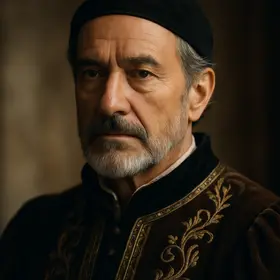
Montague in Romeo and Juliet
Major character
Head of the Montague household and Romeo’s father, a nobleman caught in Verona’s violent feud with the Capulets.
Who is Montague?
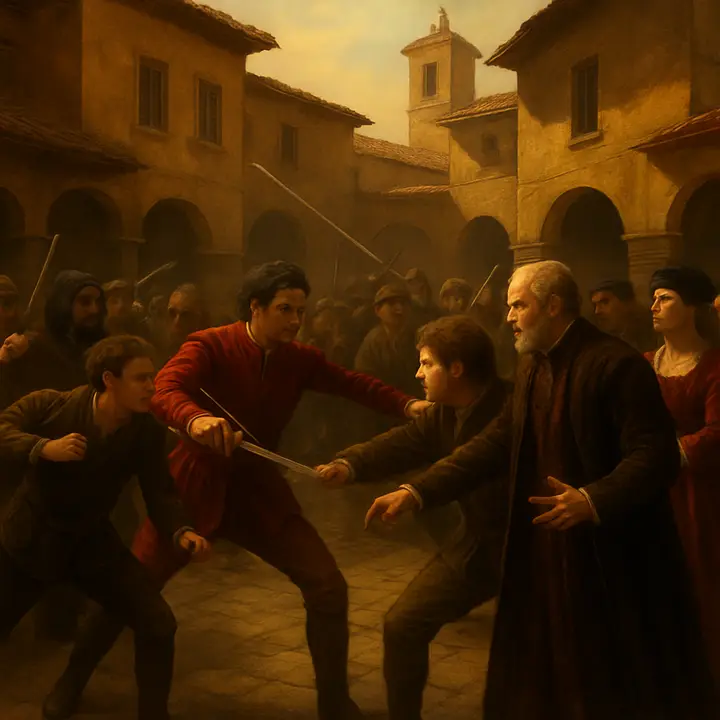
Lord Montague is the patriarch of the Montague family and Romeo’s father. He appears at public disturbances and in the immediate aftermath of violent encounters between the two houses. Concerned for his son’s sudden melancholy, he speaks with Benvolio and Lady Montague about Romeo’s withdrawn behavior and seeks the Prince’s intervention when street brawls erupt. He attends the Prince’s hearing after the first great brawl and is present when the consequences of the feud pile up: he appears at the scene after Tybalt’s death and again at the Capulet tomb after the final catastrophe. Montague acts principally as a representative of his house and of the civic order — appealing to authority, expressing parental worry, and sharing the public shame and sorrow that follow the feud’s escalation. He does not drive the secret marriage or the young lovers’ decisions, but his presence helps frame the social context and stakes that shape Romeo’s choices.
In the book: Lord Montague is the head of the Montague family and Romeo’s father, a respected nobleman whose household is locked in a long‑standing feud with the Capulets. He appears at public clashes, worries over his son’s melancholy, and seeks the Prince’s justice when tempers flare. Though not a central driver of the plot, his presence frames the social order of Verona, highlighting themes of family loyalty, generational conflict, and the consequences of civic discord.
Personality
- protective
- He questions Benvolio about Romeo’s mood and worries over his son’s continual withdrawal in Act 1, Scene 1.
- respectable
- He answers the Prince and stands among Verona’s nobles when civil disorder is condemned after the street brawl in Act 1, Scene 1.
- bellicose loyalty
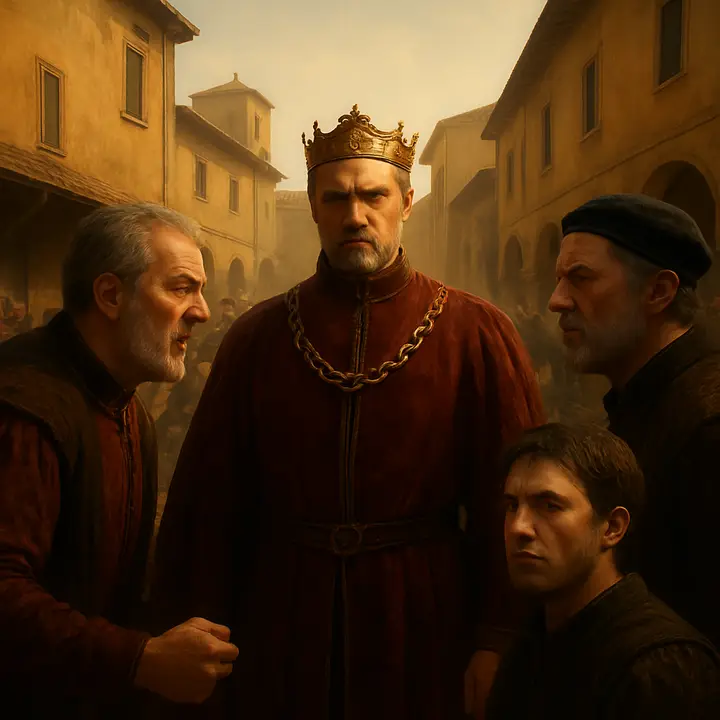
- He appears alongside Capulet before the Prince when the families are called to account for the public fight in Act 1, Scene 1, embodying the feud’s entrenched loyalties.
- grieving
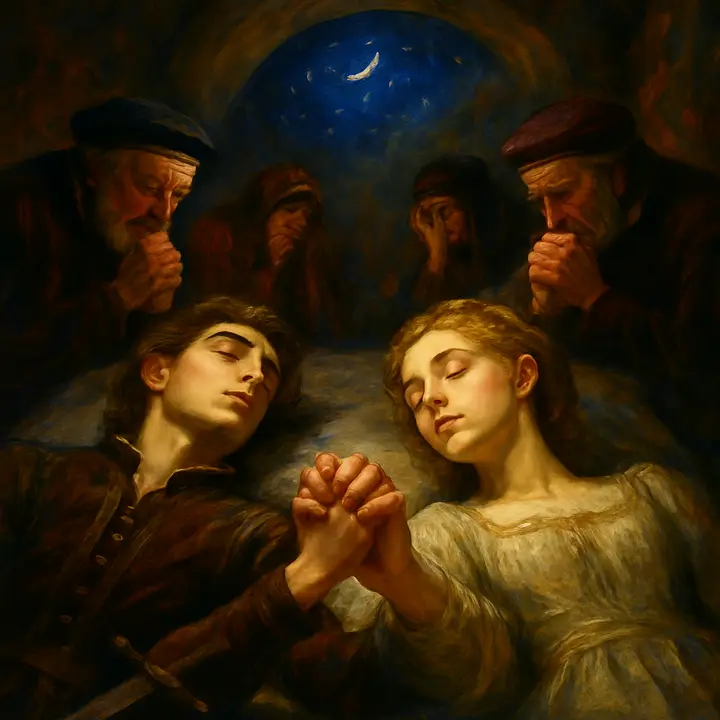
- He is on the scene at the Capulet tomb in Act 5, Scene 3, where the deaths prompt his reconciliation with Capulet.
Character arc
Montague begins as a dignified head of household whose public role is to defend his family’s honor in a city already strained by feud. Early on he is chiefly seen reacting: he answers the Prince’s summons after the servants’ brawl and discusses Romeo’s mysterious sadness with Benvolio and Lady Montague, showing his concern as a father. As violence escalates, Montague persists in standing for his house before Verona’s authorities, attending the public hearings that follow Mercutio’s and Tybalt’s deaths. He does not influence Romeo’s secret choices or the Friar’s plans, but his presence at official moments marks the feud’s social weight. By the final scene at the Capulet tomb, Montague’s arc culminates in grief: confronted by the mortal cost of the enmity, he moves from proud patriarchal defender to a mourning father who, alongside Capulet, agrees to end the feud. His change is less about personal transformation than about being compelled by tragedy to accept reconciliation and public penance for the houses’ shared ruin.
Montague in pictures
Relationships
- Romeo His son; Montague worries over Romeo’s melancholy and is present at the tomb after Romeo’s death.
- Lady Montague His wife; they speak together with Benvolio about Romeo’s withdrawn behavior in Act 1, Scene 1.
- Benvolio A kinsman who reports Romeo’s state and the brawl’s details to Montague, acting as his informant and peacekeeper.
- Prince Escalus The civic authority before whom Montague stands when the street disturbances are condemned and punishments are announced.
- Capulet His rival; Montague faces Capulet at public hearings and ultimately reconciles with him at the tomb after the lovers’ deaths.
Why Montague matters
Montague functions as a social and parental presence that frames the play’s central conflicts. He personifies the entrenched family loyalties and public respectability that sustain the feud, and his reactions—seeking justice, worrying for his son, grieving—trace how private suffering intersects with civic disorder. By surviving to the final tomb, Montague’s enforced reconciliation with Capulet underscores the tragedy’s moral: communal violence destroys what both houses most value and only shared grief can compel peace. His role emphasizes themes of generational responsibility, the costs of honor culture, and the public consequences of private enmity.
Chapters with Montague
More Romeo and Juliet characters
 RomeoProtagonist
 JulietProtagonist
 NurseMajor character
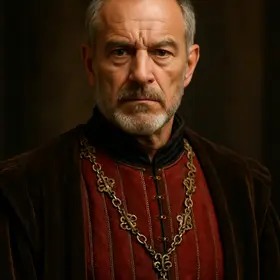 CapuletMajor character
 Friar LaurenceMajor character
 TybaltAntagonist
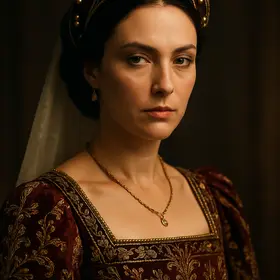 Lady CapuletMajor character
 ParisMajor character
All chapter summaries ›Characters ›
Read Romeo and Juliet illustrated
Every scene in these notes comes from the Book2Life reader, where the full public-domain text is illustrated as you read, with character portraits and narration. Free in your browser and on iPhone.
