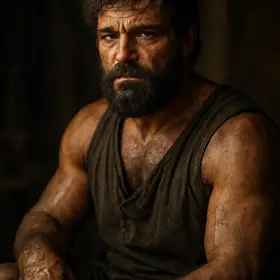
Hephaestus in The Iliad
Major character
Olympian smith-god who forges divine arms and intervenes among the gods to restore order and aid the Achaeans.
Who is Hephaestus?
Hephaestus is the divine craftsman of Olympus whose skill with fire and metal makes him the maker of marvelous arms and the agent who smooths divine quarrels. He appears first on Olympus where, with patient authority, he pacifies Hera and helps the assembly retire. Later, at Thetis's request, he forges the magnificent armor that allows Achilles to reenter the fighting after Patroclus' death; the new arms are pivotal to Achilles' return and to the Greek war effort. Hephaestus also answers Hera's call to kindle a consuming fire on the plain when Achilles' slaughter drives the river Scamander to wrath, using his mastery of elemental force to save the Achaeans from the river-god's fury. Throughout the poem he never dominates mortal combat but exerts decisive influence by providing tools, intervening among the gods, and using craft to restore balance when divine passions threaten human fortunes.
In the book: The Olympian god of fire and metalwork, Hephaestus serves as the divine craftsman in the Iliad, forging marvelous arms and tools for gods and mortals and occasionally intervening to restore order among quarrelsome deities. His artistry becomes strategically important to the Greek cause, as he creates extraordinary gear at a crucial moment without dominating the story’s battles himself.
Personality
- Artisan
- He forges magnificent armor for Achilles at Thetis's request in Book 19.
- Mediator
- He pacifies Hera and calms the divine assembly at the end of Book 1.
- Dependable
- Hera summons him in Book 21 and he answers by kindling a fire to check Scamander's flood.
- Powerful but indirect
- He influences the course of the war through crafted weaponry and elemental intervention rather than by fighting himself, as shown in Books 19 and 21.
Character arc
Hephaestus enters the poem as a composed presence on Olympus who restores calm to a fractious divine council, showing his role as a balancer among the immortals. He then remains consistent in function and temperament: when Thetis asks for help after Patroclus' death he responds by creating arms of unparalleled workmanship, shaping the pivotal instrument of Achilles' renewed rage. Later, when Achilles' slaughter raises the river-god's wrath, Hera again summons Hephaestus and he wields fire to force Scamander to relent, turning natural fury back into order. He does not undergo a moral or psychological transformation; instead his arc is one of reiterated purpose: craft and controlled force applied at key moments to repair or redirect the consequences of divine and mortal violence. From first appearance to last he remains the steady artisan who intervenes to restore balance, his interventions shifting the scene without changing his essential, service-oriented character.
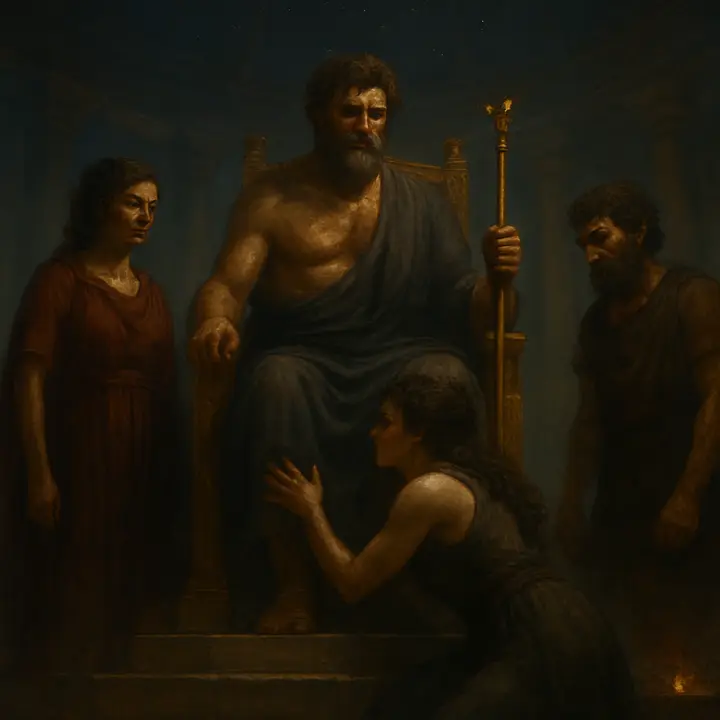
Hephaestus in pictures
Relationships
- Hera She relies on him to restrain chaos and to carry out her schemes, calling on him to pacify assemblies and to kindle fires in her service.
- Thetis She commissions Hephaestus to forge Achilles' new armor, trusting his skill to give her son a decisive advantage.
- Achilles He supplies Achilles with the god-made arms that enable his return to battle after Patroclus' death, materially affecting Achilles' course.
- Zeus He acts with deference to Zeus's will on Olympus and performs tasks that align with the broader decisions of the king of gods.
- Aphrodite She lends the girdle Hera borrows in Hera's plot (Book 14), a plan that Hephaestus helps smooth over at the divine assembly.
- Poseidon Poseidon's battlefield interventions prompt Hera to call Hephaestus in Book 21 to counter the river's fury with fire.
Why Hephaestus matters
Hephaestus embodies the power of craft and measured force in a poem dominated by honor-driven violence. His workmanship turns private grief into public turning points—most notably by arming Achilles—and his interventions among the gods and on the plain restore balance when passion and elemental fury threaten to overwhelm human affairs. As a counterweight to rage and blind force, Hephaestus highlights themes of artisan knowledge, the moral utility of controlled power, and the interdependence of divine will and human fate.
Chapters with Hephaestus
More The Iliad characters
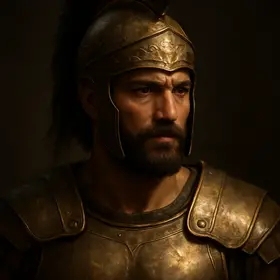 Hector
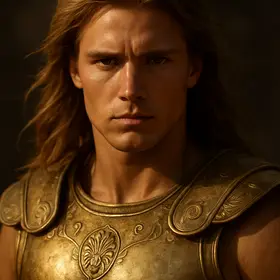 Achilles
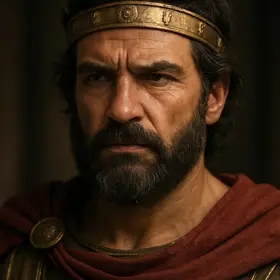 Agamemnon
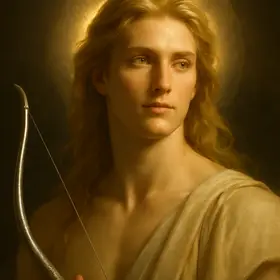 Apollo
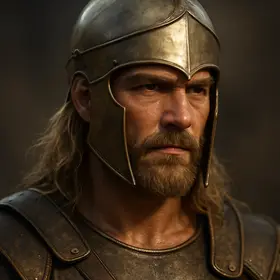 Menelaus
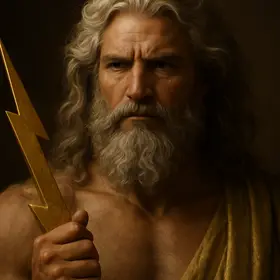 Zeus
Zeus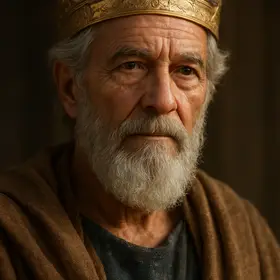 Nestor
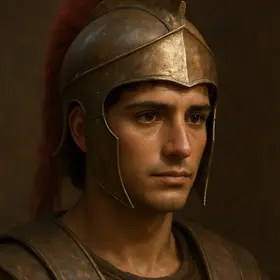 Patroclus
All chapter summaries ›Characters ›
Read The Iliad illustrated
Every scene in these notes comes from the Book2Life reader, where the full public-domain text is illustrated as you read, with character portraits and narration. Free in your browser and on iPhone.
