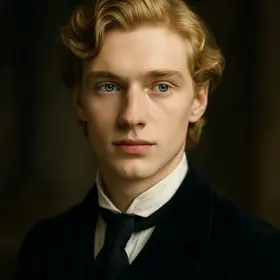
Dorian Gray in The Picture of Dorian Gray
Protagonist
A strikingly beautiful, impressionable young man whose portrait ages in his place as he pursues pleasure and avoids moral consequence.
Who is Dorian Gray?
Dorian Gray enters the novel as an exquisitely handsome youth and the inspirational model for Basil Hallward’s portrait. After meeting the cynical Lord Henry, Dorian becomes obsessed with preserving his youth and yields to a hedonistic program of sensation and self-indulgence. When he impulsively wishes that the painted likeness would bear time and sin instead of him, the portrait begins to change to reflect his moral corruption while Dorian remains outwardly unaged. He reacts to guilt, scandal, and fear in increasingly evasive and calculated ways: he hides the portrait, reads and imitates decadent ideas, abandons and then participates in relationships that lead to ruin, and ultimately resorts to murder to silence conscience. Haunted by the painted record of his actions, Dorian alternates between attempts at reform and renewed descent into vice, manipulating friends and blackmailing acquaintances to conceal his crimes. His life culminates in a desperate attempt to destroy the visible evidence of his guilt and a fatal, ironic outcome when the portrait and his body exchange their states.
In the book: Dorian Gray is the beautiful, impressionable muse of painter Basil Hallward and the protégé of the worldly Lord Henry Wotton. His extraordinary allure and fascination with pleasure place him at the center of the novel’s exploration of aestheticism, influence, and the cost of living for beauty alone, with a mysterious portrait serving as the story’s moral compass.
Personality
- Beauty-obsessed
- On first seeing Basil’s finished portrait in Chapter 2 he is overwhelmed with fear that his beauty will fade and vows to give everything to remain as he is.
- Impressionable
- After listening to Lord Henry’s seductive monologue in Chapter 2, Dorian immediately experiences a radical change in outlook and seeks more of Henry’s influence.
- Secretive
- In Chapters 10–11 he hides the altered portrait in a locked room and obsessively checks it alone, keeping the portrait’s existence from others.
- Ruthless
- In Chapter 13, when confronted by Basil about the portrait, Dorian stabs him to death and then conceals the crime.
- Guilt-haunted
- Across Chapters 16–20 Dorian is repeatedly terrorized by the presence of James Vane and by omens, and he is driven to test and finally attack the portrait in Chapter 20.
Character arc
Dorian begins as an innocent, beautiful young man whose vanity and sensitivity make him eager for life’s pleasures. Meeting Lord Henry rapidly shifts him from naiveté to a cultivated pursuit of sensation; the wish he makes before Basil’s portrait magically externalizes his conscience by taking on signs of age and sin while he remains outwardly youthful. Initially shocked by the portrait’s first alteration after Sibyl Vane’s death, he oscillates between remorse and the exhilaration of impunity, choosing concealment and aestheticized rationalizations over repentance. As rumours of scandal spread, Dorian progressively adopts darker means to protect himself: he hides the painting, reads decadent literature that nourishes his detachment, manipulates and blackmails Alan Campbell to dispose of Basil’s corpse, and lives amid opulence while inwardly decaying. Attempts at reform—his fleeting idealization of Hetty or promises to change—are undermined by the portrait’s worsening state. The arc closes with his final, violent attempt to sever the link between himself and the painted record: stabbing the canvas leads to an ironic reversal—Dorian is found dead and aged, while the portrait has returned to its original youthful form—completing the moral reckoning he evaded throughout the book.
Relationships
- Basil Hallward Artist and admirer whose portrait and moral appeals bind Dorian emotionally and whose discovery of the portrait’s corruption provokes Dorian to commit murder.
- Lord Henry Wotton Worldly corrupter and intellectual provocateur whose paradoxical epigrams and decadent ideas seduce and shape Dorian’s hedonistic path.
- Sibyl Vane Young actress who briefly inspires genuine love in Dorian before he cruelly rejects her; her death triggers his acknowledgment of the portrait’s power.
- James Vane Sibyl’s protective brother whose pursuit and later death become a source of terror and eventual relief for Dorian, underscoring consequences of past actions.
- Alan Campbell Former acquaintance whom Dorian blackmails into helping dispose of Basil’s body, and whose involvement illustrates Dorian’s coercive, destructive turn.
- Adrian Singleton A ruined acquaintance Dorian encounters in an opium den, serving as an example of the physical and social wreckage Dorian both fears and seeks.
Quotes by Dorian Gray
“I would give my soul for that!”
Chapter 2The climactic, emotional exclamation when Dorian, seeing the portrait, wishes he might remain forever as he appears in the painting.
“I had a passion for sensations.... Well, one evening about seven o’clock, I determined to go out in search of some adventure.”
Chapter 4Dorian explains how his curiosity and thirst for experience—kindled since meeting Lord Henry—led him to the shabby theatre where he first sees Sibyl Vane.
““You have killed my love,” he muttered.”
Chapter 7Dorian reacts to Sibyl's explanation that love has made her unable to act; he tells himself her real love has destroyed what he adored in her.
“"So I have murdered Sibyl Vane," said Dorian Gray, half to himself, "murdered her as surely as if I had cut her little throat with a knife."”
Chapter 8Dorian verbalizes his sense of culpability and horror, acknowledging moral responsibility for Sibyl's fate even as he remains emotionally detached.
“If one doesn’t talk about a thing, it has never happened.”
Chapter 9Dorian uses this aphorism to dismiss Sibyl Vane’s death and to explain his cultivated indifference to sorrow.
“I want to use them, to enjoy them, and to dominate them.”
Chapter 9Dorian asserts control over his emotions, revealing his aim to master feelings rather than be ruled by them.
Why Dorian Gray matters
Dorian embodies the novel’s investigation of aestheticism, influence, and moral responsibility: his unchanging exterior and the portrait’s hidden degradation dramatize the split between appearance and conscience. Through his choices—seduced by theory, sheltered from accountability, and ultimately violent—Wilde explores how the pursuit of beauty and sensation detached from ethics produces spiritual decay. Dorian’s fate operates as a moral parable: the attempt to externalize guilt cannot erase it, and a life shaped by others’ aphorisms and self-indulgence culminates in tragic self-destruction, reinforcing themes about influence, hypocrisy, and the costs of living for surface alone.
Chapters with Dorian Gray
More The Picture of Dorian Gray characters
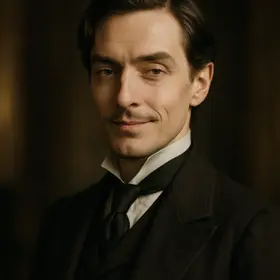 Lord Henry WottonMajor character
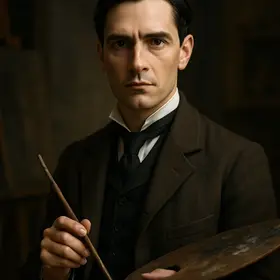 Basil HallwardMajor character
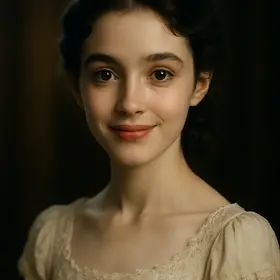 Sibyl VaneMajor character
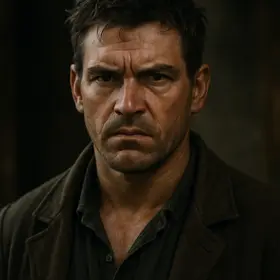 James VaneMinor character
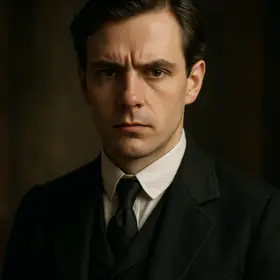 Alan CampbellMinor character
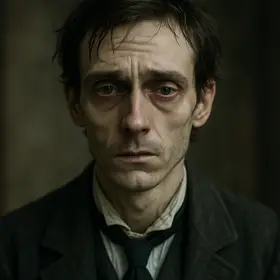 Adrian SingletonMinor character
- FFrancisMinor character
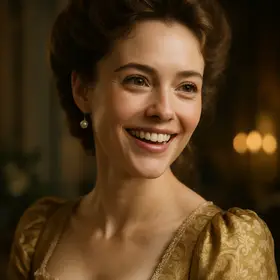 Duchess of MonmouthMinor character
All chapter summaries ›Characters ›
Read The Picture of Dorian Gray illustrated
Every scene in these notes comes from the Book2Life reader, where the full public-domain text is illustrated as you read, with character portraits and narration. Free in your browser and on iPhone.
Read The Picture of Dorian Gray free
